Welcome: Laizhou Machinery Group



A buyer searching for an expandable event trailer manufacturer may receive quotations that look surprisingly different.
One supplier offers a lower price.
Another proposes a different structural design.
A third includes more interior equipment.
Some suppliers describe themselves as manufacturers, while others may actually be trading companies or companies outsourcing most of the production.
For a conventional product, comparing quotations may be relatively straightforward.
For a large expandable event trailer, it is not.
The buyer is purchasing a combination of steel structure, hydraulic expansion system, electrical systems, interior construction, climate control and mobile engineering.
The quality of integration matters as much as the individual components.
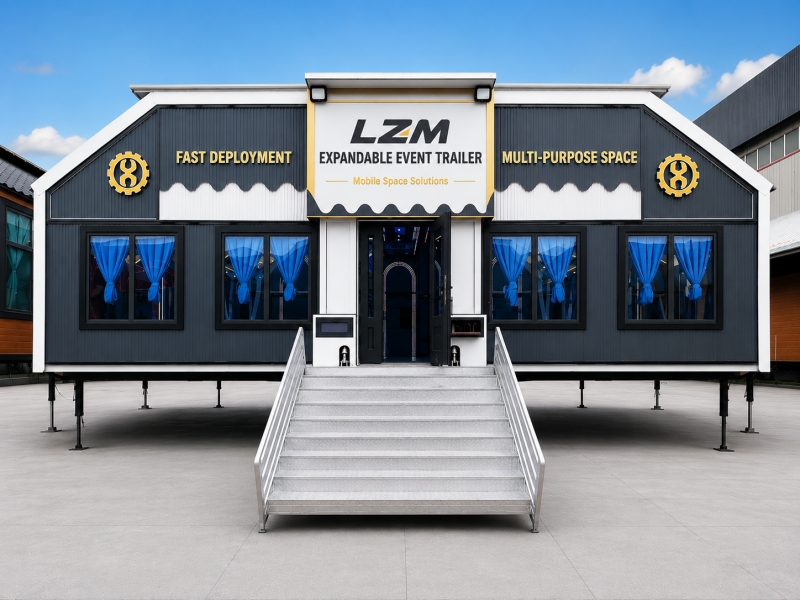
The first question should be simple:
What does the company manufacture itself?
An expandable event trailer involves several major production stages, potentially including:
Steel structure fabrication
Expandable sections
Hydraulic installation
Floor construction
Wall and roof assembly
Electrical installation
Interior finishing
Doors and windows
Equipment installation
Final testing
A buyer should understand which processes take place at the supplier's own manufacturing facility and which are outsourced.
This is particularly important when evaluating companies found through online B2B platforms.
A professional website or product catalogue does not by itself prove manufacturing capability.
A company may be an experienced trailer manufacturer without having substantial experience with large expandable event structures.
These are not ordinary box trailers.
The structure needs to move repeatedly between two very different conditions:
Transport Mode → Expanded Operating Mode
That requires coordination between:
Main frame
Expandable sections
Floors
Walls
Roof
Hydraulic system
Sealing
Electrical systems
Interior finishes
A design that looks impressive when fully expanded still needs to retract correctly for transportation.
Buyers should therefore ask for evidence of completed expandable event trailer projects, not simply general trailer-manufacturing experience.
Finished photographs are useful.
Production photographs and videos can reveal more.
They allow buyers to see what exists underneath the decorative interior.
Useful manufacturing evidence may include:
Steel frame fabrication
Structural welding
Expandable mechanisms
Hydraulic components
Wall construction
Electrical installation
Interior assembly
Completed units undergoing testing
Where practical, a factory visit can provide even better visibility into production capability.
For major commercial projects, understanding how the product is manufactured is more valuable than choosing a supplier based only on a rendered image.
Two quotations for a 15-meter expandable event trailer can differ substantially because the actual products are not equivalent.
Before comparing prices, check whether both quotations include the same:
Structural dimensions
Expanded dimensions
Interior configuration
Wall materials
Flooring
Doors
Windows
Hydraulic equipment
HVAC
Lighting
Electrical system
LED displays
Furniture
Exterior finish
Otherwise, the cheaper quotation may simply contain less equipment.
Quotation A and Quotation B are only comparable when the technical scope is comparable.
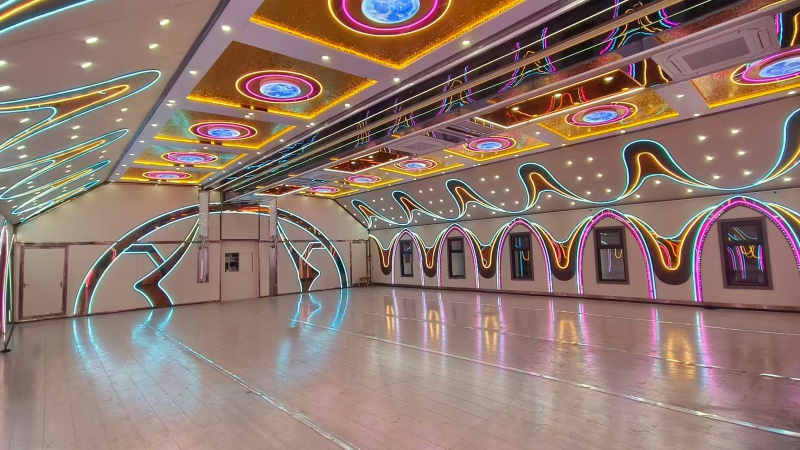
Buyers naturally focus on the large interior space available after deployment.
Manufacturers must also understand the transportation condition.
Important dimensions include:
Transport Length
Transport Width
Transport Height
Expanded Width
Expanded Floor Area
These dimensions affect:
Road transportation
Port handling
Shipping
Site access
Installation footprint
Final venue capacity
A responsible supplier should discuss both transport and operating conditions.
Hydraulics are not simply an accessory.
They enable the structural transformation that defines an expandable event trailer.
Depending on the model, hydraulic systems may be involved in several expansion and support functions.
Buyers should discuss:
Hydraulic system configuration
Operating procedure
Component accessibility
Maintenance requirements
Spare parts
Manual or emergency procedures where applicable
The cheapest hydraulic components are not necessarily the best choice for a commercial venue expected to deploy repeatedly.
For event rental businesses, reliability can directly affect revenue.
A hydraulic problem before a major event is not simply a maintenance inconvenience—it can become an operational failure.
Luxury interiors are easy to photograph.
Structural engineering is less visible.
But the underlying structure determines whether the venue can operate reliably over time.
Buyers should pay attention to:
Main steel structure
Expandable-frame design
Floor support
Roof structure
Connections
Moving interfaces
Support mechanisms
Decorative wall panels can be replaced.
A poorly designed structural system is much harder to correct after delivery.
Every expandable structure contains moving interfaces.
When the unit is deployed, these interfaces need to work together to create an enclosed venue.
Poor sealing can lead to problems involving:
Rain
Dust
Air leakage
HVAC efficiency
Noise
Interior comfort
Buyers expecting to operate in rainy, dusty, hot or cold environments should discuss sealing design with the manufacturer.
The requirements for a trailer used occasionally in mild weather may be different from one operating commercially throughout the year.
A large empty trailer is easy to cool.
A banquet hall containing hundreds of guests, lighting and audiovisual equipment is not.
When evaluating an expandable event trailer supplier, buyers should ask how HVAC recommendations are determined.
Cooling or heating requirements can be influenced by:
Interior volume
Guest capacity
Outdoor climate
Lighting
LED screens
Doors
Event duration
Other heat-producing equipment
A supplier should understand the intended application before recommending a climate-control configuration.
International buyers should not assume that the manufacturer's standard electrical system will automatically match local requirements.
Before production, the buyer should specify:
Voltage
Frequency
Phase
Major equipment
Expected electrical load
Destination requirements
For projects involving substantial HVAC, lighting, LED displays or other equipment, electrical planning becomes particularly important.
Destination-specific inspection or certification requirements should also be confirmed by the buyer and appropriate local professionals.
A manufacturer may offer dozens of optional features.
That does not mean the buyer needs all of them.
The correct configuration depends on how the trailer will generate value.
A wedding rental company may prioritize:
Banquet capacity + HVAC + lighting + interior finish
A brand activation agency may prioritize:
LED displays + branding + flexible product displays + digital equipment
A corporate hospitality operator may prioritize:
Lounge areas + meeting space + audiovisual systems
A sports-event operator may prioritize:
High visitor flow + displays + sponsor branding
The supplier should therefore ask about the application before finalizing the configuration.
LED displays can become significant components of an event trailer.
If the project includes large screens, the manufacturer needs information such as:
Screen dimensions
Installation position
Approximate weight
Power requirements
Indoor or exterior use
Viewing requirements
This allows structural and electrical provisions to be incorporated during manufacturing.
Adding heavy equipment after the trailer is completed can create unnecessary complications.
A completed expandable trailer should not be treated like ordinary static furniture.
Before shipment, relevant systems should be inspected and tested according to the agreed project scope.
Depending on the configuration, this may include:
Expansion and retraction
Hydraulic operation
Lighting
Electrical equipment
HVAC
Doors
Interior systems
Installed equipment
Buyers should ask what testing is performed and what evidence can be provided before shipment.
For custom projects, remote video inspection may also be useful when the buyer cannot attend the factory personally.
An expandable event trailer is not a disposable product.
Commercial buyers may operate it for years.
They should therefore understand what happens after delivery.
Questions should include:
What warranty is provided?
What spare parts are available?
Can hydraulic components be replaced?
Can electrical components be sourced locally?
Is remote technical support available?
Are operating instructions provided?
What information is available for installation and maintenance?
The value of technical support often becomes visible only after the equipment has entered service.
Manufacturing the trailer is only one part of an export project.
Large expandable event trailers can require specialized logistics because of their dimensions.
The supplier should understand issues involving:
Export preparation
Transport dimensions
Port delivery
Lifting or handling where required
Shipping method
Destination-port considerations
However, buyers should distinguish between the manufacturer's export experience and local legal compliance.
A manufacturer being able to ship a trailer internationally does not automatically mean the complete vehicle can be registered for public-road use in every destination country.
This is particularly important for buyers who expect the trailer to travel frequently.
Requirements can vary by country and may involve:
Overall dimensions
Weight
Axles
Brakes
Lighting
Coupling systems
Road registration
Vehicle documentation
These questions should be investigated before the order is finalized.
In some projects, the buyer may prefer to use a suitable locally sourced chassis or complete certain destination-specific systems locally.
The correct solution depends on the market and project.
The manufacturer's responsibility does not end with creating an expandable mechanism.
The buyer needs to understand how the equipment will be operated.
Before purchasing, ask about:
Deployment sequence
Retraction sequence
Site preparation
Safety considerations
Utility connections
Routine inspection
Maintenance
For rental companies operating the trailer frequently, clear operating procedures and staff training become especially important.
For a major investment, buyers may consider visiting the manufacturing facility before placing an order.
A factory visit allows the buyer to inspect:
Production capacity
Units under construction
Structural fabrication
Hydraulic installation
Interior workmanship
Quality-control processes
Completed products
It also creates an opportunity for technical discussions with the manufacturing team.
For highly customized projects, face-to-face engineering discussions can help clarify requirements before production begins.
A practical comparison should consider several categories rather than price alone.
Manufacturing Capability
Does the supplier actually manufacture expandable structures?
Relevant Experience
Can it show completed event trailer projects?
Technical Capability
Can it adapt dimensions, layout and systems to the application?
Component Quality
What hydraulic, electrical and HVAC systems are used?
Testing
How is the completed unit checked before shipment?
Export Experience
Does the supplier understand oversized international logistics?
Technical Support
What happens after delivery?
Commercial Price
Only after the technical scope has been compared should price become the deciding factor.
A lower purchase price looks attractive on a spreadsheet.
But commercial event equipment earns money only when it works.
If a cheaper unit creates repeated problems with:
Expansion
Sealing
HVAC
Electrical systems
Interior durability
Technical support
the operating cost can quickly exceed the original saving.
For an event rental company, there is another cost:
lost bookings.
A trailer unavailable during a high-value wedding, corporate event or brand activation can lose substantially more revenue than the amount saved during purchasing.
The expandable event trailer market is specialized.
Buyers should therefore evaluate more than photographs, floor area and quoted price.
A suitable manufacturer needs to understand the complete system:
Structure + Expansion + Hydraulics + Interior + Electrical + HVAC + Transportation + Commercial Operation
The objective is not simply to purchase the largest expandable trailer at the lowest factory price.
It is to purchase a commercial venue that can be transported, deployed and operated repeatedly for its intended business.
LZM manufactures expandable event trailers for weddings and banquets, brand activations, corporate events, sports events, exhibitions, hospitality and other commercial applications, with configurations developed according to individual project requirements.
Review LZM's expandable event trailer models, dimensions and customization options:
Expandable Event Trailer Manufacturer & Supplier