Welcome: Laizhou Machinery Group



An annual shareholder meeting may last only a few hours.
But preparing the venue can require weeks of coordination.
Companies need seating, presentation screens, executive areas, registration, voting systems, audiovisual equipment, security, and sufficient space for shareholders, directors, advisers, and staff.
For companies and corporate event operators in Las Vegas, Nevada, an expandable event trailer could provide another option: a configurable mobile venue designed around shareholder meetings and investor communication events.
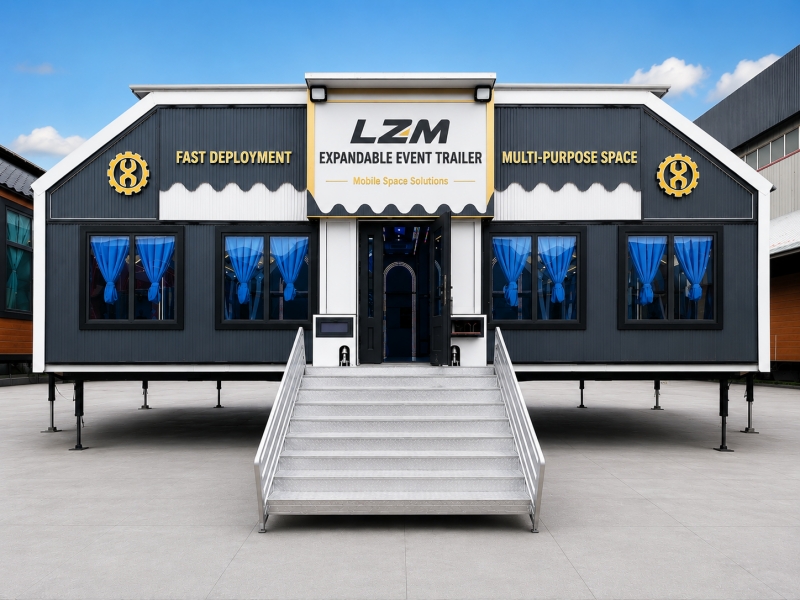
A shareholder meeting is not simply another corporate party.
Attendees may need to move through several stages:
Registration → Identity or eligibility verification → Seating → Corporate presentation → Voting → Executive Q&A → Investor reception
The physical space should support this process.
Depending on the company and meeting format, the interior could include:
Registration area
Shareholder seating
Executive presentation stage
Large display screens
Voting support area
Technical control position
Private executive room
Investor reception space
The layout should be planned around corporate governance procedures rather than maximum theoretical occupancy.
This creates an interesting commercial question.
A company may need a professionally configured meeting environment for an AGM, extraordinary shareholder meeting, investor day, or another major corporate event—but it does not necessarily need that space every day.
Permanent corporate headquarters may have meeting rooms without having an auditorium large enough for a major shareholder event.
Traditional options include renting:
Hotel ballrooms
Convention facilities
Conference centers
Theaters
An expandable mobile venue introduces another alternative, particularly for organizations or event companies that expect to reuse the facility across multiple corporate programs.
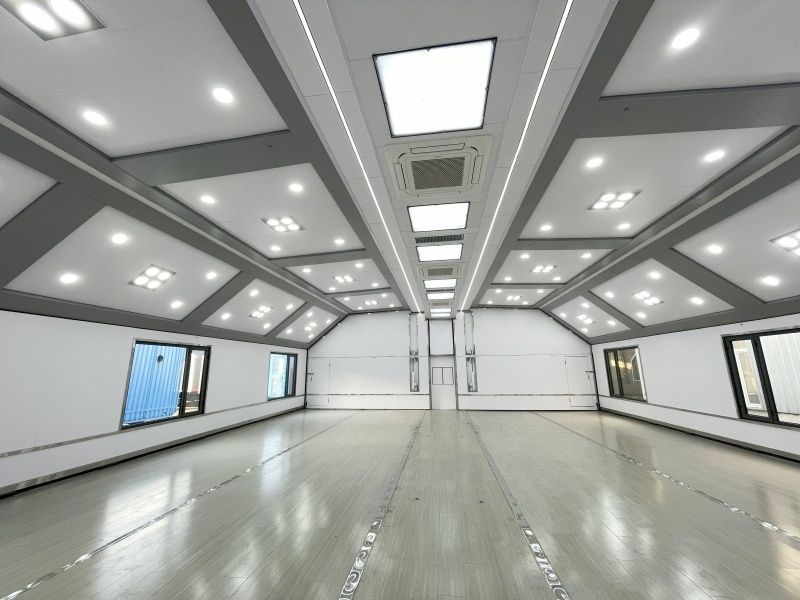
Shareholder communication increasingly combines physical attendance with digital presentation.
The venue may need infrastructure for:
Financial presentations
Corporate videos
Live camera feeds
Presentation screens
Remote participation
Voting information
Audio recording
Livestreaming
Screen positions and sightlines should therefore be considered before seating is finalized.
A technically impressive display is of little value if part of the audience cannot see it clearly.
Many shareholder meetings include questions from investors.
That means the stage may need more than a lectern.
Depending on the meeting format, it could accommodate:
Chairman
CEO
CFO
Board members
Guest speakers
Moderator
Microphone positions, stage access, audience microphones, lighting, and camera angles may all influence the layout.
For smaller meetings, a compact presentation stage may preserve more floor area for attendees.
For larger corporate events, a wider stage and stronger audiovisual system may be more appropriate.
Some shareholders may attend physically while others participate remotely.
A hybrid meeting can therefore require:
Cameras
Microphones
Video-conferencing systems
Internet connectivity
Presentation computers
Streaming equipment
Large displays
Technical control equipment
Electrical supply and cable routing should be planned around this equipment during the design stage.
Where specialized corporate voting or webcast systems are required, buyers can define the necessary interfaces so appropriate installation provisions can be considered.
Not every discussion belongs on the main stage.
Directors, legal advisers, investor-relations staff, and executives may require separate rooms before or during the meeting.
An interior configuration could therefore include one or more private areas for:
Board preparation
Legal consultation
Executive meetings
Media preparation
Document handling
A well-planned corporate venue needs both public presentation space and controlled back-of-house space.
The balance depends on the size and complexity of the meeting.
Las Vegas has extensive convention and corporate-event infrastructure.
That might seem to make a mobile corporate venue unnecessary.
But this application is not based on the assumption that permanent venues are unavailable.
The commercial argument is different.
An event production or corporate hospitality company that already serves multiple clients may want to control its own reusable venue configuration instead of rebuilding the same technical environment at different rented locations.
The trailer could potentially support a series of:
Shareholder meetings
Investor days
Corporate presentations
Executive briefings
Partner conferences
Press events
The interior can then be reconfigured according to each client's requirements.
A rental operator serving several companies needs a neutral infrastructure that can be rebranded.
Digital displays, removable graphics, stage backgrounds, reception signage, and lighting can help change the appearance between projects.
One week, the venue may support an investor meeting.
Later, the same facility could host a corporate presentation under completely different branding.
Reusable infrastructure combined with changeable branding can be more valuable than designing the interior around only one company.
A buyer should not begin with:
“What is your largest trailer?”
A more useful starting point is:
“We need 180 shareholders seated, a six-person executive stage, two large screens, registration, and one private board room.”
That information allows the manufacturer to evaluate the actual floor-space requirement.
Theater-style seating can accommodate more attendees than layouts that include tables, larger aisles, reception areas, or multiple private rooms.
Las Vegas can experience high outdoor temperatures.
At the same time, a shareholder meeting may place many people, screens, lighting systems, computers, and audiovisual equipment inside the venue simultaneously.
HVAC planning should therefore consider:
Peak occupancy
Trailer dimensions
Outdoor temperature
Lighting load
AV equipment
Operating duration
Door-opening frequency
Cooling capacity should be evaluated according to actual project conditions.
The buyer does not necessarily need to be the company holding the shareholder meeting.
Potential operators could include:
Corporate event production companies
Investor-relations event providers
Convention service companies
Corporate hospitality operators
Large business groups
Mobile venue rental companies
For a single company holding one AGM per year, conventional venue rental may remain the more practical choice.
The mobile model becomes more commercially interesting when the same facility can support repeated corporate events.
Before selecting the trailer size and configuration, buyers should prepare:
Expected attendee capacity
Seating format
Stage dimensions
Number of executives on stage
Registration requirements
Display-screen requirements
Audio system requirements
Livestreaming requirements
Private-room requirements
HVAC requirements
Frequency of relocation
Transportation, electrical systems, accessibility, fire safety, public occupancy, event operation, site use, and other applicable requirements should be evaluated according to U.S., Nevada, and local requirements.
An annual shareholder meeting alone may not justify investing in dedicated mobile infrastructure.
But a facility capable of supporting AGMs, investor days, corporate presentations, executive briefings, partner conferences, and other business events has a broader commercial use case.
For corporate event companies and organizations operating across multiple locations, an expandable event trailer can provide a reusable environment for professional presentations, shareholder communication, executive meetings, and investor hospitality.
LZM develops expandable event trailers according to audience capacity, interior layout, audiovisual requirements, climate conditions, and individual commercial applications.
Explore the expandable platform for shareholder meetings and corporate investor events:
Mobile Shareholder Meeting & Investor Event Venue