Welcome: Laizhou Machinery Group



A larger off road caravan does not automatically provide a better family layout.
For dealers developing a caravan range, the real question is how effectively the available interior space is used.
A family caravan may need to accommodate:
Parents
Children
Sleeping areas
Kitchen
Bathroom
Dining space
Clothing
Food
Outdoor equipment
Water
Batteries
All of these requirements compete for limited space and payload.
For Mexican caravan dealers and importers, a successful OEM family model should therefore be designed around real customer use rather than simply maximizing the number of beds.
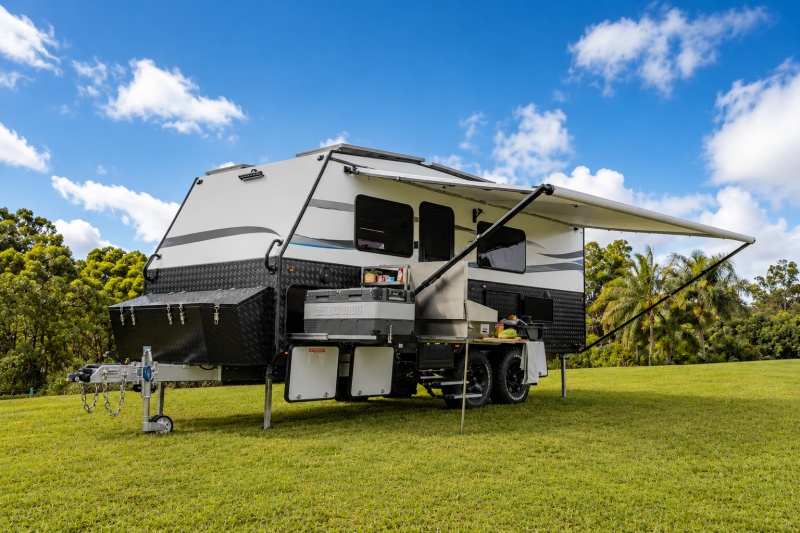
One of the first specifications dealers usually define is the number of occupants.
A caravan may be designed for:
Two people
A couple with one child
Four-person family
Larger family groups
But advertised sleeping capacity does not always tell the complete story.
Dealers should consider:
Bed dimensions
Access
Privacy
Night-time movement
Storage around sleeping areas
Ease of converting beds
A caravan technically capable of sleeping six people may not necessarily provide a comfortable six-person travel experience.
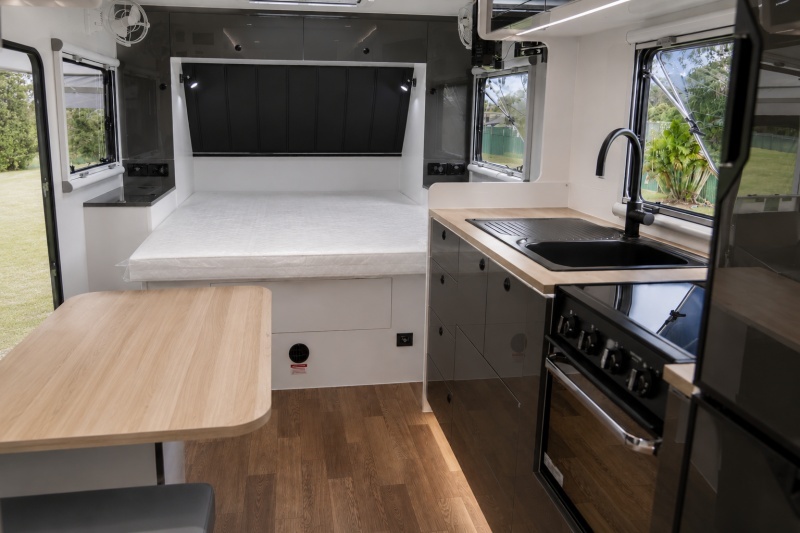
Both approaches have advantages.
A fixed bed provides immediate sleeping space without daily conversion.
Advantages can include:
Convenience
Permanent mattress
Under-bed storage opportunities
However, it permanently occupies interior floor area.
Dining or seating areas may sometimes convert into sleeping spaces.
This can improve daytime space efficiency but requires customers to rearrange the interior.
For a dealer, the correct solution depends on the target customer rather than one layout being universally better.
Bunk beds are a practical way to increase sleeping capacity without consuming the floor area required by multiple conventional beds.
They can be particularly useful for families travelling with children.
However, bunk design should consider:
Bed dimensions
Structural support
Access ladder
Guarding
Ventilation
Lighting
Nearby storage
Simply adding another sleeping position should not compromise usability.
More occupants usually mean more:
Clothing
Food
Bedding
Shoes
Camping equipment
Personal items
A four-person caravan therefore needs more than four sleeping positions.
It also needs somewhere to store the belongings of those four people.
Useful storage areas may include:
Overhead cabinets
Under-bed storage
Kitchen cabinets
Wardrobes
External compartments
Dedicated equipment storage
The objective is to use otherwise wasted space without creating excessive weight.
This distinction is important.
A caravan may physically contain many large storage compartments but still have limited available payload.
Customers can easily fill storage areas with:
Tools
Food
Camping equipment
Outdoor furniture
Spare parts
Personal belongings
Dealers should therefore consider storage volume together with the caravan's allowable loaded configuration and applicable weight limits.
More storage can encourage customers to carry more weight.
Family customers may use the caravan kitchen very differently from couples travelling for short periods.
Possible equipment can include:
Refrigerator
Sink
Cooking equipment
Microwave
Storage
Work surface
Dealers should consider whether customers mainly:
Cook inside
Cook outside
Use both
Stay at established campsites
Travel remotely
An oversized indoor kitchen may consume valuable living space if customers primarily cook outside.
Conversely, a very small kitchen may frustrate families using the caravan for extended trips.
Off road caravan customers often value outdoor living.
An exterior cooking arrangement can provide additional flexibility in suitable weather.
Potential advantages include:
More outdoor interaction
Reduced cooking heat inside
Additional preparation space
However, an outdoor kitchen also requires:
Storage space
Hardware
Plumbing or electrical connections
Additional weight
For OEM development, dealers should determine whether this feature actually matches their customer group.
Adding a bathroom increases convenience, particularly for remote travel.
But bathrooms occupy valuable interior volume.
Design decisions may include:
Toilet
Shower
Combined shower/toilet
Separate shower area
Wash basin
Storage
A larger bathroom can improve comfort but reduce space available for:
Beds
Kitchen
Dining
Storage
This is another area where maximum size is not necessarily the best design.
More occupants generally increase demand for:
Drinking water
Cooking water
Washing
Showering
Dealers may therefore request larger freshwater capacity for family caravans.
But water adds substantial mass.
Approximately one litre of water adds one kilogram of mass when carried.
Increasing a water tank from 100 L to 250 L, for example, means up to roughly 150 kg of additional water when comparing full tanks.
That needs to be considered in payload planning.
A family may use more:
Phones
Tablets
Lighting
Refrigerator capacity
Entertainment equipment
Water
Climate control
This can influence:
Battery capacity
Solar requirements
USB outlets
12V distribution
Inverter requirements
Interior layout and electrical planning are therefore connected.
Small details can significantly affect customer experience.
Charging outlets located far from beds or seating areas may be inconvenient.
During OEM layout development, dealers can consider outlets near:
Main bed
Bunk beds
Dining area
Kitchen
Work or entertainment area
Planning these locations before production is easier than adding wiring after the interior is completed.
Several people sleeping inside a relatively compact caravan produce:
Heat
Moisture
Carbon dioxide
Cooking and showering add additional moisture.
A family layout should therefore consider:
Windows
Roof vents
Bathroom ventilation
Kitchen ventilation
Air conditioning where required
Ventilation should be coordinated with insulation and sealing rather than treated as an unrelated option.
A caravan is a small shared living environment.
Families may appreciate some separation between:
Parent sleeping area
Children's beds
Bathroom
Main living area
Complete separation is not always possible, but layout planning can improve privacy through:
Curtains
Doors
Partitions
Bed positioning
These relatively simple design choices can influence how customers perceive the interior.
OEM flexibility is valuable, but unlimited customization creates problems for dealers.
If every caravan uses a completely different:
Layout
Cabinet system
Electrical arrangement
Plumbing layout
Furniture specification
repeat production and after-sales support become more difficult.
A better dealer strategy can be to develop two or three standardized family layouts and allow customers to select equipment packages within those platforms.
This provides customization without turning every order into a completely new engineering project.
Before confirming an OEM family caravan, dealers should ask:
How many people will realistically use the caravan?
Are the beds comfortable for the intended occupants?
Are bunk beds required?
How much clothing storage is available?
Is external storage required?
Does storage capacity exceed practical payload?
Is an indoor or outdoor kitchen more appropriate?
How large should the bathroom be?
How much freshwater capacity is required?
Where will batteries be installed?
Are charging outlets positioned conveniently?
Is ventilation adequate for the intended occupancy?
Can the same layout be reproduced consistently for future orders?
These questions help transform an attractive floor plan into a commercially practical caravan.
LZM works with international dealers and importers requiring different off road caravan layouts and equipment configurations.
Sleeping arrangements, kitchens, bathrooms, storage, electrical systems and off-grid equipment can be discussed according to the dealer's target customers.
Mexican businesses developing their own caravan range can explore the LZM Off Road Caravan Models for Dealer Programs.
For businesses targeting family and longer-distance travel customers, the 21ft platform provides more space to coordinate sleeping, cooking, bathroom and storage requirements.
Different project requirements can be discussed around:
Main sleeping area
Bunk configuration
Kitchen
Bathroom
Interior storage
External storage
Battery system
Solar equipment
Water capacity
Explore the LZM 21ft Family Off Road Caravan for OEM Projects.
Instead of beginning an OEM inquiry with only a caravan length, Mexican dealers can provide information about the intended customer.
Useful details include:
Number of travellers
Typical trip duration
Preferred sleeping arrangement
Indoor or outdoor cooking preference
Bathroom requirements
Storage requirements
Off-grid duration
Water requirements
Battery and solar requirements
Initial purchasing quantity
LZM can use these requirements to discuss a more practical family caravan configuration.
The best family caravan is not necessarily the one with the largest number of beds, cabinets or appliances.
Every additional feature consumes space, weight or both.
For dealers, successful family caravan development means balancing sleeping comfort, storage, kitchen space, bathroom size, water capacity, electrical demand and payload.
A standardized and well-planned layout can also make repeat production easier, helping an importer develop a consistent caravan range instead of treating every customer order as a completely new product.