Welcome: Laizhou Machinery Group



A buyer finds an expandable event trailer online and sends a message:
“How much is this trailer?”
It is a reasonable first question.
But for a customized expandable event trailer, there is rarely one useful price without knowing what the buyer actually needs.
A trailer for a 160-person wedding business is different from one used as a mobile exhibition space, VIP hospitality facility, training venue, entertainment hall, or commercial operation.
Even two buyers requesting the same trailer length may ultimately need very different configurations.
Before requesting a detailed quotation, preparing the following 12 pieces of project information can make the discussion considerably more productive.
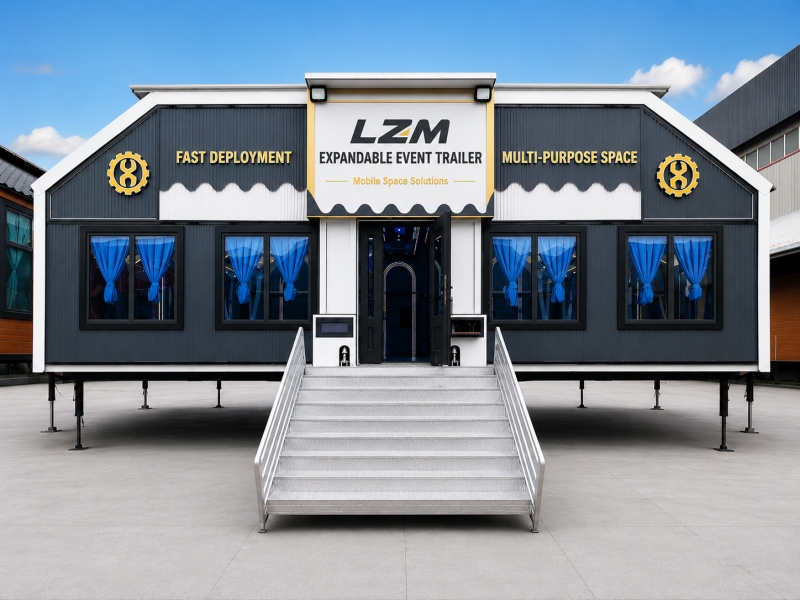
Start with the application.
Do not simply write:
“I need an event trailer.”
Explain the business.
For example:
Wedding and banquet rental
Corporate hospitality
Live entertainment
Mobile business facility
Education
Exhibition
Public-service project
Private events
Application influences almost every later decision, including layout, capacity, interior finish, HVAC, electrical load, and optional equipment.
Photos or examples of the intended operation can also be useful.
Capacity is one of the first numbers the manufacturer needs.
But specify what that number means.
There is a major difference between:
200 people standing
and
200 people seated at banquet tables with a stage and dance floor.
Tell the manufacturer both the expected number of occupants and how they will use the space.
That allows the discussion to move from theoretical floor area toward an actual layout.
If you already have a preferred layout, send it.
It does not need to be a professional CAD drawing.
A sketch can show:
Tables
Chairs
Stage
Dance floor
Bar
Reception
Meeting rooms
Screens
Service areas
Even a hand-drawn concept can be more useful than several paragraphs of explanation.
The layout often determines the appropriate trailer size—not the other way around.
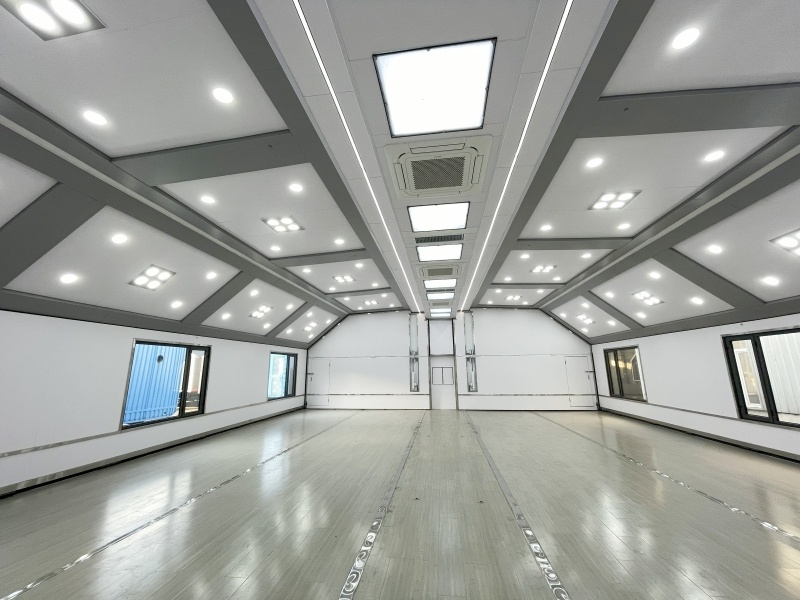
This should be provided at the beginning of the inquiry, not after the quotation has been prepared.
Destination affects discussions about:
Transportation dimensions
Road requirements
Electrical systems
Climate
Shipping
Chassis strategy
Local compliance
A configuration intended for the United States may require a different approach from one intended for the UAE, Australia, South America, or Southeast Asia.
International buyers should also investigate applicable requirements in their own market before finalizing the manufacturing specification.
“Mobile” can mean very different things.
One buyer may move the trailer every weekend.
Another may relocate it twice per year.
A resort may install it at essentially one location for long periods.
Tell the manufacturer which operating model applies:
Frequent touring
Regular event relocation
Seasonal relocation
Occasional relocation
Mainly stationary use
Transportation frequency can influence the appropriate configuration and purchasing strategy.
Do not simply request “air conditioning.”
Provide the expected operating conditions.
Useful information includes:
Typical summer temperature
Typical winter temperature
Humidity
Operating season
Daytime or evening use
Expected occupancy
A high-capacity event trailer operating in Riyadh or Dubai has very different cooling requirements from a unit operating in a moderate climate.
The same principle applies to heating in colder regions.
Electrical requirements should be discussed before production.
Buyers should provide information about:
Voltage
Frequency
Phase
Available site power
Generator use, if applicable
They should also list major electrical equipment.
LZM event trailer projects commonly use 380V three-phase electrical configurations, with 50Hz or 60Hz depending on project requirements.
However, the final electrical configuration should be evaluated according to the destination and equipment being installed.
Prepare a list instead of adding equipment gradually during production.
Depending on the project, this could include:
Air conditioning
Heating
LED screens
Projectors
Sound system
Stage
Lighting system
Bar
Kitchen equipment
Furniture
Partitions
Specialized business equipment
For electrical equipment, provide power ratings where possible.
This helps determine electrical capacity and installation requirements.
These two requirements can significantly affect the interior layout.
A restroom requires space for plumbing, water, wastewater, ventilation, and associated equipment.
A kitchen can require substantial electrical capacity, ventilation, storage, and working space.
Before putting everything inside the main trailer, ask whether these functions could instead use:
Existing site facilities
External mobile restrooms
Separate mobile kitchen facilities
Local catering infrastructure
Keeping support functions outside the main event space can sometimes preserve more usable area for guests or commercial activity.
International buyers should discuss how the expandable structure will ultimately be transported in the destination country.
Depending on the market and project, buyers may consider either:
a complete expandable trailer
or
an expandable body prepared for integration with an appropriate local transport/chassis solution.
This question can become particularly important where local requirements for road trailers, axles, brakes, lighting, dimensions, registration, or certification differ from those used by the manufacturer.
The appropriate approach should be evaluated before the final configuration is confirmed.
A buyer may have enough room for the trailer in transport condition but not enough room after expansion.
Provide information about the intended site, including:
Available length
Available width
Ground conditions
Access route
Turning space
Nearby buildings
Utility connections
Obstacles
Photos, videos, or a simple site plan can help.
Remember that the operating footprint is larger than the transport footprint once the trailer is expanded.
Finally, provide a realistic timeline.
Tell the manufacturer:
When the trailer is needed
Whether the date is fixed
When the first event will take place
Destination port or city
Whether shipping time has been considered
Manufacturing is only one part of the schedule.
International projects may also involve:
Design confirmation → Production → Inspection → Inland transportation → Export → Ocean shipping → Import clearance → Local delivery → Commissioning
Waiting until shortly before the first event to place the order can create unnecessary project risk.
Budget is useful information too.
Buyers sometimes avoid providing it because they assume the supplier will simply increase the quotation to match the available amount.
But for a heavily customized product, a realistic budget range can help determine whether the proposed configuration makes commercial sense.
For example, LZM customized expandable event trailers generally fall into approximately the USD 59,000–140,000 EXW range, depending on model, configuration, interior requirements, and optional equipment.
That does not mean every project will fall at the same point within the range.
A buyer expecting a highly customized 21-meter unit with premium interior, HVAC, entertainment equipment, and specialized systems should not evaluate it against the budget for a much simpler configuration.
The objective of providing detailed information is not to make the purchasing process complicated.
It does the opposite.
A useful initial project brief can be surprisingly short:
Application: Wedding rental
Country: UAE
Capacity: 180 seated guests
Layout: Banquet tables + stage + dance floor
Climate: Hot climate / air conditioning required
Electrical: Local supply information
Equipment: Sound + lighting + LED screen
Restroom: External
Catering: External
Relocation: Approximately 20 events per year
Site: Layout attached
Required delivery: March 2027
That gives a manufacturer considerably more information than:
“Please send price for your biggest trailer.”
Price matters. But a useful quotation requires a defined product.
For customized expandable event trailers, buyers can save time by preparing the application, capacity, layout, destination, climate, utilities, equipment, transportation model, and project schedule before asking manufacturers for final pricing.
This also makes quotations from different suppliers easier to compare later because they can be based on the same project requirements.
LZM evaluates expandable event trailer projects according to the buyer's intended application, capacity, interior layout, destination market, equipment requirements, and operating model.
Prepare your project requirements and review the expandable platform before requesting a detailed quotation:
Expandable Event Trailer Project & Quotation Guide