Welcome: Laizhou Machinery Group



A comedian can travel.
The production team can travel. Sound and lighting equipment can travel. Ticketing can be organized in almost any city.
The difficult part is often the venue.
Traditional comedy clubs and theaters are tied to permanent locations, while touring entertainment businesses need suitable indoor spaces wherever audiences are available.
For entertainment operators in Abu Dhabi, UAE, an expandable event trailer could create a different model: a mobile comedy club that travels as part of the entertainment business itself.
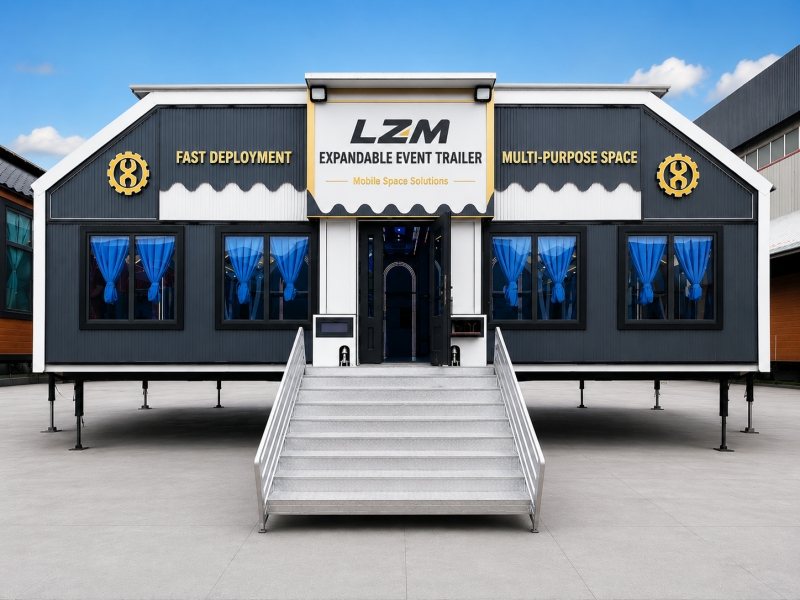
A stand-up performance does not necessarily need an arena-sized production.
But the relationship between the performer and the audience matters.
A comedy venue typically benefits from:
Clear sightlines
Close audience seating
Small performance stage
Controlled lighting
Professional audio
Comfortable temperature
Limited external noise
Suitable audience circulation
The objective is intimacy rather than simply fitting the maximum number of people into the available floor area.
This makes interior layout particularly important.
A conventional touring show normally books an existing theater or event venue in every city.
That means the operator depends on local venue availability, rental terms, technical facilities, and scheduling.
A mobile comedy venue introduces another possibility.
The entertainment company could potentially move the same configured facility between approved locations:
City A → City B → City C → Special Event
The stage, lighting arrangement, sound system, seating concept, and branding can remain consistent from one stop to another.
For a touring operator, the venue itself becomes part of the production infrastructure.
Comedy is highly dependent on audience interaction.
A room that is too open or poorly arranged can make a relatively large audience feel disconnected.
The buyer should therefore think about:
Distance from stage to first row
Number of seating rows
Central and side aisles
Stage visibility
Table seating versus theater seating
Performer access
Emergency circulation
A comedy-club layout using small tables may require considerably more floor space per guest than conventional theater seating.
Capacity should be calculated from the desired entertainment format, not from floor area alone.
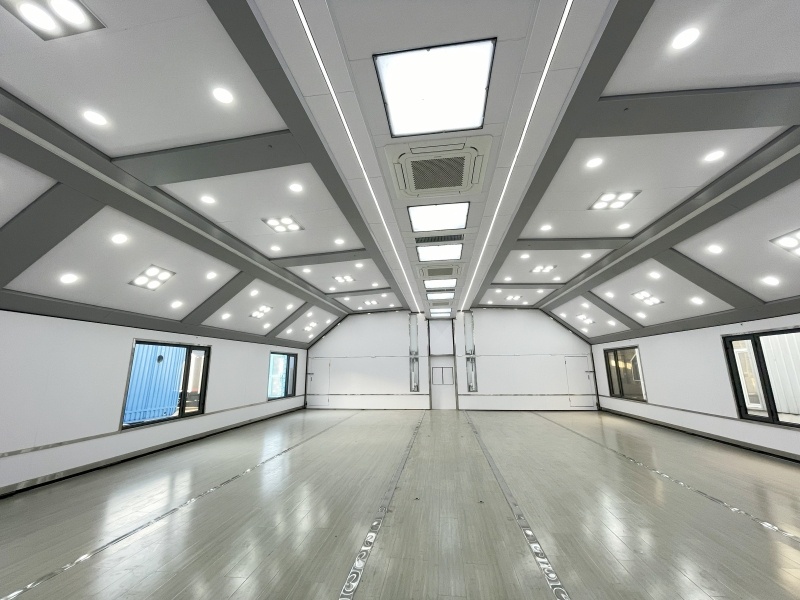
Unlike some music productions, stand-up comedy generally requires relatively little stage equipment.
This can leave more of the expandable floor area available for the audience.
A stage may need space for:
Performer
Microphone
Stool or small furniture
Backdrop
Display screen
Basic stage lighting
For mixed entertainment programs, however, the buyer may want a larger stage capable of supporting music, interviews, small performances, or corporate presentations.
Removable staging can increase flexibility.
A comedy audience needs to understand every word clearly.
That means the audio system should prioritize speech clarity rather than simply high output.
The project may require:
Professional microphones
Main speakers
Stage monitor
Audio mixer
Playback equipment
Recording connections
Interior acoustic treatment may also need consideration.
A mobile comedy venue should control sound both inside the room and, where necessary, transmission toward the surrounding site.
Local noise requirements would need to be considered according to the deployment location.
The interior does not need the complex lighting system of a major concert production.
Instead, lighting can help separate the stage from the audience.
A typical concept might combine:
Focused stage lighting
Lower audience lighting
Decorative ceiling lighting
Entrance lighting
Emergency lighting
Bar or service-area lighting
The buyer could also incorporate branded backgrounds or digital screens behind the performer.
This allows the same physical facility to present different comedy brands, festivals, or sponsors.
A ticketed audience expects to remain comfortable throughout the performance.
In Abu Dhabi, cooling therefore becomes a major technical consideration.
HVAC requirements should take into account:
Audience capacity
Trailer dimensions
Outdoor temperature
Stage lighting
Audio equipment
Operating hours
Door-opening frequency
A sold-out evening with many people inside the venue creates a very different cooling load from an empty trailer.
HVAC should therefore be selected according to expected operating conditions and occupancy.
A mobile comedy club could be designed around stand-up while remaining useful for other smaller live events.
The same interior could potentially host:
Spoken-word performances
Small acoustic concerts
Podcast live shows
Interviews
Storytelling events
Corporate entertainment
Private performances
Talent showcases
Flexible seating and removable equipment can make the facility easier to reuse between different productions.
Unlike an open public event, a comedy show normally has a defined start time and known ticket capacity.
That makes entrance planning important.
The operator may need areas for:
Ticket verification
Security checks
Guest waiting
Merchandise
Refreshments
Audience entry and exit
These functions do not all need to occupy the main performance space.
Depending on the site, some services could be handled externally to preserve more interior area for paying guests.
Potential buyers could include:
Comedy promoters
Entertainment companies
Touring production companies
Event rental businesses
Festival operators
Resorts
Entertainment districts
Corporate event providers
A venue operator could also use the trailer differently from a touring comedian.
Instead of following one performer, the facility could remain at a location temporarily and host a rotating calendar of performers.
For a commercial entertainment operator, the purchasing decision should ultimately connect to revenue.
Important questions include:
How many sellable seats are available?
What is the average ticket price?
How many performances can run each week?
Can food or beverages generate additional revenue?
Can the facility support private bookings?
How frequently will it relocate?
What other events can use the space?
The largest possible trailer is not automatically the most profitable configuration.
The appropriate size depends on the operator's audience, ticketing model, touring schedule, and local operating costs.
Before selecting a trailer configuration, an entertainment operator should provide:
Target audience capacity
Seating style
Stage dimensions
Audio requirements
Lighting requirements
Screen requirements
Bar or refreshment requirements
HVAC requirements
Acoustic requirements
Expected relocation frequency
Available installation area
Transportation, electrical, fire safety, accessibility, public occupancy, entertainment licensing, noise, site use, and other applicable requirements should be evaluated according to UAE and local project requirements.
Touring entertainment normally moves performers and equipment between permanent venues.
A mobile comedy club changes the model by allowing the performance environment itself to travel with the business.
For comedy promoters and entertainment operators in Abu Dhabi and other markets, an expandable event trailer can provide configurable space for ticketed audiences, live performances, private events, and touring entertainment programs.
LZM develops expandable event trailers according to audience capacity, seating layout, stage requirements, audiovisual systems, climate conditions, and individual commercial applications.
Explore the expandable platform for touring comedy and live entertainment projects:
Mobile Comedy Club & Live Performance Venue