Welcome: Laizhou Machinery Group



Visa application demand is rarely constant throughout the year.
Student enrollment periods, holiday travel, religious travel, major international events, seasonal employment, and changes in entry requirements can create temporary increases in application volumes.
The problem is straightforward: the number of applicants can increase quickly, while the physical capacity of an existing visa application center remains unchanged.
For organizations providing visa and document-processing services in Kuala Lumpur, Malaysia, an expandable event trailer could provide additional temporary service space during periods of unusually high demand.
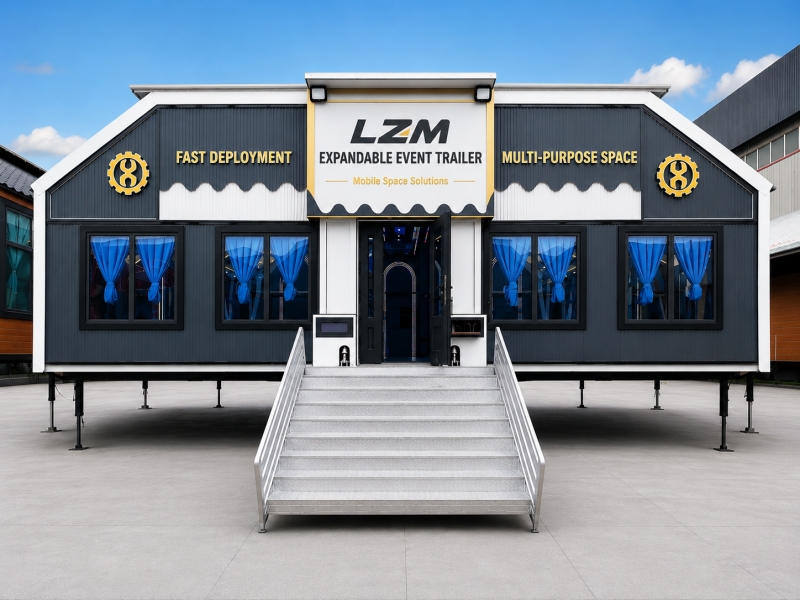
When appointment volumes increase, pressure can appear throughout the entire application process.
Applicants may need to move through several stages:
Appointment verification
Queue registration
Document checking
Application submission
Fee processing
Biometric procedures where applicable
Additional document enquiries
Collection or follow-up instructions
Simply adding more chairs does not necessarily increase processing capacity.
The facility needs to support the workflow from arrival through completion of the appointment.
A mobile facility does not necessarily need to replace a permanent visa application center.
It could instead provide additional capacity during peak periods.
Depending on the operating model, the expandable space could be configured for:
Applicant reception
Document pre-checking
Waiting
Application counters
Private consultation
Staff workstations
Document handling
Customer support
This allows an operator to decide which functions should remain inside the permanent facility and which could be transferred temporarily to the additional space.
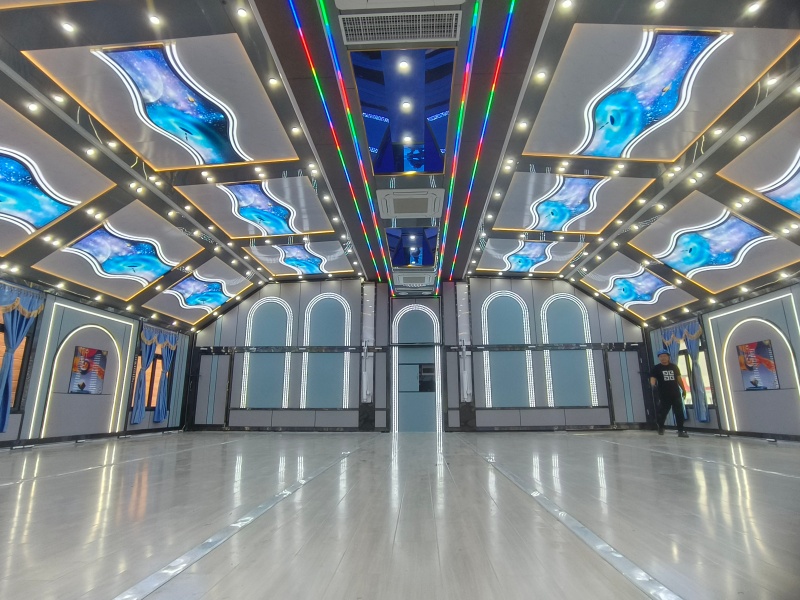
Visa applications can involve passports, identification documents, financial records, photographs, supporting letters, and other personal documentation.
An uncontrolled open hall would not be appropriate for every stage of the process.
The interior could therefore separate public and staff areas.
For example:
Entrance → Registration → Waiting → Service Counter → Exit
Staff-only areas could be positioned behind the customer-service zone for document handling and administrative work.
The exact workflow should follow the operator's established application procedures.
Applicants may need to discuss personal information with service staff.
This means counter spacing and acoustic conditions deserve attention.
Depending on the service being provided, buyers could consider:
Separated service counters
Privacy screens
Individual consultation rooms
Acoustic treatment
Restricted document-processing areas
Maximum applicant capacity should not come at the expense of appropriate privacy and service procedures.
The operator remains responsible for establishing data-protection and document-handling processes according to applicable requirements.
Some visa application processes involve fingerprints, photographs, or other biometric information.
If biometric services are intended inside the mobile facility, the project would need to consider the equipment specified by the relevant service operator or authority.
Requirements may include:
Dedicated workstation
Camera positioning
Controlled lighting
Fingerprint equipment
Computers
Network connectivity
Privacy
Electrical supply
LZM can design the physical space and prepare appropriate electrical and equipment positions according to information supplied by the buyer.
The actual biometric systems and authorization to operate them would depend on the relevant authorities and service providers.
A modern application center depends heavily on digital systems.
Staff may need access to appointment databases, document systems, payment platforms, printers, scanners, and secure networks.
The facility may therefore require infrastructure for:
Computers
Network equipment
Internet connectivity
Printers
Document scanners
Queue-management systems
Display screens
Charging and power supply
Cable routes and workstation positions should be established before interior finishing is completed.
Backup electrical systems may also be considered where service interruption would significantly affect appointment operations.
This is where a mobile facility can differ economically from another permanent office.
Imagine an application center that normally handles its daily workload comfortably but experiences a substantial increase for several months.
Constructing a permanent building around the highest possible seasonal volume could leave excess capacity for the rest of the year.
A temporary expandable facility introduces another model:
increase physical service capacity when demand rises, then redeploy the facility when the peak period ends.
For operators managing visa services across multiple locations, reuse may be especially relevant.
The same facility could potentially support:
Seasonal application demand
Temporary processing programs
Additional appointment capacity
Special travel programs
Regional application campaigns
After one project is completed, it could be prepared for another approved service location.
The feasibility of relocation would depend on transportation requirements, site access, utilities, security, and the operator's contracts or authorization.
Visa processing can involve passports and sensitive personal information.
Security planning may therefore include:
Controlled entry
CCTV provisions
Access control
Staff-only areas
Secure document storage
Alarm-system preparation
Visitor-flow control
The final security specification should be established by the operating organization according to its procedures and applicable local requirements.
Applicants may wait inside the facility while multiple staff members and computers operate throughout the day.
In Kuala Lumpur's hot and humid climate, cooling and ventilation are therefore important design considerations.
HVAC requirements should account for:
Trailer size
Peak occupancy
Staff numbers
Computer equipment
Lighting
Outdoor conditions
Operating hours
Frequent door opening
Cooling capacity should be selected according to actual operating conditions rather than only the nominal floor area.
Potential users could include organizations involved in:
Visa application services
Consular service outsourcing
Passport or document services
Government service projects
International travel documentation
Temporary administrative programs
This is a specialized application.
The expandable trailer provides the physical service environment; authorization, processing procedures, IT systems, security protocols, and regulatory requirements remain the responsibility of the appropriate operating organization.
A buyer considering this application should provide detailed operational information, including:
Applicants per day
Peak simultaneous occupancy
Number of service counters
Number of staff
Waiting capacity
Document workflow
Privacy requirements
IT equipment
Security requirements
Biometric requirements, if applicable
HVAC requirements
Expected deployment period
Accessibility, electrical systems, data protection, fire safety, security, public occupancy, transportation, and other applicable requirements should be evaluated according to Malaysian and local project standards.
Permanent visa application centers remain appropriate for stable long-term demand.
The challenge comes when application volume temporarily exceeds the physical capacity available.
An expandable event trailer can provide additional configurable space for applicant reception, waiting, document processing, consultation, and administrative operations during those periods.
For authorized service organizations operating in Kuala Lumpur and other markets, the facility can be customized around applicant flow, service counters, IT systems, privacy, security, and climate requirements.
LZM develops expandable event trailers according to the operational requirements of individual commercial and public-service projects.
Explore the expandable platform for temporary application and document-service facilities:
Mobile Visa Application & Document Service Center