Welcome: Laizhou Machinery Group



When buyers first inspect an off road caravan, they usually notice the interior layout, exterior styling, suspension and equipment.
For a dealer planning to sell the same product for many years, another question is equally important:
How will the caravan structure perform after prolonged exposure to road conditions, moisture, dust and changing climates?
Body materials and corrosion protection influence:
Structural durability
Exterior appearance
Water resistance
Maintenance
Customer satisfaction
Long-term resale perception
For Argentine caravan importers, these factors should be considered during OEM specification development rather than only after products enter the market.
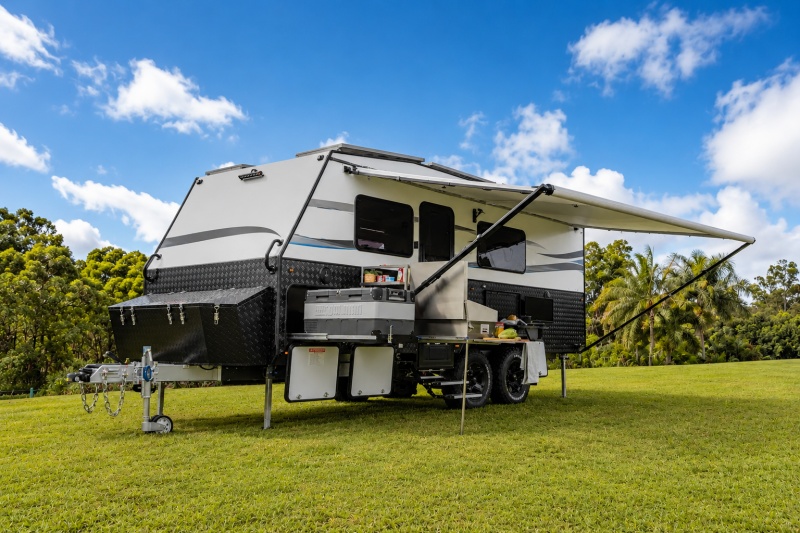
A caravan is not manufactured from one material.
Depending on its construction, different areas may involve:
Chassis materials
Structural framing
Exterior panels
Interior panels
Roof materials
Fasteners
Hinges
Brackets
Doors and windows
Underbody components
Each material performs a different function.
The purchasing question should therefore not simply be:
"Is this caravan made of aluminium or steel?"
A better question is:
"Which materials are used in each structural area, and why?"
The chassis operates close to the road surface and may be exposed to:
Water
Mud
Gravel
Dust
Road debris
Repeated temperature changes
For off road applications, the chassis specification should consider both structural strength and surface protection.
Dealers should discuss:
Base material
Surface treatment
Welded areas
Exposed edges
Mounting points
Long-term inspection requirements
Corrosion protection is a system, not simply a layer of paint.
Protective coatings perform best when the underlying surface has been prepared appropriately.
A coating applied over poorly prepared material may not provide the expected durability.
Manufacturing quality therefore involves more than the final visible finish.
Dealers evaluating an OEM supplier should pay attention to the complete production process rather than judging corrosion resistance from exterior appearance alone.
Exterior caravan materials may need to provide a balance between:
Weight
Strength
Weather resistance
Appearance
Repairability
Thermal performance
No single material is automatically ideal for every caravan.
A lightweight exterior may help control vehicle mass, while the underlying structure still needs sufficient strength for the intended application.
The complete body system matters more than a single material specification.
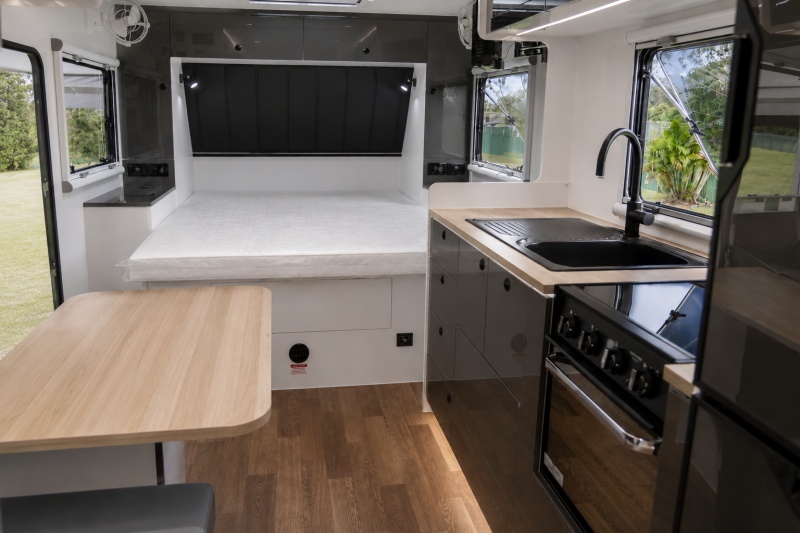
Dealers often request more equipment while simultaneously wanting a lower caravan weight.
These objectives can conflict.
Vehicle mass is influenced by:
Chassis
Body construction
Interior furniture
Batteries
Water tanks
Appliances
Suspension
Optional equipment
Material selection therefore forms part of overall weight planning.
A manufacturer should evaluate structural changes together with the complete caravan specification.
Bolts, screws, rivets and other fasteners may appear insignificant compared with the chassis or body panels.
But an off road caravan contains many connection points.
Fastener selection can depend on:
Material combination
Required strength
Exposure
Location
Serviceability
Dealers should also consider whether important service components can be removed without damaging surrounding structures.
When dissimilar metals are used together in the presence of an electrolyte such as moisture, galvanic corrosion can potentially occur under certain conditions.
The significance depends on:
Materials involved
Environment
Contact conditions
Protective measures
For manufacturers, this means material compatibility and isolation methods may need consideration in relevant areas.
For dealers, it is another reason why simply requesting "more aluminium" or "more stainless steel" is not a complete engineering specification.
Water ingress is one of the issues caravan dealers want to minimize.
Potential entry areas may include:
Roof joints
Windows
Doors
Service openings
Exterior lights
Cable penetrations
Plumbing penetrations
Other body joints
Proper sealing helps protect not only occupants but also the internal structure and installed equipment.
A caravan roof may contain:
Air conditioner
Vent
Solar cable entry
Antenna
Other accessories
Every opening through the roof creates an area that requires appropriate installation and sealing.
For an OEM project, dealers should avoid unnecessary modifications after production where possible.
It is generally better to define roof-mounted equipment before manufacturing so the necessary installation points can be incorporated into the original build.
A caravan travelling regularly on rough roads experiences repeated vibration.
Over time, vibration can influence:
Fasteners
Plumbing connections
Electrical connections
Seals
Mounted equipment
This is why off road durability involves more than making individual components stronger.
Installation methods and component support also matter.
Depending on the caravan design, the underside may contain:
Water tanks
Pipes
Wiring
Structural members
Mechanical components
These areas may encounter gravel, water and road debris.
For remote-road applications, dealers should evaluate whether vulnerable components have appropriate positioning and protection.
Argentina includes different operating environments, and caravans may travel far beyond the dealer's original sales region.
Customers using caravans in humid or coastal environments may expose components to different corrosion conditions from customers operating primarily in dry inland areas.
Dealers should therefore tell the manufacturer where the products are expected to operate.
This can help determine whether particular materials or protective measures deserve additional attention.
This is not a realistic way to describe a complete caravan.
Different materials, components and operating environments behave differently over time.
Even corrosion-resistant materials and coatings require appropriate:
Design
Installation
Inspection
Maintenance
Dealers should be cautious about absolute claims such as "rust-proof forever."
A more useful objective is appropriate material selection and corrosion protection for the intended environment.
Customers should inspect areas exposed to:
Stone damage
Scratches
Moisture
Dirt
Road debris
Damage to protective coatings should not simply be ignored.
A dealer can improve long-term customer support by providing appropriate inspection and maintenance guidance for the specific product.
Before developing repeat orders, a dealer can pay attention to:
Chassis finish
Weld areas
Panel joints
Roof joints
Door sealing
Window sealing
Underbody components
Fastener installation
Plumbing penetrations
Electrical penetrations
These details often reveal more about manufacturing quality than decorative interior features.
Before confirming an OEM specification, dealers should ask:
What material is used for the chassis?
What corrosion-protection process is applied?
What materials are used in the body structure?
What exterior panel construction is used?
How are dissimilar materials managed where relevant?
How are roof openings sealed?
How are windows and doors sealed?
How are underbody components protected?
What fastener types are used in exposed areas?
Which areas require routine inspection?
Can the same material specifications be maintained for repeat orders?
How will requested OEM modifications affect weight and construction?
These questions provide a much better picture of long-term product quality.
LZM works with importers and dealers developing off road caravan specifications for different climates, roads and customer groups.
Body construction, chassis, electrical systems, water systems and interior layouts can be discussed together during OEM development.
Businesses comparing manufacturing platforms can explore the LZM Off Road Caravan Manufacturing Range.
Larger family caravans contain more equipment and living space, making weight management and body construction particularly important.
For an OEM 21ft project, dealers can consider body specifications together with:
Interior layout
Battery capacity
Water storage
Air conditioning
Suspension
Overall loaded weight
Review the 21ft Family Off Road Caravan for Dealer Programs.
If you are an Argentine importer or caravan dealer, useful information to provide includes:
Target customer group
Main operating regions
Expected road conditions
Preferred caravan size
Required equipment
Climate considerations
OEM branding requirements
Initial purchasing quantity
LZM can discuss these requirements as part of the complete manufacturing specification.
A caravan can look excellent when it leaves the factory. The more important question for a dealer is how the construction will perform after years of travel and environmental exposure.
Chassis protection, body materials, fasteners, sealing, underbody protection and manufacturing consistency all contribute to long-term durability.
For Argentine importers, evaluating these areas before placing repeat orders can help build a product range that is easier to maintain, support and sell over the long term.