Welcome: Laizhou Machinery Group



Professional certification is increasingly important in industries where employers need evidence that workers have specific technical knowledge or occupational skills.
But certification programs have an infrastructure problem.
Candidates may live or work far from an approved testing facility. Employers may also need to assess large numbers of workers during recruitment, project mobilization, or workforce-development programs.
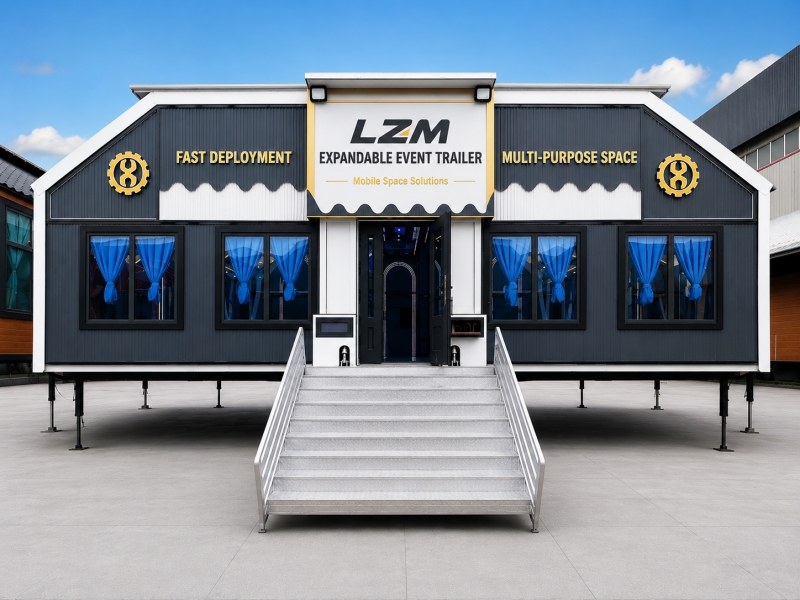
In Nairobi, Kenya, an expandable event trailer could be configured as a mobile professional certification and testing center, providing a controlled indoor environment for examinations and skills assessments at different approved locations.
Training and examination serve different purposes.
A classroom encourages discussion, instruction, and interaction. A professional testing facility needs greater control over seating, candidate identification, examination procedures, and supervision.
Depending on the certification program, the interior may include:
Candidate registration area
Identity verification desk
Waiting area
Individual testing stations
Invigilator workstation
Technical support area
Secure storage
Staff workspace
The layout should follow the examination process rather than a conventional teaching-room arrangement.
Many professional qualifications are now delivered through computer-based examinations.
A mobile testing facility may therefore require multiple workstations operating simultaneously.
Project planning should consider:
Number of computers
Monitor dimensions
Desk spacing
Network equipment
Internet requirements
Electrical outlets
Cable management
Backup power requirements
If 20, 30, or more candidates are testing at the same time, the combined electrical and network requirements become an important part of the technical design.
Professional examinations may require candidates to verify their identity before entering the testing area.
Depending on the examination provider, this could involve:
Document checks
Candidate registration
Photography
Digital verification
Personal-item storage
Admission procedures
Separating registration from the main examination area can help maintain an organized candidate flow.
The entrance process should be designed around the certification provider's operating procedures.
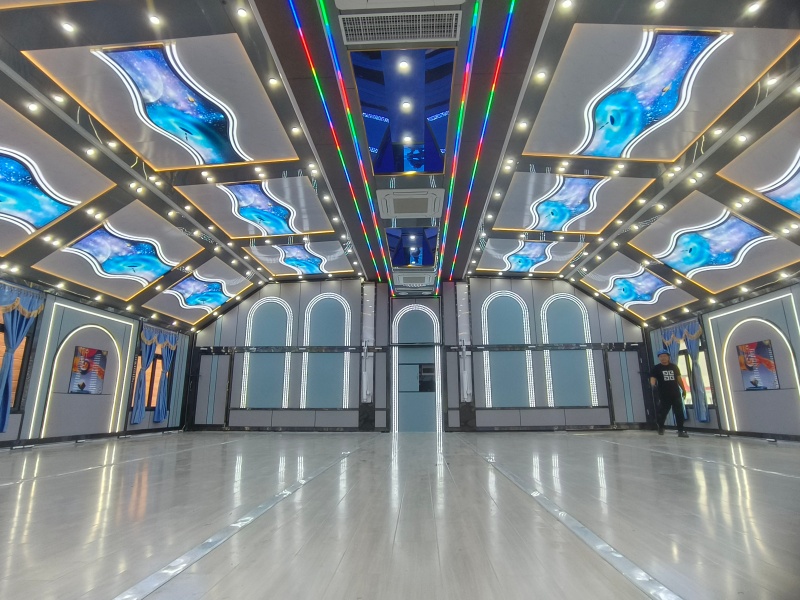
A certification organization operating in multiple locations needs more than available floor space.
It may need a consistent testing environment.
This can include:
Similar workstation arrangement
Controlled lighting
Suitable temperature
Low distraction levels
Reliable electrical supply
Consistent IT infrastructure
Using the same mobile facility across different locations may help the operator maintain a more standardized physical environment than repeatedly adapting unrelated temporary rooms.
Testing stations should be arranged according to the requirements of the examination being delivered.
Some programs may require physical separation between candidates or privacy screens.
The buyer should therefore define:
Number of simultaneous candidates
Required distance between workstations
Desk dimensions
Privacy requirements
Invigilator positions
Circulation routes
Maximum theoretical seating capacity should not override the examination provider's testing standards.
The potential application extends beyond public certification examinations.
Large employers and contractors may need temporary assessment infrastructure for:
Technical recruitment
Workforce mobilization
Trade qualification programs
Safety certification
Equipment-operator assessments
Corporate competency testing
A large construction, mining, logistics, manufacturing, or infrastructure project may need to assess many candidates during a relatively short period.
Creating another permanent testing center solely for that project may not always be necessary.
A permanent testing center depends on candidates traveling to one address.
A mobile facility creates another operating model.
The same center could potentially follow a scheduled program between cities or project locations.
For example, an operator might deploy the facility for one examination period, complete the scheduled assessments, and then relocate it to another approved site.
Potential operators could include:
Professional certification organizations
Vocational education providers
Examination companies
Large employers
Workforce development organizations
Government skills programs
Industry associations
The commercial value comes from reusing the same testing infrastructure across multiple examination programs.
A testing room filled with candidates and computers generates heat.
For projects in Nairobi and other markets, cooling and ventilation should therefore be evaluated according to:
Number of candidates
Number of computers
Trailer dimensions
Outdoor conditions
Operating hours
Lighting load
Electronic equipment
Comfort also matters because professional examinations may continue for several hours.
A short power interruption during a computer-based examination can create a much larger operational problem than it would during a normal meeting.
Depending on the testing program and site infrastructure, the operator may need to evaluate:
UPS systems
Backup power
Network redundancy
Emergency lighting
Data protection procedures
These systems should be determined according to the examination provider's requirements.
LZM can prepare the trailer's electrical configuration around the equipment information supplied by the buyer, while specialized testing and IT systems can be integrated according to the project plan.
Before selecting the trailer size and configuration, the buyer should prepare a clear testing specification.
Important information includes:
Number of candidates per session
Number of testing stations
Computer specifications
Desk dimensions
Network requirements
Internet requirements
Registration procedure
Privacy requirements
Electrical load
HVAC requirements
Expected relocation frequency
Certification rules, examination security, accessibility, electrical systems, fire safety, transportation, data protection, and other applicable requirements should be evaluated according to Kenyan and local project requirements.
Permanent examination centers remain appropriate where candidate demand is stable and concentrated.
Professional certification programs, workforce projects, and regional assessment campaigns can create a different requirement.
A mobile testing center allows an organization to reuse the same infrastructure for candidate registration, computer-based examinations, professional certification, and workforce assessment at different approved locations.
LZM develops customized expandable event trailers according to required capacity, interior layout, electrical systems, climate conditions, and individual education or commercial applications.
Explore the expandable platform for professional certification and workforce assessment projects:
Mobile Professional Certification & Testing Center