Welcome: Laizhou Machinery Group



Franchise expansion usually begins online. Potential partners download information, attend webinars, review investment requirements, and speak with development teams remotely.
But a franchise agreement is a significant business decision.
Before committing capital, prospective franchisees may want to meet the brand team, understand the operating model, examine products, discuss territory opportunities, and ask detailed financial and operational questions face to face.
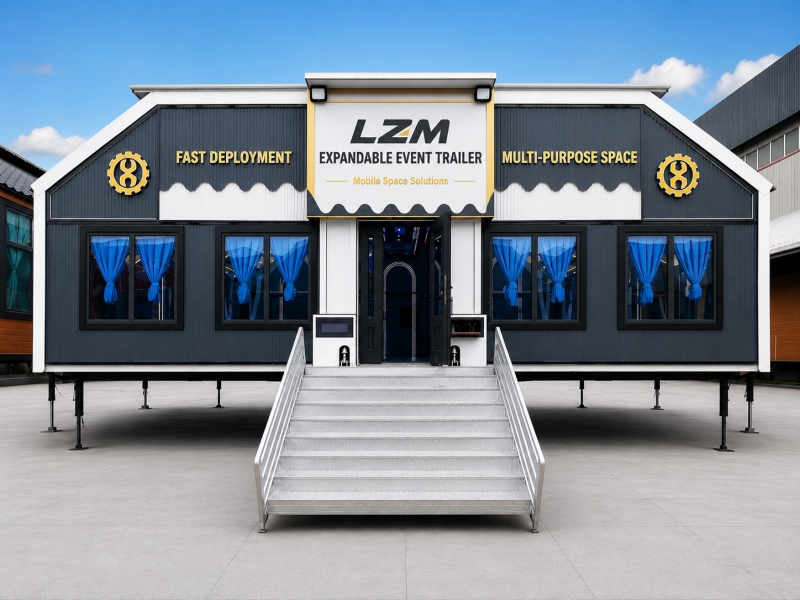
For franchise brands expanding across markets such as Texas, an expandable event trailer could be configured as a mobile franchise discovery center that travels between potential growth markets.
A consumer promotion may need to attract hundreds or thousands of visitors.
Franchise development usually focuses on a much smaller number of people—but each qualified visitor may represent a substantial business opportunity.
The facility therefore does not need to operate like a conventional exhibition booth.
Instead, it could provide areas for:
Brand introduction
Franchise model presentation
Product demonstrations
Investment discussions
Territory consultation
Private meetings
Application processing
Development-team workspace
The objective is not maximum visitor traffic. It is creating an environment where serious business conversations can take place.
Franchise brands often organize discovery days at their headquarters.
That works well for candidates already prepared to travel.
But a company entering a new state or region may want to meet potential partners closer to where the future locations will actually operate.
A mobile franchise center creates another possibility.
For example, the same facility could be deployed for a period in Houston and later moved to another target market as the expansion campaign develops.
This could be useful for brands recruiting franchisees across several regions rather than concentrating all development activity at corporate headquarters.
A franchise candidate rarely arrives, watches one presentation, and immediately signs an agreement.
The process may involve several stages.
A visitor could first enter a reception area, learn about the brand, review the business model, examine products or services, and then move into a private consultation.
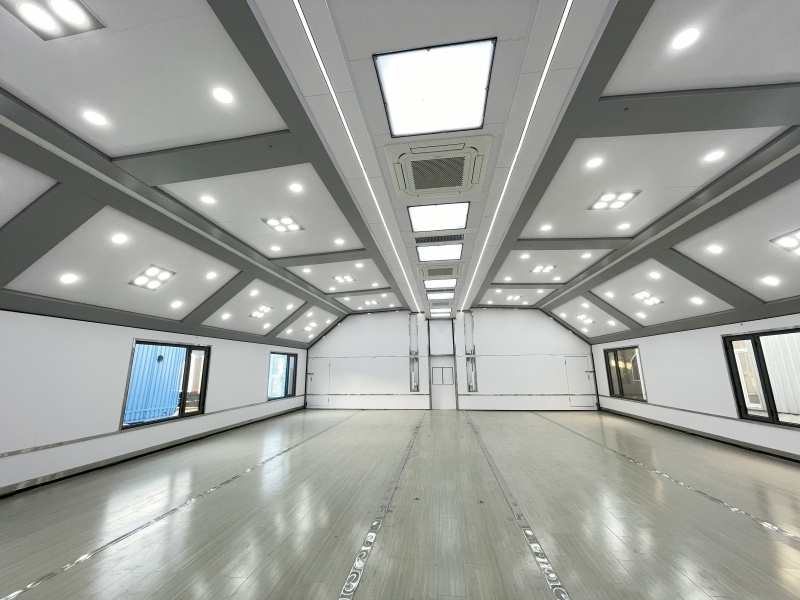
An interior layout might therefore include:
Reception desk
Brand presentation area
Large display screens
Product or service demonstration zone
Consultation tables
Private meeting rooms
Staff office area
Separating presentation from private discussion can make the facility more useful for serious franchise development conversations.
A restaurant franchise and a home-service franchise do not sell the same business model.
The interior configuration should reflect what potential partners need to understand.
A food-service brand may want to demonstrate:
Menu concepts
Equipment
Packaging
Service workflow
A retail franchise may emphasize:
Product displays
Store design
Merchandising
Point-of-sale systems
A service franchise may rely more heavily on digital presentations, operational demonstrations, and consultation space.
For this reason, the expandable interior should be planned around the franchise concept rather than treated as a standard exhibition layout.
Franchise discussions may involve investment ranges, territories, operating costs, financing, business experience, and development schedules.
These conversations are different from general visitor enquiries.
Private meeting rooms or separated consultation areas may therefore be valuable.
For this application, usable business-meeting space may matter more than maximizing total occupancy.
The number of rooms can be determined according to how many development managers and prospective franchisees are expected to meet simultaneously.
Franchise development teams frequently use digital materials to explain the business.
A mobile discovery center may therefore need:
Large screens
Computers
Internet connectivity
Video presentations
Financial presentation displays
Digital application systems
Charging points
Electrical connections, screen positions, network equipment, and cable routing should be considered during the design stage.
Video conferencing equipment could also allow specialists at corporate headquarters to participate in meetings remotely.
The commercial logic of this application depends heavily on reuse.
A franchise brand may be targeting several markets during the same expansion program.
Instead of establishing a temporary office in every city, the company could potentially move the same facility according to its development schedule.
For example:
Houston → Dallas → Atlanta → another target market
The exterior branding and interior presentation could remain consistent while the franchise-development team changes location.
This makes the trailer part of a regional business-development strategy rather than simply a temporary event venue.
Potential operators could include:
Restaurant franchise groups
Retail franchise brands
Fitness franchise companies
Home-service franchises
Education franchise companies
Automotive service brands
Franchise development agencies
Multi-brand franchise groups
A company managing several franchise concepts could potentially rebrand the facility for different recruitment campaigns.
Before selecting the trailer size and configuration, the buyer should explain how the franchise recruitment process will operate.
Useful project information includes:
Expected visitors per session
Number of development staff
Number of private meeting rooms
Presentation requirements
Product demonstration requirements
Display-screen requirements
Internet and IT requirements
HVAC requirements
Frequency of relocation
Transportation, electrical, fire-safety, accessibility, public-occupancy, signage, and other applicable requirements should be evaluated according to local standards and the final operating location.
Online lead generation can identify potential franchise partners, but major business decisions often still benefit from direct interaction.
A mobile franchise discovery center could give brands a reusable environment for presentations, demonstrations, private consultations, and franchise-development meetings while allowing the facility to follow expansion into different markets.
For franchise organizations operating in Houston and other cities, an expandable event trailer can be configured around the brand's recruitment process, presentation requirements, meeting capacity, technology, and operating model.
LZM develops customized expandable event trailers according to individual commercial applications and project requirements.
Explore the expandable platform for franchise development and business-partner recruitment projects:
Mobile Franchise Discovery & Business Partner Center