Welcome: Laizhou Machinery Group



Animal shelters and rescue organizations often need to take adoption programs beyond their permanent facilities.
Shopping centers, community events, parks, pet exhibitions, and public campaigns can introduce adoptable animals to many more potential families. But temporary adoption events also create practical problems: animals need appropriate space, staff need somewhere to talk with applicants, and visitors need an organized environment where they can meet animals without creating unnecessary stress.
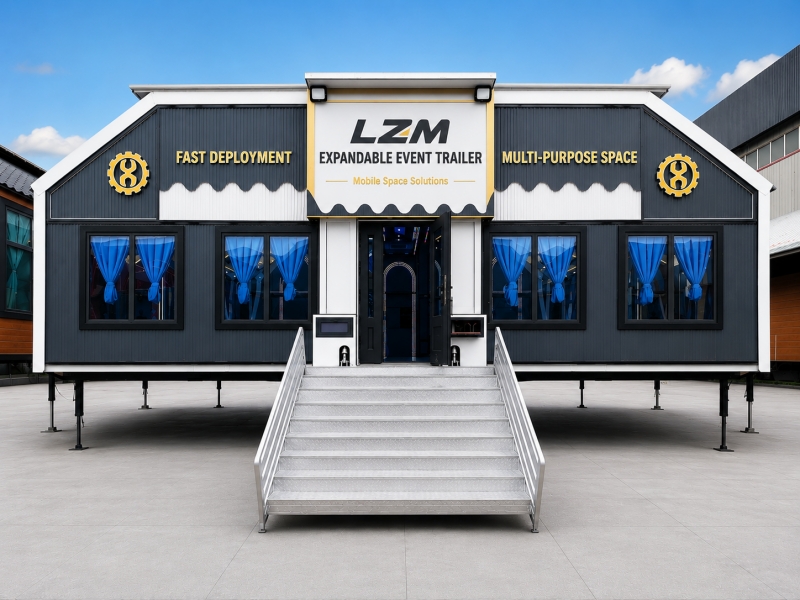
In Bogotá, Colombia, an expandable event trailer could be configured as a mobile pet adoption center for shelters, rescue organizations, and community animal-welfare programs.
A successful adoption event is not simply about putting dogs or cats where people can see them.
Potential adopters may need time to:
Meet individual animals
Speak with rescue staff
Review adoption requirements
Complete applications
Discuss animal behavior
Learn about feeding and care
Arrange follow-up procedures
The facility therefore needs to support both animal interaction and the administrative side of adoption.
Animals, visitors, staff, and paperwork do not necessarily belong in one large open area.
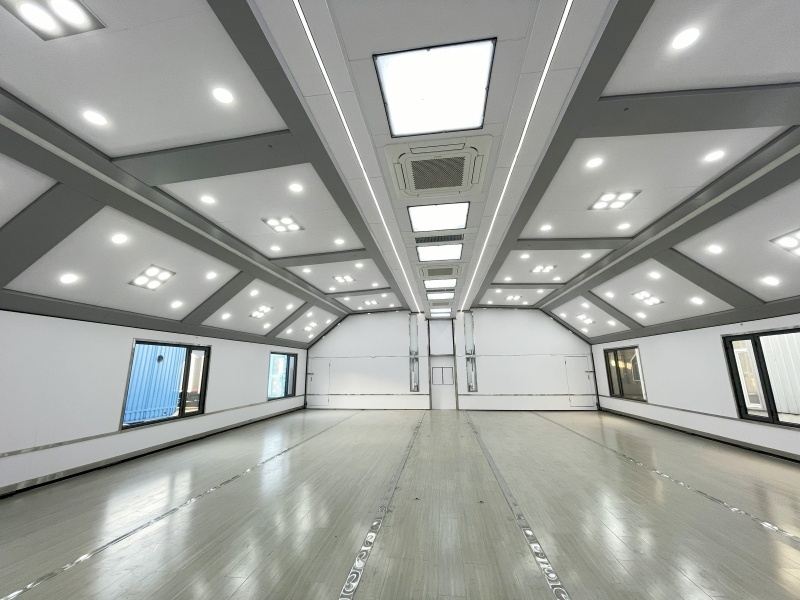
Depending on the organization and the type of animals involved, the expandable interior could be divided into several functional zones.
These might include:
Visitor reception
Animal introduction area
Individual meeting spaces
Adoption consultation tables
Application processing area
Staff workspace
Food and equipment storage
The layout should be developed according to the expected number and type of animals rather than using a standard event configuration.
An animal adoption facility has requirements that a conventional commercial event space does not.
Temperature, ventilation, noise, cleaning, and separation between animals can directly affect how the facility operates.
Buyers may need to consider:
Ventilation
Air conditioning
Washable interior surfaces
Non-slip flooring
Noise management
Animal separation
Cleaning access
Waste handling
The appropriate configuration depends on whether the facility primarily serves dogs, cats, smaller animals, or a combination.
Outdoor adoption events are easy to organize in good weather, but conditions can change.
Heat, rain, direct sunlight, noise, and crowded public environments may make longer events more difficult for both animals and staff.
An enclosed climate-controlled space provides another option.
Visitors can enter in smaller groups, staff can manage interactions more systematically, and animals can remain in a more controlled environment.
The objective is not to replace outdoor adoption activities but to provide additional infrastructure where a more controlled space is useful.
Adopting an animal often involves more discussion than visitors initially expect.
Staff may ask about:
Home environment
Existing pets
Family members
Previous pet ownership
Daily routine
Animal-care expectations
Some organizations also conduct interviews before approving an adoption.
A mobile adoption center can provide dedicated consultation areas instead of requiring these discussions to take place in the middle of a crowded public event.
A mobile animal facility does not necessarily need to be used only for adoption days.
Depending on the organization and interior configuration, it could also support:
Pet-care education
Animal-welfare campaigns
Volunteer recruitment
Responsible ownership programs
Donation campaigns
Community information events
For rescue organizations, this can improve utilization of the facility between major adoption events.
A permanent shelter serves people who already know where to find it.
A mobile facility can take adoption programs closer to communities where potential adopters already spend their time.
Possible locations may include:
Shopping destinations
Community events
Pet exhibitions
Public campaigns
Residential developments
Corporate events
For organizations covering a large geographic area, the same facility could potentially operate in several communities according to an adoption-event schedule.
Before selecting a trailer size and interior layout, the organization should define how the adoption program will operate.
Important project information includes:
Type of animals
Maximum number of animals
Expected visitor volume
Required animal separation
Consultation areas
Ventilation requirements
HVAC requirements
Cleaning requirements
Storage needs
Water requirements
Animal-welfare, sanitation, electrical, accessibility, fire-safety, transportation, and other applicable requirements should be evaluated according to Colombian and local regulations.
Permanent shelters remain essential for animal rescue organizations, but they do not have to be the only place where adoption takes place.
A mobile pet adoption center can provide a reusable environment for animal introductions, family consultations, adoption processing, education, and community outreach at different locations.
For shelters and animal-welfare organizations in Bogotá and other markets, an expandable event trailer can be configured around animal capacity, visitor flow, ventilation, cleaning, climate control, and staff requirements.
LZM develops customized expandable event trailers according to the operating needs of different commercial, educational, hospitality, and public-service projects.
Explore the expandable platform for animal adoption and community outreach projects:
Mobile Pet Adoption & Community Outreach Center