Welcome: Laizhou Machinery Group



Dubai is one of the world's major international aviation and business destinations. But not every passenger operation requires—or has immediate access to—another permanent terminal or hospitality facility.
Private aviation, charter flights, major international events, government delegations, sports teams, and temporary aviation operations can create demand for additional premium passenger space for a limited period or at a specific location.
An expandable event trailer can be configured as a mobile VIP hospitality lounge, providing a larger enclosed environment after deployment for passenger reception, waiting, private meetings, and support services.
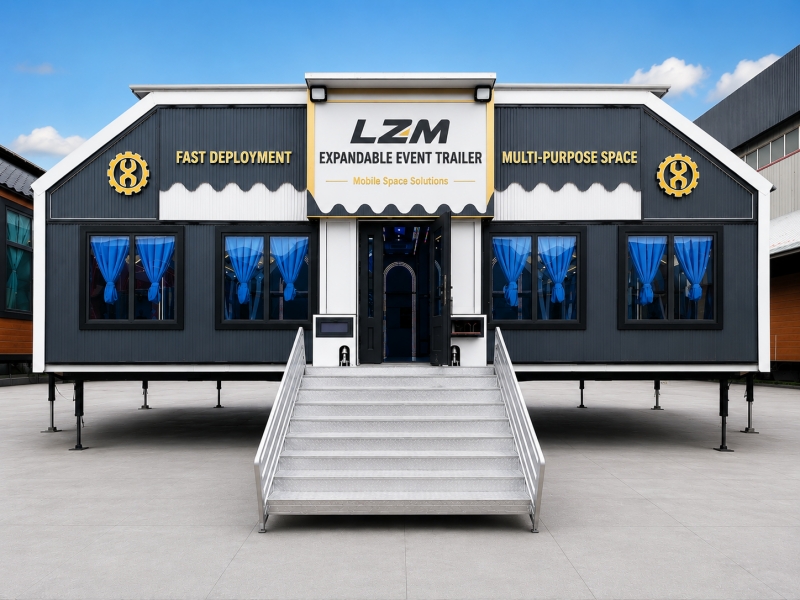
Premium passengers generally expect a different experience from a standard terminal waiting area.
Depending on the intended operation, the interior could include:
Reception area
Lounge seating
Private meeting rooms
Refreshment area
Flight information displays
Charging points
Staff workspace
Luggage holding area
The interior should be designed around the passenger journey rather than simply maximizing seating capacity.
A private aviation company serving small groups, for example, may prioritize privacy and interior quality. A temporary hospitality operation handling larger delegations may require more circulation and reception space.
Business aviation and charter operations do not always follow the same passenger flow as scheduled commercial flights.
A temporary mobile lounge could be considered for applications involving:
Private jet passengers
Charter flights
Corporate aviation
Sports teams
Entertainment groups
Government delegations
VIP event guests
For Dubai, this type of facility could also be relevant when temporary aviation demand is associated with major exhibitions, sporting events, conferences, or international business activities.
The deployment location would need to be coordinated with the airport operator and relevant local authorities.
Large international events can change aviation demand significantly for several days or weeks.
The challenge is that the additional requirement may disappear after the event.
Constructing permanent passenger infrastructure specifically for occasional peaks may therefore not always be commercially justified.
A reusable expandable facility introduces another possibility.
The same mobile hospitality space could potentially support one temporary aviation program and later be relocated or reconfigured for another project.
For premium aviation applications, capacity is not necessarily the most important consideration.
Passengers may need separate spaces for:
Business discussions
Private waiting
Family groups
Security coordination
Staff communication
Individual passenger services
Interior partitions can be incorporated according to the operating model.
A smaller number of well-planned private areas may sometimes be more valuable than maximizing the number of seats.
Acoustic treatment can also be considered where confidential meetings or several passenger groups may use the facility simultaneously.
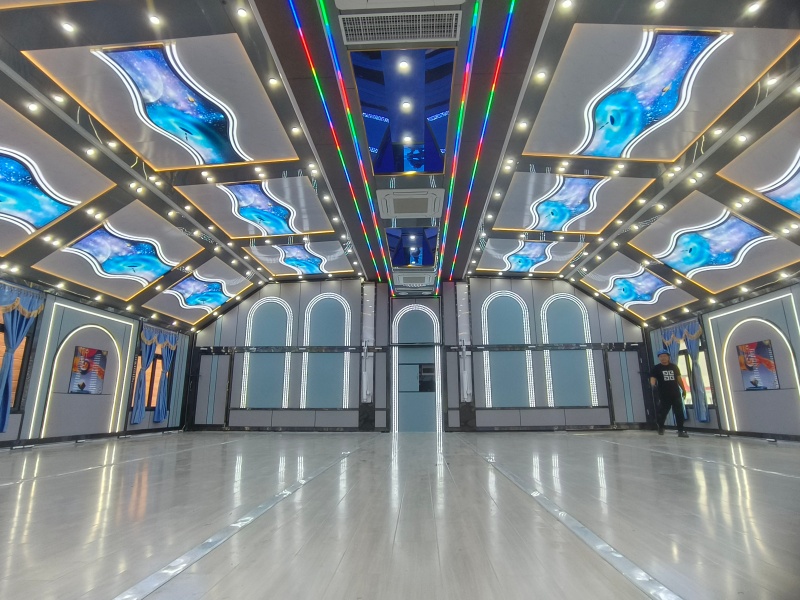
A VIP aviation lounge is fundamentally a hospitality environment.
Depending on the project positioning, the interior may include:
Premium lounge furniture
Decorative ceiling systems
Ambient lighting
High-quality flooring
Large display screens
Refreshment counters
Branded wall panels
Private consultation areas
The objective is not to disguise the fact that the facility is mobile. It is to create an interior appropriate for the level of passenger service expected.
A mobile VIP lounge operating in Dubai requires careful consideration of cooling.
Outdoor temperature, solar exposure, frequent door opening, passenger numbers, lighting, and electronic equipment can all increase the cooling load.
HVAC planning should therefore consider:
Trailer dimensions
Maximum passenger capacity
Number of staff
Outdoor operating conditions
Electronic equipment load
Operating hours
Entrance configuration
Climate-control capacity should be determined according to the actual project rather than treated as a standard specification for every market.
Insulation and ventilation are also important parts of the overall system.
Business and VIP passengers may continue working while waiting for a flight.
A mobile aviation lounge may therefore require infrastructure for:
Wi-Fi equipment
Charging points
Computers
Flight information screens
Television displays
Security equipment
Communication systems
Lighting and HVAC
Electrical capacity, outlet positions, cable routing, and network equipment locations should be planned before the interior is completed.
A mobile structure cannot simply be delivered to an airport and placed wherever space is available.
Airport environments can involve strict requirements covering:
Controlled-area access
Security
Fire safety
Emergency exits
Passenger circulation
Accessibility
Electrical systems
Service vehicle movement
Installation location
Applicable UAE requirements and the individual airport's operating rules should be evaluated before the final configuration is confirmed.
For projects located inside restricted aviation areas, coordination with the airport operator becomes particularly important.
A mobile VIP lounge could potentially be operated by several types of organizations:
Airport operators
Private aviation companies
FBO operators
Charter companies
Aviation service providers
Event aviation contractors
Corporate flight departments
Hospitality service companies
This distinction matters because each buyer may have a different operating model.
An FBO may want a premium facility used repeatedly, while an event contractor may prioritize relocation between temporary projects.
Permanent lounges remain the appropriate choice where passenger demand is stable and long-term.
Temporary aviation programs, special events, private flights, and changing passenger volumes create a different requirement.
For these applications, an expandable event trailer can provide configurable indoor space for VIP reception, passenger waiting, private meetings, refreshments, and aviation support operations, while retaining the possibility of relocation for future projects.
LZM develops expandable event trailers according to passenger capacity, interior layout, electrical requirements, HVAC demand, branding, and individual commercial applications.
Explore the expandable platform for private aviation and VIP passenger hospitality projects:
Mobile Airport VIP Hospitality Lounge