Welcome: Laizhou Machinery Group



A wedding venue can look beautiful to the human eye and still look disappointing in photographs.
This is an important distinction for modern wedding businesses.
Today, almost every wedding is documented through:
Professional photography
Wedding films
Smartphone videos
Social media
Livestreaming
The images created during one wedding can then become marketing material for the venue itself.
For a hotel, wedding venue operator or event rental company, lighting therefore has two jobs:
Create the right atmosphere for guests.
And:
Create an environment that photographs and records well.
For an expandable wedding event trailer, these requirements should be considered during the original electrical and interior design—not after the venue has already been manufactured.
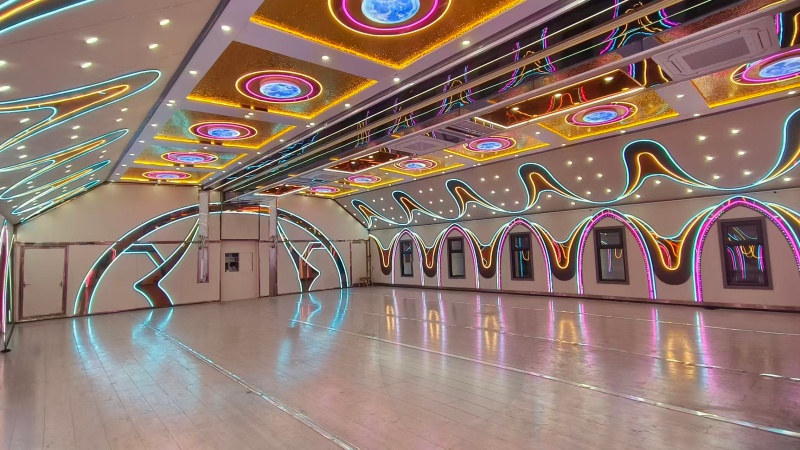
When buyers discuss a luxury mobile wedding venue, chandeliers are usually one of the first decorative requests.
They are important.
But a chandelier alone does not create a complete lighting design.
A banquet venue may require several lighting layers:
General illumination
Decorative lighting
Table lighting
Accent lighting
Entrance lighting
Dance-floor lighting
Photography-friendly lighting
Cleaning and setup lighting
Different parts of the wedding need different conditions.
A single lighting system operating at one fixed brightness cannot easily provide all of them.
Consider a typical wedding schedule.
Guests arrive while natural daylight may still be strong.
The venue needs comfortable, elegant banquet lighting.
Attention shifts toward the couple or presentation area.
The atmosphere becomes more dramatic.
DJ and entertainment lighting may dominate.
Staff need much brighter practical illumination.
The venue itself has not moved.
But its lighting requirements have changed several times.
A flexible system should support these transitions.
Buyers sometimes ask only:
“How many lights are included?”
A better question is:
How controllable is the lighting?
A banquet hall that is bright enough for cleaning may be far too bright for an evening reception.
Dimming allows the operator to adjust the same venue for different phases of the event.
For rental businesses, it also makes the trailer more adaptable to different customers.
Lighting that appears technically “white” can still produce very different visual effects.
Warmer light tends to create a softer atmosphere commonly associated with:
Weddings
Banquets
Hospitality
Cooler lighting may feel more appropriate for:
Exhibitions
Corporate presentations
Product displays
A multi-purpose expandable venue may therefore benefit from lighting that can support different event environments.
The exact specification should be selected according to the equipment and project design.
Professional cameras can reveal differences that guests barely notice.
For example, one section of the room may appear warm while another appears much cooler.
This can make:
Skin tones
Wedding dresses
Decorations
look inconsistent in photographs.
Using a coordinated lighting plan helps create a more predictable visual environment for photographers.
Wedding photography centers on people.
The venue may contain:
Gold decorations
Flowers
LED screens
Colored lights
but the bride, groom and guests remain the main subjects.
Poor lighting can make faces look:
Too orange
Too green
Too blue
Unevenly illuminated
A camera-friendly venue should therefore avoid relying entirely on highly saturated decorative lighting.
Photographers often bring their own:
Flash
Video lights
Portable lighting
but the permanent venue lighting still affects the background and overall scene.
Good-quality lighting can improve:
Skin appearance
Interior photographs
Video recording
while reducing the amount of corrective work needed later.
For a premium venue, this can become part of the customer experience.
A chandelier may be the visual centerpiece of a wedding hall.
But buyers should decide what role it plays.
Is it primarily:
Decoration?
Or does it also provide significant general illumination?
If the entire venue depends on one large decorative fixture, lighting may become uneven.
A better design may combine chandeliers with other integrated light sources.
This allows the chandelier to provide atmosphere without carrying the entire lighting requirement.
The size and hanging height of a chandelier should be coordinated with the finished clear height.
A chandelier that is too large or hangs too low can:
Visually compress the room
Interfere with decorations
Enter camera frames awkwardly
The relationship between:
Ceiling Height + Chandelier Size + Table Layout
should be reviewed before production.
Guests need enough light to:
See food
Read menus
Talk comfortably
but strong overhead lighting can destroy the evening atmosphere.
Banquet lighting therefore needs a balance between:
Visibility and ambience.
This is one reason multiple lighting zones are useful.
The operator can reduce general brightness while maintaining adequate illumination where necessary.
Many weddings create a visual focal point around:
Bride and groom table
Sweetheart table
Main backdrop
This area appears in a large percentage of event photographs.
The lighting should therefore support:
Faces
Flowers
Backdrop
Video recording
without creating excessive glare.
Planning the main photography zone before finalizing electrical points can improve the result.
Large glass walls can make an expandable wedding venue look spectacular.
But they also introduce a photography challenge.
If the couple sits directly in front of extremely bright exterior daylight, cameras may struggle to expose both:
People
Background
correctly.
Photographers can compensate, but venue planning can reduce the problem.
The orientation of:
Main table
Ceremony backdrop
Photography area
should consider natural light direction.
A glass façade may provide beautiful daylight during an afternoon event.
Several hours later, that same glass becomes dark and reflective.
The venue therefore needs to work in two environments:
Daylight Mode
and
Night Mode.
Lighting design should consider both.
A daytime rendering alone does not show what the venue will feel like during a late-night reception.
Natural light can produce beautiful wedding photographs.
It can also introduce:
Glare
Strong contrast
Heat gain
depending on orientation and climate.
Curtains, shades or other suitable treatments may provide more control where required.
These elements can also change the visual style of the venue.
Curtains are often treated purely as decoration.
They can also influence:
Natural light
Reflections
Photography backgrounds
Interior atmosphere
A neutral curtain system can help the venue adapt between different wedding styles.
For rental operators, flexibility is especially useful.
Large LED screens are increasingly common in wedding venues.
They may show:
Couple photographs
Videos
Live camera feeds
Names
Visual backgrounds
But an LED screen that is too bright can dominate the entire room.
It may also make photographing people nearby more difficult.
The screen brightness should be adjustable for the indoor environment.
A bright white slide behind the couple creates a very different camera exposure from a dark romantic video.
Venue operators should consider what content will be displayed during:
Speeches
Couple entrance
First dance
especially if the screen forms part of the main stage or backdrop.
Lighting and digital content should work together.
Some lighting or display equipment can appear stable to the human eye but produce flicker or banding on cameras.
This becomes particularly relevant for:
Wedding films
Livestreams
Slow-motion video
The actual result depends on equipment and camera settings.
For venues expecting frequent professional video production, installed lighting and display equipment should be selected with video use in mind.
Colored lighting can completely change a wedding venue.
It is useful for:
Dance floor
Evening party
Accent walls
But covering the entire banquet hall in strong purple or blue light may make photography more difficult.
A better approach is often to preserve relatively flattering light on people while using stronger colors as accents.
Instead of controlling the entire venue as one circuit, buyers can consider several functional zones.
For example:
General guest lighting.
Focused lighting.
Entertainment lighting.
Arrival and exterior presentation.
Functional staff lighting.
This allows the venue to change atmosphere without turning every light on or off together.
A venue operator may develop several standard lighting scenes.
For example:
Guest Arrival
Bright, welcoming entrance with comfortable interior lighting.
Dinner
Warm banquet atmosphere.
Speech
Lower room lighting with emphasis on the presentation area.
First Dance
Reduced general lighting and stronger decorative effect.
Party
Entertainment lighting.
Cleaning
Maximum practical illumination.
Staff can then move between known settings rather than manually adjusting every fixture.
An expandable wedding trailer may also be rented for:
Conferences
Annual dinners
Awards
Product presentations
Corporate users often need:
Brighter presentation areas
Clearer video
Neutral white lighting
A flexible lighting system helps the same venue support both wedding and corporate demand.
This increases asset utilization for commercial rental companies.
Brand activation clients may care strongly about exact brand colors.
Lighting can support the campaign through:
Accent colors
illuminated graphics
LED content
But permanent interior lighting should remain sufficiently versatile for the next customer.
For a multi-client rental business, flexibility is more valuable than designing the entire system around one brand.
Lighting alone cannot create good images if photographers have nowhere to work.
Large weddings may involve:
Photographer
Videographer
Assistant
Camera equipment
They need circulation around:
Couple seating
Dance floor
Entrance
When every meter of floor space is filled with tables, camera angles become limited.
Photography requirements should therefore influence layout as well as lighting.
The first dance is one of the most photographed moments of a wedding.
Guests want to see it.
Photographers need to capture it.
The lighting needs to highlight it.
A dance floor hidden behind:
Columns
Screens
Decorations
will be difficult to photograph effectively.
For weddings, the dance floor should be treated as an important visual zone.
Large hanging flowers or fabric may look impressive.
But they can block permanent ceiling lights and create unexpected dark areas.
Wedding planners should know where the main light fixtures are before installing overhead decoration.
For rental businesses, a simple ceiling diagram can help decorators work around:
Lights
HVAC outlets
Sensors
Other technical equipment
Modern photography and video teams may need power for:
Chargers
Lights
Monitors
Livestream equipment
Appropriately located outlets can reduce the need for long cables crossing guest areas.
The venue operator should establish approved connection points rather than allowing suppliers to plug equipment into random circuits.
A wedding production company may arrive with additional:
Moving lights
DJ equipment
Video equipment
These loads should be considered when planning the electrical system.
The buyer should tell the manufacturer what kinds of events the venue will normally support.
A basic banquet lighting system and a full production setup can have very different power requirements.
A sophisticated system has little value if staff cannot use it reliably.
The operator should be able to understand:
Main controls
Dimming
Lighting zones
Preset scenes
without requiring a specialist programmer before every wedding.
For frequently rented venues, simple operation has significant value.
Lighting and AV controls should ideally be located where authorized staff can access them without guests accidentally changing settings.
This becomes particularly important during:
Children's events
Large parties
Open corporate functions
Commercial operation should influence the control layout.
Many couples want an evening photograph showing the complete venue.
A dark trailer with one bright doorway may not create the desired image.
Exterior architectural lighting can help reveal:
Venue shape
Entrance
Glass
Surrounding event space
and improve nighttime photography.
The exterior should therefore be considered as part of the complete lighting concept.
Expandable trailers have strong functional requirements.
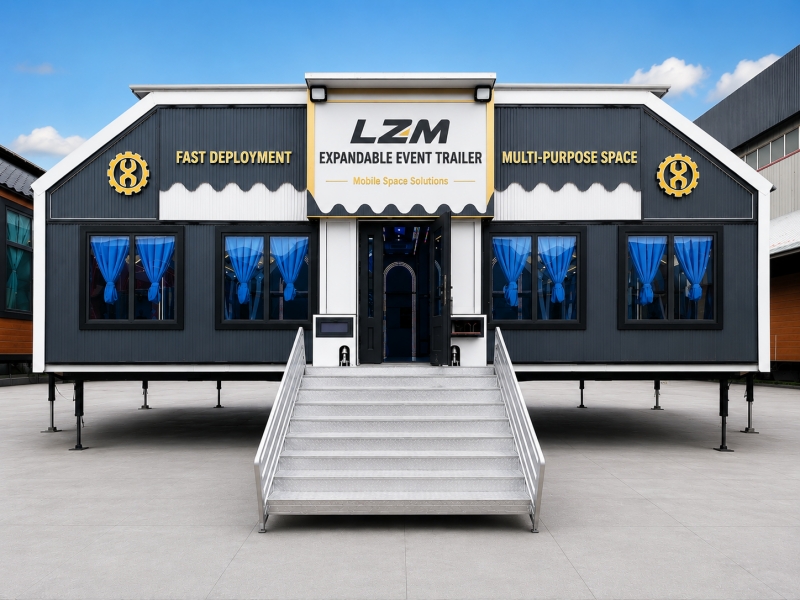
Good lighting can visually reduce the industrial impression of the structure.
For example, lighting can emphasize:
Glass façades
Clean structural lines
Entrance features
rather than focusing attention on technical components.
This is particularly useful for premium wedding applications.
The goal does not have to be pretending the structure is a permanent building.
Modern couples may actually appreciate a venue that looks:
Contemporary
Modular
Different
from a traditional hotel ballroom.
Lighting can highlight the unique architecture while still creating a luxury experience.
Every successful wedding creates content.
The venue operator may receive photographs showing:
Interior
Couple
Decoration
Exterior
These images can later be used on:
Website
Wedding directories
Sales presentations
A photogenic venue therefore helps generate its own future marketing material.
A potential customer may never visit the venue before making the initial inquiry.
They first see photographs online.
If those photographs show:
Dark corners
Strange colors
Harsh lighting
the venue may appear less premium than it actually is.
For wedding businesses, good lighting can therefore contribute indirectly to lead generation.
If the permanent lighting is extremely stylized, every wedding inherits that style.
A more neutral base allows planners to create:
Classic white wedding
Warm romantic wedding
Modern luxury wedding
Color-themed celebration
using temporary decorative elements.
This increases the venue's ability to serve different customers.
A commercial venue may host many events.
Eventually:
Lights fail
drivers need replacement
controls require service
Access should be considered during design.
A fixture that is almost impossible to reach can increase downtime and maintenance cost.
If the venue uses specialized decorative lighting, the operator may consider keeping suitable spare components.
Years later, replacing one failed fixture with a visibly different model can affect the interior appearance.
Standardization can simplify long-term maintenance.
A permanently installed ballroom does not travel over roads.
An expandable event trailer may.
Fixtures therefore need to tolerate the intended transport environment.
Heavy decorative elements may need:
Secure mounting
Transport restraints
Removal before travel
depending on the design.
The event configuration and transport configuration must both be considered.
Renderings are useful for evaluating atmosphere.
But they do not tell buyers:
Fixture specifications
Dimming capability
Lighting zones
Control method
Electrical load
Before production, the buyer should move from visual concept to technical lighting plan.
Both are necessary.
Wedding buyers do not need to speak like lighting engineers.
They can provide:
Venue photographs
Pinterest-style references
Interior examples
and explain:
“We want this kind of atmosphere.”
The manufacturer can then discuss how the trailer's:
Ceiling
lighting
electrical system
may support that concept.
Real equipment information should be confirmed before final production.
For a venue expected to host many premium weddings, an experienced local photographer can offer useful insight.
They may immediately notice:
Poor main-table orientation
Difficult backlighting
Insufficient dance-floor illumination
Problematic LED screen location
A short review before production can prevent years of repeated photography problems.
Before commercial launch, do not only stand inside and say:
“It looks good.”
Take:
Photographs
Video
Smartphone footage
under different lighting scenes.
Test:
Main table
Dance floor
Entrance
Wide room shots
This can reveal problems that are difficult to identify with the eye alone.
Once the venue has been tested, the operator can establish a reliable starting point.
The wedding planner can still customize it.
But staff already know which settings work well for:
Guest arrival
Dinner
Speeches
Photography
This makes event operation more consistent.
Before ordering an expandable wedding venue, define:
Will the venue mainly host weddings or multiple event types?
Are chandeliers required?
What finished ceiling height is planned?
Where will the couple normally sit?
Where is the dance floor?
Will large LED screens be installed?
Does the venue use significant glass?
Are dimming and multiple lighting zones required?
Will corporate events also use the venue?
What additional lighting equipment will DJs or production companies bring?
Are exterior and entrance lighting required?
Which fixtures remain installed during transport?
How will lighting components be serviced?
These answers influence both the interior and electrical design.
This may sound exaggerated, but modern weddings are effectively temporary media productions.
During one event there may be:
Professional photography
Multiple video cameras
Guest smartphones
Social-media content
The venue appears in thousands of images.
That changes the value of good lighting.
For a commercial wedding operator, the objective is no longer simply:
Make the hall look attractive while guests are inside.
It is also:
Make the hall continue to look attractive when the wedding is remembered, shared and marketed through images.
A successful expandable wedding venue therefore combines:
Atmosphere + Guest Comfort + Camera-Friendly Lighting + Flexible Controls + Practical Maintenance.
LZM expandable event trailers can be customized for weddings, mobile banquet halls, hotels, resorts and event rental businesses, including different interior layouts, lighting systems, glass configurations and AV requirements according to the project.
For premium wedding projects, lighting should be planned together with the ceiling, tables, dance floor, screens and photography zones—not selected as a final decorative accessory.
Explore Expandable Wedding & Banquet Event Trailer Configurations