Welcome: Laizhou Machinery Group



Searching for an expandable event trailer manufacturer in China is easy.
Choosing the right manufacturer is much harder.
A buyer can search online and quickly find suppliers showing:
Large expandable trailers
Luxury wedding interiors
Hydraulic expansion
LED screens
Glass walls
Attractive renderings
Prices may also vary dramatically.
One supplier may quote a relatively low figure.
Another may quote substantially more for what appears, from a few photographs, to be a similar trailer.
So how should an international buyer compare them?
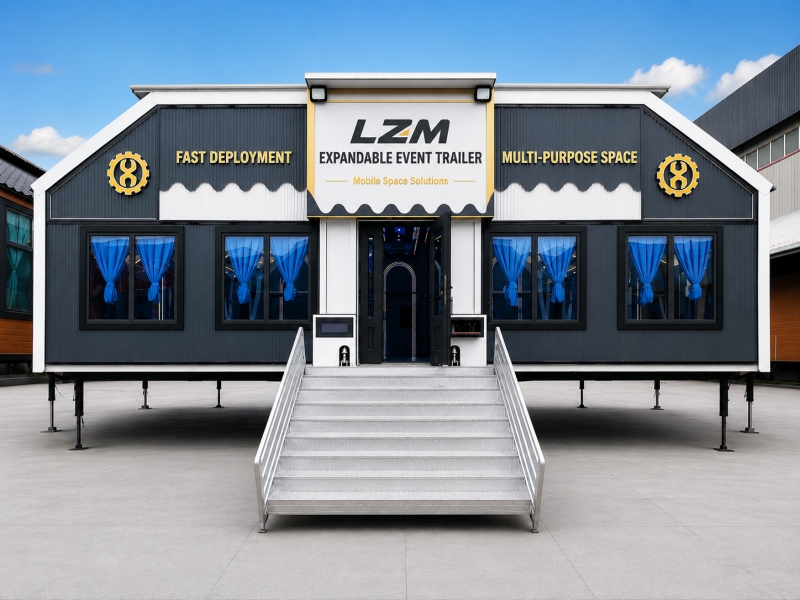
The answer is not simply:
Choose the lowest price.
An expandable event trailer is a customized combination of:
Steel Structure + Hydraulic System + Chassis + Electrical System + HVAC + Interior Construction + Road Transport Engineering.
For large commercial models, mistakes can become expensive after the trailer arrives overseas.
The more useful question is therefore:
Can this supplier design, manufacture, test and support the exact trailer required for my market and application?
An expandable event trailer is not a standard container with decorative walls.
During transport, the structure must remain compact enough for movement.
At the destination, it may expand into a venue many times wider than its road configuration.
The same structure therefore needs to perform in two completely different states:
Compact, structurally secure and suitable for road or shipping movement.
Expanded, level, weather-protected and suitable for occupied commercial use.
This makes the engineering more complex than it may appear in photographs.
Many buyers begin by looking at:
Chandeliers
Flooring
Furniture
Wall panels
These are important for a wedding or hospitality venue.
But they tell you very little about:
Structural engineering
Hydraulic reliability
Weight distribution
Expansion alignment
Weather sealing
Electrical design
A supplier can create an attractive showroom interior without necessarily having strong engineering capability.
The buyer needs to look behind the decoration.
Do not evaluate the product only from fully expanded photographs.
Ask for:
Closed transport configuration
Expansion process
Fully deployed configuration
This helps you understand whether the supplier is showing a real functioning trailer rather than only a finished interior.
Real operating videos can be particularly useful.
A factory video can reveal information that catalog photographs cannot.
Look for:
Steel frames under fabrication
Hydraulic components
Expandable sections
Electrical installation
Interior finishing
Completed trailers
Units currently under production
A supplier with genuine manufacturing activity should normally be able to show more than one polished finished product.
If the project value is substantial, ask the supplier to walk through the factory during a live video call.
You can ask them to show:
Current production
Welding area
Assembly area
Hydraulic installation
Finished trailers
This makes it harder to rely entirely on borrowed or outdated marketing materials.
Chinese industrial supply chains are highly specialized.
A trailer company may source:
Hydraulic pumps
HVAC equipment
Axles
Electrical components
Glass
Interior materials
from specialist suppliers.
That is normal.
The important question is not whether every component is manufactured inside one building.
The important question is:
Who is responsible for the engineering, integration, quality control and final performance of the complete trailer?
A factory does not need to manufacture its own air conditioner to be a good trailer manufacturer.
But it needs to understand:
Required HVAC capacity
Electrical load
mounting
weight
service access
and integrate the equipment correctly.
The same applies to hydraulic and electrical components.
The trailer manufacturer is ultimately the system integrator.
The expandable mechanism is central to the product.
Buyers should understand whether the supplier has:
Existing proven designs
Engineering drawings
Previous production experience
or is attempting to create the structure for the first time based mainly on photographs.
A new design is not automatically bad.
But the engineering risk is different.
If a supplier claims extensive experience, ask to see examples of:
Completed units
Production records
Different sizes
Previous custom configurations
You do not necessarily need confidential customer information.
You do need evidence that the manufacturer has successfully built similar structures.
Finished trailers hide most of the important construction.
During production, you can see:
Structural members
Welding
reinforcement
hydraulic mounting
wiring routes
insulation
This often provides more useful information than the finished decorative surface.
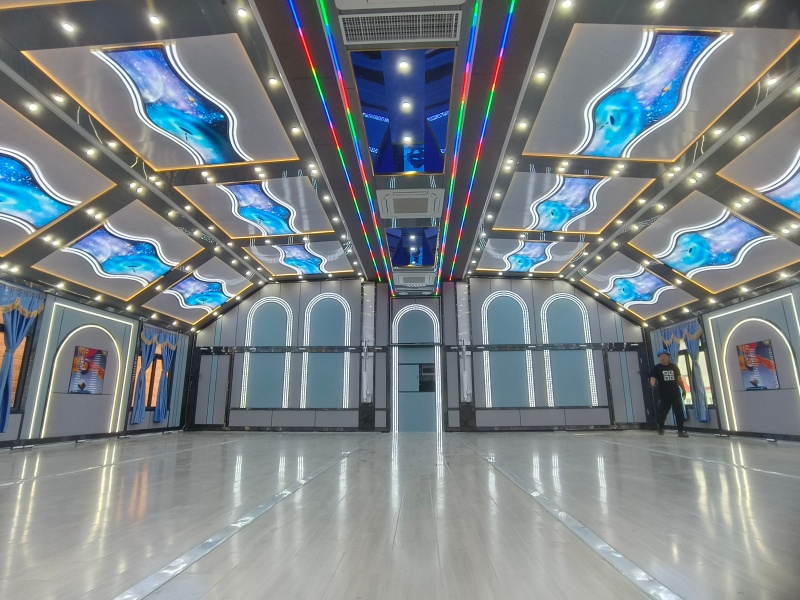
A 12m expandable trailer and a 21m model are not simply the same product at different lengths.
As size increases, engineering considerations can change.
These may include:
Structural loads
weight
chassis
axle arrangement
hydraulic system
floor alignment
The supplier should be able to explain how the proposed configuration differs from smaller models.
Commercial event venues need a floor designed for real use.
Potential loads include:
Guests
tables
furniture
AV equipment
catering equipment
If the supplier provides a floor-load specification, ask:
What does the number represent?
Is it uniformly distributed load?
What structure supports it?
Do not compare suppliers based only on a large number printed in a quotation.
Understand what it means.
Hydraulics may control:
Expansion
retraction
support legs
leveling
depending on the configuration.
Ask the manufacturer to explain:
Main hydraulic functions
control method
emergency operation
maintenance
replacement parts
A supplier that actually understands its system should be able to explain it clearly.
This is a practical question.
The answer reveals whether the supplier has thought about abnormal operating conditions.
There should be an appropriate procedure according to the system design.
The buyer should receive operating instructions rather than discovering the procedure during an emergency.
A trailer may operate thousands of kilometers away from the factory.
Eventually, components such as:
hoses
seals
valves
may require maintenance.
Ask whether replacements can be:
sourced locally
identified by specification
shipped from China
A commercially useful trailer needs to remain serviceable after delivery.
Some proprietary parts may be necessary.
But excessive use of unique components can make future repairs difficult.
Where practical, commercial buyers may prefer standard industrial components with:
model numbers
specifications
alternative supply channels
This can reduce downtime.
One of the easiest ways to create problems is copying a Chinese domestic electrical configuration into an export trailer without proper modification.
Countries can differ in:
Voltage
frequency
phase
plugs
wiring practices
protection requirements
The supplier should ask where the trailer will operate.
If the destination is never discussed, that is a warning sign.
A buyer may say:
“Our country uses 220V.”
That still does not define the complete system.
The manufacturer may need information about:
frequency
single-phase or three-phase
available current
equipment loads
Large commercial trailers can have substantial electrical demand.
The system needs proper engineering.
Today's fourth article covered this issue in detail.
A supplier should not automatically install the same air-conditioning package in trailers for:
Houston
Dubai
Melbourne
Canada
Climate conditions differ.
Ask:
What cooling assumptions were used for this quotation?
If the answer is simply:
“We always install six air conditioners,”
the buyer should ask more questions.
Supplier A may offer six air conditioners.
Supplier B may offer eight.
That alone tells you very little.
Compare:
Individual capacity
total capacity
heating function where required
electrical demand
equipment location
air distribution
The cheapest quotation may contain significantly less HVAC capacity.
Suppliers may quote:
insulation thickness
material name
But thermal performance depends on the entire wall and roof assembly.
Ask about:
roof
walls
floor where relevant
joints
seals
especially for very hot or cold climates.
When the trailer is open, moving sections create interfaces that need to control:
Rain
wind
dust
air leakage
Poor sealing can create:
water intrusion
HVAC inefficiency
interior damage
Ask to see details or videos of deployed units during real use where available.
Depending on the design and factory process, buyers may ask how weather sealing is checked before shipment.
The important point is not obtaining a marketing claim such as:
“100% waterproof.”
Instead, understand:
How seals are installed
How closure is checked
What inspection is performed
The chassis affects:
Road transport
weight distribution
axle loads
coupling
braking
local compliance
For large expandable trailers, chassis engineering deserves the same attention as the venue interior.
This sounds obvious, but international quotations can be misunderstood.
A supplier may quote:
Expandable superstructure plus chassis.
or:
Expandable structure without local road chassis.
These are not comparable prices.
The quotation should state clearly what is included.
For some markets, a buyer may prefer to source the road chassis locally.
This can be useful where local:
axle
braking
coupling
road approval
requirements are difficult to satisfy with a Chinese chassis.
In that case, the Chinese manufacturer supplies the expandable superstructure and engineering information needed for integration.
The expandable superstructure is not simply dropped onto any available chassis.
The project may need information concerning:
weight
weight distribution
mounting points
structural interfaces
The supplier and local chassis company should coordinate before production.
A qualified supplier should be able to develop technical drawings appropriate to the project stage.
These may include:
Closed dimensions
Expanded dimensions
Floor plan
Equipment layout
For customized projects, drawings help ensure that buyer and manufacturer are discussing the same product.
Photos show appearance.
Drawings show:
dimensions
relationships
layout
If the project includes:
kitchen
restrooms
stage
bar
special doors
the buyer should review where those elements actually fit.
A written description is not enough.
The nominal trailer length does not necessarily equal the usable internal event length.
Technical areas and structural sections may occupy part of the overall dimension.
Ask for:
Overall length
usable internal length
expanded width
internal clear height
where relevant.
These numbers determine the real event layout.
For wedding and banquet projects, the easiest way to understand the venue is to put furniture into the drawing.
Show:
tables
chairs
dance floor
bar
service area
Then ask:
Does this layout actually work?
A supplier claiming a high guest capacity should be able to demonstrate the assumptions behind it.
A floor plan can be manipulated by using:
undersized tables
minimal aisles
no dance floor
to create an impressive capacity number.
Buyers should ask what furniture dimensions were used.
A realistic commercial layout is more valuable than a maximum theoretical number.
Even if 250 chairs physically fit inside, the destination authority may apply occupancy requirements based on:
exits
egress
fire safety
The manufacturer can support layout planning.
The buyer should confirm local operating approval.
Almost every supplier says:
“We can customize.”
That phrase means very little by itself.
Ask something specific:
“Can you change the expanded internal width?”
“Can you relocate the restroom?”
“Can you design for our local three-axle chassis?”
“Can you change the electrical system for our country?”
The quality of the response tells you more about real customization capability.
A supplier that agrees immediately to every request may not necessarily be the best supplier.
Some customer requests can create:
structural problems
excessive weight
poor layout
transport difficulties
An experienced manufacturer should sometimes explain:
“We do not recommend this because…”
Technical disagreement can be evidence of engineering judgment.
Adding:
glass
batteries
water tanks
restrooms
kitchen equipment
changes the trailer weight.
The supplier should consider the combined effect rather than treating every option independently.
Before production, the supplier may provide an engineering estimate.
After production, buyers can request final weight information according to the agreed project requirements and available weighing process.
Weight affects:
chassis
axles
transport
shipping
It should not remain unknown until delivery.
Two trailers can have the same gross weight but different axle loads.
Heavy components should be positioned carefully.
Examples include:
water tanks
generator
batteries
HVAC
kitchen equipment
A qualified manufacturer should consider their location during layout development.
Before shipment, what does the supplier test?
Depending on the configuration, testing may include:
Expansion
retraction
hydraulic supports
electrical system
lighting
HVAC
doors
controls
A large customized trailer should not be shipped immediately after final assembly without functional checks.
A useful pre-shipment video can show:
Closed Trailer
↓
Leveling / Supports
↓
Expansion
↓
Fully Open Venue
↓
Retraction
This verifies more than a photograph of the final ballroom.
Mechanical systems should operate repeatedly during factory commissioning according to the manufacturer's test procedure.
A mechanism working once does not necessarily reveal:
alignment issues
intermittent faults
control problems
The buyer can ask how the factory verifies repeatable operation.
After repeated expansion and retraction, check whether:
Doors align
Glass sections remain correct
Seals engage properly
Movement of a large structure can reveal adjustment issues.
These should be addressed before shipping.
When the venue is fully expanded, floor sections should create a practical event surface.
Misalignment can affect:
Furniture
guest comfort
appearance
Buyers should ask to see the expanded floor condition during inspection.
If a buyer is purchasing the first unit from a new supplier, a factory visit can provide significant confidence.
The buyer can:
Inspect the factory
Meet engineers
Review production
Test the completed trailer
For a high-value customized product, travel cost may be small relative to project risk.
If the buyer cannot travel to China, an independent inspection company may be able to review agreed items before shipment.
The inspection scope should be defined clearly.
A third party cannot determine whether every engineering decision is correct unless that is specifically within its expertise.
But it can help verify agreed physical and functional points.
The checklist can include:
Model and dimensions
Equipment list
Interior finishes
Hydraulic operation
Electrical operation
HVAC operation
Doors and windows
Included accessories
Spare parts
Documentation
This reduces the chance that important items are forgotten during final inspection.
Suppose Supplier A quotes USD 59,000.
Supplier B quotes USD 95,000.
That does not mean Supplier B is automatically overpriced.
Compare what is actually included.
Possible differences include:
Chassis
Axles
HVAC
Glass
Interior materials
Generator
Restrooms
Kitchen
Electrical specification
Hydraulic configuration
Until specifications are aligned, the prices are not directly comparable.
Some marketplace listings display very low prices to attract inquiries.
The advertised figure may represent:
Smaller model
Basic configuration
Chinese domestic specification
Superstructure without chassis
Limited equipment
The final export project may cost substantially more.
Buyers should ask for a detailed configuration rather than assuming the headline price represents the finished trailer they saw in the photos.
This is important.
If a buyer genuinely wants a basic configuration built primarily around Chinese domestic specifications, the manufacturer may be able to offer a lower price.
But an export project may require changes involving:
Chassis
electrical systems
insulation
HVAC
materials
destination-specific requirements
These are different products from a commercial quotation perspective.
The comparison should be like-for-like.
Two suppliers may both quote:
15m Expandable Event Trailer
Yet one includes:
Premium interior
Large HVAC system
Customized electrical system
while the other offers a much more basic configuration.
Trailer length is not a sufficient basis for price comparison.
A clear quotation should identify major included equipment.
This may include:
HVAC
lighting
electrical distribution
hydraulic system
doors
windows
interior materials
depending on the project.
The more customized the trailer, the more important the specification becomes.
A quotation saying only:
“15m luxury expandable trailer — USD XX,XXX”
leaves too much uncertainty.
What does “luxury” mean?
What is the:
HVAC capacity?
voltage?
chassis?
interior material?
glass configuration?
The buyer needs enough detail to compare suppliers meaningfully.
This question can be even more useful than asking what is included.
Potential exclusions may include:
Freight
Import tax
Local registration
Towing vehicle
Furniture
Local installation
Local labor
Clarifying exclusions prevents later misunderstandings.
International buyers should know which commercial term is being quoted.
An EXW factory price is not the same as a delivered project price.
Depending on the agreed Incoterm and shipment, additional costs can include:
China inland transport
port handling
ocean freight
destination charges
customs
final inland transport
Compare suppliers on the same basis.
Shipping rates can change.
A supplier quoting freight today may not be able to guarantee the same rate several months later.
This is particularly important for oversized equipment.
Buyers should ask:
When is the freight estimate valid?
What shipment method is assumed?
Which destination port is used?
Do not treat a preliminary freight estimate as a permanent fixed cost.
The shipping method can depend on:
Closed dimensions
weight
destination
chassis configuration
Possible methods may include specialized container or non-container solutions depending on the project.
The manufacturer and freight forwarder should confirm the actual plan.
Do not assume every expandable trailer fits into a standard container.
Some projects use a locally sourced chassis.
This may allow the expandable superstructure to be configured differently for international transport.
The shipping strategy should be discussed during engineering rather than after production is complete.
A supplier may say:
“We export worldwide.”
That statement is too broad to be meaningful.
Ask:
Have you exported this product type?
Which regions?
Complete trailer or superstructure?
What shipping method was used?
Experience with small machinery exports is not the same as experience with large expandable event structures.
A manufacturer may never have shipped an event trailer to your exact country.
That does not automatically make the supplier unsuitable.
The more important question is whether the supplier is willing and able to:
Study destination requirements
modify the design
coordinate with local engineers
provide drawings
A supplier should not pretend previous approval exists when it does not.
These phrases can be oversimplified.
Road compliance can involve:
Chassis
axles
brakes
lighting
dimensions
while CE or other requirements may apply differently to:
electrical systems
machinery
components
complete equipment
Ask exactly:
Which component or complete product has which certificate?
Do not rely on a logo in a brochure.
If certification is critical to your project, ask for documentation before ordering.
Then verify:
Product covered
manufacturer
standard
validity
where appropriate.
A certificate for one component should not be presented as certification of an unrelated complete trailer.
This is especially important in tightly regulated markets.
Before committing to a customized project, the buyer should investigate:
Road legality
Temporary venue requirements
electrical requirements
fire and occupancy requirements
The manufacturer can modify the product around known requirements.
It cannot change local law after delivery.
This is a surprisingly useful test.
Ask:
“Can you guarantee this trailer will be road legal in my state?”
A responsible overseas supplier may say:
“We need your local requirements before confirming the chassis specification.”
That answer can be more trustworthy than:
“Yes, no problem anywhere.”
Complex compliance questions deserve qualified answers.
Do not accept only:
“One-year warranty.”
Ask:
What is covered?
What is excluded?
Who diagnoses the problem?
Who supplies replacement parts?
Who pays international freight?
Is local labor included?
A clear warranty is more valuable than a long but vague warranty.
A Chinese manufacturer generally cannot maintain service technicians in every destination country.
A practical support model may involve:
Remote Diagnosis
Replacement Parts
Qualified Local Technician
This should be understood before purchase.
Many buyers assume warranty means:
“The manufacturer pays every repair bill.”
That may not be the agreement.
For international industrial equipment, warranty may cover replacement parts for verified manufacturing defects while:
local labor
travel
international freight
are treated separately.
The contract should state this clearly.
A trailer may remain in service for many years.
After the formal warranty ends, the operator still needs:
seals
hydraulic components
electrical components
switches
interior repair materials
Ask how parts can be identified and ordered.
Long-term serviceability is essential for a commercial asset.
For an overseas project, it can be economical to ship certain small critical spare parts with the trailer.
The appropriate package depends on:
model
installed components
destination
local availability
A USD 20 component can create significant downtime if it takes two weeks to arrive internationally.
A good industrial delivery should not be only:
Trailer + Keys.
Depending on the project, useful documentation can include:
Operating instructions
Hydraulic information
Electrical diagrams
Component list
Maintenance guidance
Spare-parts information
The exact package should be agreed before delivery.
Electrical breakers, hydraulic valves and control components should be identifiable.
Clear labeling helps:
Operators
Maintenance staff
Local technicians
years after the trailer leaves the factory.
This is a small manufacturing detail with large after-sales value.
Large expandable trailers should not be operated by someone who has only watched a short social-media video.
Operators should understand:
Site preparation
Leveling
Expansion
Retraction
Safety zones
Emergency procedures
Training can be provided through:
Factory instruction
Video
Manuals
Remote support
depending on the project.
A rental company should not depend on one employee who knows how to operate the trailer.
If that person is:
Sick
On holiday
Leaves the company
the business still needs to function.
Train several operators and document procedures.
When a problem occurs, the supplier may need:
Photos
Video
Error information
Electrical measurements
to diagnose it.
Ask:
Who provides technical support?
How can they be contacted?
What information should be supplied?
A clear process reduces downtime.
A U.S. rental company may have an event problem while the Chinese factory is asleep.
For critical operations, the buyer should maintain:
Local technicians
spare parts
operating knowledge
rather than depending entirely on immediate factory response.
Remote manufacturer support is valuable, but it should be part of a broader service strategy.
When comparing two trailers, ask:
Can a competent local hydraulic, electrical or HVAC technician understand and repair this system?
If yes, long-term ownership becomes easier.
A product designed to be impossible to service without the original factory creates operational risk.
Lead time can vary depending on:
Model
customization
factory workload
components
A supplier should provide a realistic production estimate.
Be cautious if a highly customized large trailer is promised unrealistically quickly without explanation.
Buyers naturally want early delivery.
But engineering, fabrication, finishing and testing require time.
The objective should be:
Reliable Delivery Date
rather than the shortest number in the sales comparison.
A late trailer is a problem.
A rushed defective trailer is a bigger problem.
A professional custom-project workflow may include:
Requirement discussion
Preliminary configuration
Quotation
Drawing development
Buyer confirmation
Production
Testing
Inspection
Shipping
If a supplier wants to begin fabrication before important technical details are defined, clarify the process.
Once steel fabrication begins, changing:
Door positions
Trailer length
kitchen location
chassis arrangement
may create substantial rework.
Buyers should invest time in specification review before approving production.
WhatsApp messages are useful for daily communication.
But a large customized project should also have a consolidated technical specification.
This reduces disagreements such as:
“I thought this was included.”
The document can record:
dimensions
equipment
materials
electrical system
options
and other agreed project details.
Customized projects evolve.
A drawing may change from:
V1 → V2 → V3
Both parties should know which version is final.
Manufacturing from an outdated drawing can create expensive mistakes.
Use clear:
Drawing numbers
Revision dates
approval records
for significant projects.
International buyers may worry about sending a large deposit to an unfamiliar Chinese supplier.
Before payment, verify:
Legal company name
Business registration
Bank beneficiary
Factory identity
The bank account information should correspond appropriately to the contracted transaction.
Buyers should conduct their own commercial due diligence.
Do not rely only on the salesperson's PDF.
Depending on the country and available systems, buyers can use:
Government company-registration databases
Business documents
Bank verification
Third-party inspection
to confirm supplier identity.
Large B2B purchases deserve proper due diligence.
Some buyers feel safe only if the product appears on a large B2B marketplace.
Marketplaces can be useful for discovery.
But the buyer still needs to evaluate:
Manufacturer
Technical capability
contract
specifications
payment terms
A marketplace page does not replace engineering due diligence.
China has:
Different factory scales
Different supply chains
Different overhead
Two legitimate factories can quote different prices.
The goal is not to assume:
“Cheap = fake.”
Instead ask:
Why is the price different?
Then compare the configuration.
The reverse is also true.
A supplier charging more does not automatically provide better engineering.
Buyers should demand evidence.
Price is one data point.
Factory capability, specification and quality control matter more.
A large factory may offer:
More production volume
Established processes
More staff
A smaller specialized factory may offer:
Lower overhead
Greater customization
Competitive pricing
Neither is automatically superior.
The buyer should evaluate which supplier best fits the project.
A factory regularly building expandable trailers has more opportunities to learn from:
Manufacturing
Testing
customer feedback
Ask what is currently being produced.
Current factory activity can sometimes be more informative than an old catalog.
A high-volume factory may be optimized around standard products.
A highly customized project may require more engineering attention.
Supplier selection should consider:
Production Experience
Customization Capability
Engineering Support
Price
rather than one factor alone.
During sales, communication may happen with a salesperson.
After the order, technical questions become more detailed.
Ask whether you will have access to:
Engineer
project manager
technical support
as needed.
Complex projects benefit from clear communication channels.
If simple questions repeatedly receive:
Contradictory answers
incomplete answers
unexplained specification changes
before payment, the situation may become more difficult after production begins.
Good communication does not guarantee good manufacturing.
But poor communication is a real project risk.
Instead of:
“Is the quality good?”
ask:
“What steel structure is used here?”
“How is this section supported after expansion?”
“What happens during power failure?”
“How do we replace this hydraulic valve in the U.S.?”
Specific questions reveal actual technical understanding.
If the supplier claims:
“Exported to the United States.”
ask for reasonable supporting evidence where confidentiality permits.
If it claims:
“This component is certified.”
ask for the certificate.
If it claims:
“The floor supports X load.”
ask for the technical basis.
Major purchasing decisions should rely on verifiable information where possible.
There is a reasonable limit.
A manufacturer may not be able to provide:
Customer names
private contracts
confidential drawings
That does not automatically indicate dishonesty.
Buyers can ask for non-confidential evidence such as:
factory videos
anonymized production photos
shipment photos
where available.
Suppose the website shows one factory.
The video shows another.
The company registration shows a third name.
The bank account shows an unrelated entity.
That deserves clarification.
A legitimate business structure may have subsidiaries or related companies, but the relationship should be explainable.
The contracting entity matters.
Confirm:
Legal company name
address
bank details
responsibilities
before payment.
This is particularly important when sales brands and manufacturing companies use different names.
Do not wait until the trailer is complete to decide what “acceptable” means.
Before production, agree on key requirements such as:
Dimensions
Equipment
functionality
interior specification
Then final inspection can check against those agreed points.
One buyer may consider a minor surface imperfection acceptable.
Another purchasing a luxury wedding venue may expect very high decorative finish.
If appearance is commercially critical, define:
Material
finish
color
visible quality expectations
before production.
Photos can distort:
Color
texture
gloss
For premium interiors, physical samples or clearly identified material specifications may reduce misunderstandings.
This can be particularly useful for:
Flooring
wall panels
upholstery
A 3D rendering shows the design concept.
It does not prove the exact:
material
color
texture
that will be installed.
Buyers should distinguish between:
Visual Concept
and
Technical Material Selection.
For a customized high-value project, periodic updates can show:
Frame fabrication
hydraulic installation
interior construction
final assembly
This allows issues to be identified earlier.
It also gives the buyer confidence that production is progressing.
The manufacturer needs a defined specification and quality-control process.
Constantly changing details based on daily photographs can create confusion.
The objective is controlled project management, not improvisation.
Approve important decisions formally.
Ask how the manufacturer checks:
Welding
dimensions
hydraulic operation
electrical systems
interior finish
Quality control should occur during production, not only after everything is hidden behind decorative panels.
Before walls and ceilings close, useful photos can document:
Wiring
insulation
structural sections
This may help future maintenance.
Once decorative panels are installed, these systems are much harder to see.
Years later, a local electrician may need to troubleshoot:
Lighting
outlets
HVAC circuit
An electrical schematic can save significant time.
This documentation has little marketing value but high ownership value.
Likewise, hydraulic information can help technicians understand:
Pump
valves
cylinders
circuit relationships
A system that is documented is easier to maintain.
Useful information includes the make/model or specification of major:
Hydraulic components
HVAC
electrical equipment
controls
This makes future replacement easier.
This is one of the best supplier questions.
Not:
“What is the warranty?”
but:
“If I need a replacement component five years from now, how will I identify and obtain it?”
A serious commercial product should have an answer.
The initial transaction may last several months.
The trailer may operate for many years.
Supplier selection should therefore consider:
Documentation
parts
communication
technical support
after the sales commission has already been earned.
If the first trailer performs well, the buyer may purchase another.
Using similar:
controls
HVAC
hydraulic components
electrical layouts
can simplify:
training
spare parts
maintenance
A supplier capable of maintaining design consistency can be valuable to a growing rental company.
If the first unit is 15m and the second is 21m, can major systems remain similar?
Some components may necessarily differ.
But standardization where practical can reduce operating complexity.
This is a useful discussion for fleet buyers.
A hotel buying one semi-permanent banquet venue has different priorities from an event rental company planning ten trailers.
May prioritize:
Interior quality
large capacity
integration with site
May prioritize:
reliability
transport
fast setup
serviceability
fleet standardization
The “best supplier” can therefore depend on the buyer.
If the buyer asks ten factories:
“How much for your trailer?”
the quotations may be impossible to compare.
Instead, prepare a short requirement document.
Include:
Destination
Application
Size or target capacity
Main equipment
Electrical requirements
Chassis preference
Then ask suppliers to quote against the same brief.
For example:
Application: Mobile wedding and corporate venue
Destination: Houston, Texas, USA
Target Guests: 150–180 seated
Layout: Banquet tables + dance floor + DJ
HVAC: Designed for local summer climate
Electrical: To be confirmed with local electrician
Chassis: Complete trailer or local-chassis alternative requested
Now Supplier A and Supplier B are responding to approximately the same project.
Their quotations become much more meaningful.
Instead of deciding from intuition, buyers can score suppliers.
Possible categories include:
| Category | Evaluation |
|---|---|
| Expandable trailer experience | Proven / Limited / Unclear |
| Factory evidence | Strong / Medium / Weak |
| Engineering support | Strong / Medium / Weak |
| Customization | Strong / Medium / Weak |
| Drawings | Detailed / Basic / Missing |
| Hydraulic system | Clear / Partially clear / Unclear |
| Electrical customization | Confirmed / Limited / Unclear |
| HVAC engineering | Project-specific / Generic |
| Chassis support | Strong / Limited |
| Factory testing | Comprehensive / Basic |
| Documentation | Strong / Limited |
| Spare parts | Clear / Unclear |
| After-sales support | Clear / Unclear |
| Price | Competitive / High / Low |
| Communication | Strong / Medium / Weak |
This prevents price from becoming the only deciding factor.
Not every category deserves equal importance.
For a USD 100,000-class customized project, the buyer might give more weight to:
Engineering
structural experience
hydraulic reliability
documentation
than to a small difference in decorative furniture price.
Prioritize the things that are difficult to repair after delivery.
If the supplied chairs are not ideal, they can be replaced locally.
If the expandable structure does not align properly, the problem is much more serious.
Therefore, supplier evaluation should prioritize:
High-Risk Core Systems
before:
Easy-to-Replace Accessories.
A decorative lamp can be changed.
A fundamentally undersized electrical distribution system is much harder to correct.
Buyers should spend the most technical attention on:
Structure
hydraulics
chassis
electrical system
HVAC
because these systems define the long-term performance of the venue.
No single sign automatically proves a supplier is unreliable.
But buyers should investigate when they see combinations such as:
Extremely low price with no specification
Refusal to show factory production
No technical drawings
Constantly changing dimensions
Vague answers about weight
Generic HVAC configuration for every climate
Unclear company or bank identity
Unrealistic compliance guarantees
No explanation of after-sales support
One issue may have a reasonable explanation.
Several together deserve caution.
Conversely, useful positive indicators include:
Real production evidence
Clear drawings
Willingness to discuss technical limitations
Detailed configuration
Destination-specific questions
Functional testing
Component information
Clear warranty scope
Spare-parts planning
Realistic lead time
These do not guarantee a perfect project.
They reduce uncertainty.
A good manufacturer should not only answer questions.
It should ask them.
For example:
How many guests?
What will the trailer be used for?
Where will it operate?
What climate?
What electrical supply?
How frequently will it move?
Do you need a local chassis?
If the supplier can provide a final quotation without knowing any of these, ask what assumptions are being made.
The buyer understands:
Local market
customer
regulations
operating model
The manufacturer understands:
Structure
production
expansion mechanism
integration
A successful project combines both sets of knowledge.
Neither side should make every decision alone.
The most useful sequence is:
Requirement
↓
Recommended Model
↓
Configuration
↓
Technical Review
↓
Quotation
not:
Lowest Online Price
↓
Try to Make the Project Fit It
This is especially important for large customized event trailers.
One supplier may be best for:
Highly customized luxury wedding projects
Another may be stronger for:
Standardized fleet production
Another may offer:
Lower-cost domestic-style configurations
The buyer needs the manufacturer that best matches:
Project Requirements + Budget + Destination + Risk Tolerance.
Buyers should not be afraid of competitive Chinese manufacturing prices.
Cost efficiency is one of the reasons international companies source equipment from China.
The key word is:
Qualified.
If two suppliers genuinely offer equivalent:
Engineering
specification
quality
support
then price becomes an entirely reasonable deciding factor.
The problem arises when buyers compare unequal products as though they were identical.
A premium quotation should be able to explain what the buyer receives for the additional cost.
Perhaps it includes:
Better structure
more HVAC
better interior
stronger after-sales support
more extensive testing
If the difference cannot be explained, the buyer should ask why.
Price transparency improves purchasing decisions.
Before placing an order, the buyer should be comfortable answering:
Do they have the engineering and production capability?
Can they adapt electrical, HVAC, chassis and other systems to the destination?
Will I have drawings, parts and technical support?
If the answer to all three is credible, the supplier deserves serious consideration.
By the time a buyer visits the factory, major questions should already have been discussed.
The visit can verify:
Company
production
engineering
current units
It should not be the first time anyone asks:
“What voltage do we need?”
Good projects develop progressively.
This is perhaps the most important principle for customized expandable event trailers.
Before fabrication begins, define as much as reasonably possible:
Dimensions
layout
equipment
destination requirements
chassis
electrical system
HVAC
A problem discovered on a drawing is inexpensive.
The same problem discovered after shipment can be extremely expensive.
When buyers compare manufacturers, they often think they are comparing prices.
In reality, they are comparing different levels of project risk.
The risks include:
Engineering risk
Manufacturing risk
Compliance risk
Shipping risk
Operational risk
Maintenance risk
The right supplier is the one that offers an acceptable balance of:
Capability + Configuration + Price + Support + Risk.
If you are buying:
Standard chair
Standard table
price comparison can be relatively simple.
A customized expandable event trailer is different.
Two products that look similar in photographs may differ substantially underneath.
Before ordering, evaluate:
Factory
Engineering
Structure
Hydraulics
Chassis
HVAC
Electrical System
Testing
Documentation
After-Sales Support
and only then compare the final price.
That process requires more work before the purchase.
But for a commercial asset expected to operate for years, that work can prevent much larger problems later.
LZM manufactures customized expandable event trailers for weddings, mobile banquet halls, event rental, corporate hospitality, exhibitions and brand events. Available configurations can be developed according to trailer size, destination market, expected capacity and operating requirements.
International buyers can provide their intended application, guest capacity, destination country and preferred configuration so the project can be discussed before a detailed quotation is prepared.
Review LZM expandable event trailer configurations and discuss your project directly with the manufacturer:
Expandable Event Trailer Manufacturer in China