Welcome: Laizhou Machinery Group



A wedding venue can look beautiful and still provide a poor guest experience.
Imagine a luxury reception with elegant lighting, premium tables and a large LED screen.
Then the speeches begin.
Guests at the back cannot understand the couple.
Music reflects from the walls and ceiling.
Conversation becomes difficult.
The HVAC system adds background noise.
Outside traffic can still be heard inside.
The problem is not decoration.
It is acoustic design.
For an expandable wedding event trailer, acoustics should be considered during the project specification rather than treated as something the DJ will solve after delivery.
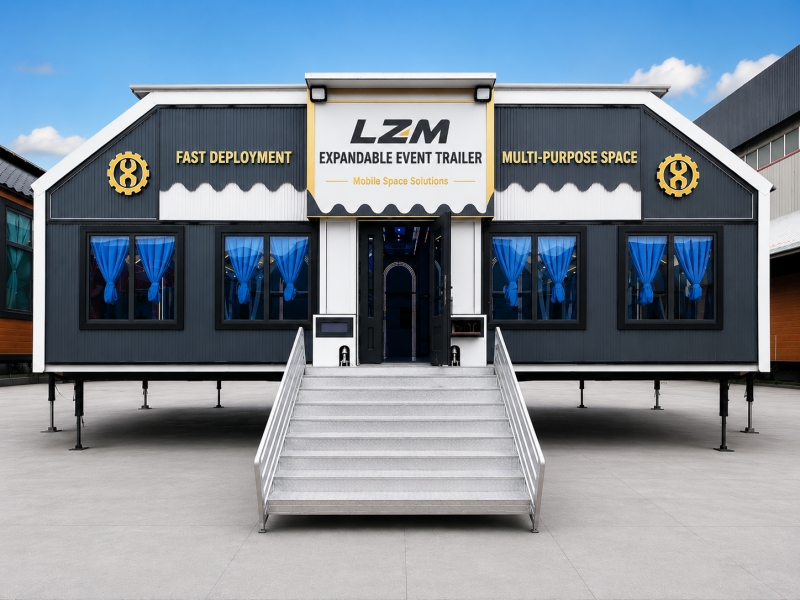
A successful mobile banquet venue needs to manage several different sound problems at the same time:
Speech intelligibility
Music quality
Interior reverberation
HVAC noise
Exterior noise
Sound escaping from the venue
These are related, but they are not the same problem.
These two terms are often used as if they mean the same thing.
They do not.
Primarily concerns reducing sound transmission between inside and outside.
For example:
Keeping traffic noise outside
Reducing music leakage to neighboring properties
Primarily concerns how sound behaves inside the venue.
For example:
Reducing echoes
Improving speech clarity
Making music sound more controlled
A wedding venue can be well insulated from outside noise and still have poor internal acoustics.
Likewise, a room can sound pleasant internally while still allowing loud music to escape.
Both need to be considered.
Large expandable event spaces often contain substantial areas of:
Wall panels
Flooring
Ceiling panels
Glass
LED screens
Many hard surfaces reflect sound.
When reflections accumulate, the room can develop excessive reverberation.
Guests may describe this as:
Echo
Booming music
Unclear speech
Excessive loudness
The problem can become more noticeable as the venue becomes larger.
That makes acoustic planning especially relevant for large wedding and banquet configurations.
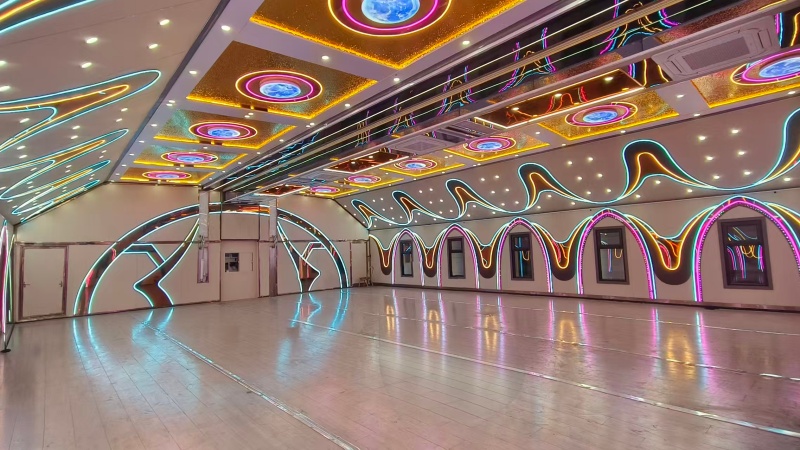
A wedding is not one continuous sound environment.
During the same event, the venue may need to support:
Quiet Guest Arrival
↓
Background Music
↓
Ceremony or Speeches
↓
Dinner Conversation
↓
Live Music or DJ
↓
Dancing
Each stage has different acoustic requirements.
A venue optimized only for loud music may perform poorly during speeches.
A room designed only for conversation may not create enough energy for dancing.
The objective is balanced performance.
Guests may forgive imperfect background music.
They are much less forgiving if they cannot understand:
Wedding vows
Toasts
MC announcements
Corporate presentations
Speech intelligibility depends on several factors.
These include:
Reverberation
Speaker placement
Background noise
Guest distance
Room geometry
Increasing the microphone volume is not always the solution.
If the room creates too many reflections, louder speech can simply become louder and still unclear.
When a person speaks, the direct sound travels toward the listener.
But sound also reaches:
Walls
Ceiling
Floor
Glass
Screens
and reflects back into the room.
If too much reflected sound remains for too long, words begin to overlap acoustically.
This makes speech harder to understand.
Music can also lose definition.
An acoustically comfortable event venue therefore needs an appropriate balance between:
Reflective Surfaces
and
Sound-Absorbing Surfaces.
Wedding buyers naturally want materials that look premium.
They may request:
Glossy wall panels
Glass
Hard flooring
Decorative ceilings
Large digital screens
Visually, this can work very well.
Acoustically, however, an interior made almost entirely from hard surfaces can create excessive reflection.
The design therefore needs to consider appearance and acoustics together.
A luxury finish should not create a room where guests need to shout across the dinner table.
Sound-absorbing materials can reduce excessive reverberation.
Depending on the interior concept, acoustic control may be integrated through elements such as:
Ceiling treatments
Wall panels
Curtains
Upholstered furniture
Decorative soft finishes
The goal does not have to be a visible recording-studio appearance.
Acoustic materials can be incorporated into the luxury design.
For wedding venues, appearance remains important.
The best solution provides acoustic benefit without making the space feel industrial.
The ceiling represents a large surface area.
That makes it one of the most important surfaces in the room.
A completely hard reflective ceiling may return substantial sound energy toward guests.
An intelligently designed ceiling can help manage:
Reverberation
Speaker reflections
General sound balance
For this reason, the ceiling should not be designed only around:
Lighting
Decoration
Appearance
Acoustic performance deserves consideration as well.
Parallel hard walls can create strong reflections.
Depending on the interior design, selected wall areas can use finishes that provide more acoustic absorption.
Not every wall needs to be treated identically.
The design can balance:
Decorative panels
Windows
Screens
Acoustic surfaces
This is particularly useful in banquet halls where the customer still wants a sophisticated interior appearance.
Large glass areas can make an expandable wedding venue feel:
More open
More premium
Better connected to outdoor scenery
This can be especially attractive for:
Resort weddings
Vineyard weddings
Coastal venues
But glass is a hard reflective surface.
Large glass areas can therefore increase acoustic reflections.
The solution is not necessarily to eliminate glass.
It means the acoustic design should compensate elsewhere.
Curtains are commonly used in wedding venues for:
Decoration
Privacy
Light control
Depending on the material and installation, they may also provide some acoustic absorption.
This can make them useful around large window areas.
A flexible venue can also use curtains differently for different event types.
For example, they may be opened during daytime receptions and closed during evening events.
Hard flooring is often preferred for commercial event venues because it can be:
Durable
Easy to clean
Suitable for dancing
But hard floors also reflect sound.
Carpet absorbs more sound but may be less suitable for every event or operating model.
A wedding trailer therefore needs to balance:
Cleaning + Appearance + Durability + Acoustics.
The solution does not necessarily require carpet across the entire venue.
Other surfaces can provide the required acoustic control.
An empty venue sounds different from a fully occupied wedding reception.
Tables, chairs, fabric and guests all absorb some sound.
This is why an empty ballroom during setup can sound much more reverberant than the same room during the event.
Audio systems should ideally be tested under conditions that resemble actual occupancy.
Sound adjusted perfectly in an empty venue may perform differently when 150 guests arrive.
People are acoustically significant.
A full wedding can reduce reverberation compared with an empty room.
This creates another challenge:
The audio system needs to work acceptably under both:
Low occupancy
High occupancy
Professional event operators therefore adjust audio based on the actual event rather than relying on one permanent volume setting.
A common mistake is assuming that a larger venue simply needs more powerful speakers.
What matters is not only total sound output.
It is how evenly sound reaches guests.
Poor speaker placement can create:
Extremely loud front rows
Weak sound at the rear
Excessive reflections
Uneven music coverage
Multiple appropriately positioned speakers can sometimes produce better results than one extremely loud source.
For a long banquet hall, a distributed sound system may provide more even coverage.
Instead of trying to project everything from one end of the room, additional speakers can support different areas.
This may help achieve:
Lower required volume
Better speech clarity
More consistent guest experience
However, speaker timing and system configuration need to be handled correctly.
Simply adding more speakers without audio planning can create additional problems.
Wedding layouts often focus heavily on:
Couple's table
Dining tables
Dance floor
The DJ is then placed wherever space remains.
That can be a mistake.
The DJ or sound-control position should consider:
Speaker locations
Dance floor
Guest seating
Power
Cable routing
Equipment access
Good technical planning improves both sound and appearance.
Placing high-output speakers immediately beside large reflective surfaces can increase undesirable reflections.
Large glass areas, hard walls and corners can influence how sound behaves.
Speaker location should therefore be coordinated with the room layout.
This is particularly important for live music and higher-volume evening receptions.
Low-frequency sound behaves differently from speech.
Bass can travel through structures and over longer distances.
A venue may sound comfortable inside while low-frequency music remains noticeable outside.
This matters when the trailer is used near:
Hotels
Residential properties
Resorts
Other events
Wedding venue operators should therefore manage bass levels as part of neighborhood and site planning.
A wedding reception may continue late into the evening.
If the venue is located near:
Guest rooms
Houses
Other functions
noise leakage can become a complaint.
This is especially important for resorts hosting multiple groups at the same time.
Reducing sound transmission can help the operator maintain higher interior entertainment quality without creating unnecessary disturbance outside.
A well-insulated wall does little if doors remain open throughout the event.
Doors can allow:
Music to escape
Traffic noise to enter
HVAC energy to escape
Wedding operations should therefore consider how guest circulation is managed.
Frequently opened doors can affect both:
Acoustics
and
Climate Control.
A simple direct doorway connects the ballroom immediately with the outside environment.
Where layout and project requirements allow, an entrance arrangement can help reduce the direct transfer of:
Sound
Hot or cold air
Wind
This may involve the way the entrance area is positioned rather than necessarily constructing a complicated permanent vestibule.
The entrance should be treated as part of the venue design.
Catering staff may repeatedly move:
Food
Drinks
Equipment
Waste
through another entrance.
If the service door constantly opens beside the dance floor, it can affect:
Noise
Temperature
Guest experience
The wedding layout should therefore separate guest circulation and service circulation where practical.
A wedding may need powerful climate control.
But guests should not need to compete with the air-conditioning system during speeches.
HVAC noise can come from:
Fans
Compressors
Air movement
Vibration
Ducts
Mechanical-system design therefore influences acoustics directly.
A venue can have excellent acoustic wall materials and still feel noisy if the HVAC system dominates the room.
Moving more air through a small opening can create greater noise.
HVAC distribution therefore needs to balance:
Cooling/heating performance
Air velocity
Diffuser design
Guest comfort
Noise
Guests should feel comfortable without feeling that they are sitting beneath an industrial air outlet.
This is particularly important in premium banquet applications.
Mechanical equipment placed immediately beside sensitive interior areas can transmit:
Airborne noise
Vibration
The location and mounting of equipment should therefore be considered during trailer design.
Separating noisy equipment from key guest areas where practical can improve the interior experience.
Some mechanical equipment creates vibration.
That vibration can transfer into the trailer structure and become audible elsewhere.
Appropriate mounting and isolation strategies can help reduce structural transmission.
This can apply to equipment such as:
HVAC
Generator
Pumps
The exact solution depends on the equipment configuration.
Remote wedding sites sometimes rely on generator power.
If the generator is positioned directly beside the venue, guests may hear it throughout the reception.
Generator planning should therefore consider:
Required power
Distance
Cable length
Safety
Ventilation
Noise
Where practical, placing the generator appropriately away from guest areas can substantially improve the event experience.
Depending on the generator and project, acoustic enclosures may reduce operating noise.
However, noise control must not interfere with:
Ventilation
Cooling
Exhaust
Safe operation
The correct generator arrangement should be designed for the actual equipment.
Simply covering a generator to make it quieter can create serious problems.
The hydraulic expansion system normally operates during:
Deployment
Retraction
rather than continuously throughout the wedding.
This means its acoustic impact is different from HVAC.
The important operational strategy is straightforward:
Complete major mechanical deployment before guests enter the venue.
Retraction should take place after the event and after the guest area has been cleared.
Not every venue begins with the same background-noise level.
A countryside wedding property may be extremely quiet.
An urban site may have:
Road traffic
Aircraft
Construction
Crowds
The required acoustic separation therefore depends partly on where the trailer will operate.
Buyers should tell the manufacturer if the project is intended for a particularly noisy environment.
An expandable venue positioned close to a busy road may need stronger attention to noise transmission than one installed inside a remote vineyard.
The trailer's wall and insulation specification should be considered together with:
Doors
Windows
Seals
Ventilation
Noise usually finds the weakest path.
Improving one wall layer alone does not automatically solve every transmission problem.
Materials used in the enclosure can influence both:
Thermal performance
Sound transmission
But buyers should avoid assuming that thermal insulation automatically provides complete soundproofing.
Acoustic performance depends on the overall construction assembly, including:
Material mass
Layering
Air gaps
Connections
Seals
The complete wall system matters more than one insulation material name.
Greater mass can help reduce some types of sound transmission.
But a mobile venue also needs to control transport weight.
This creates an engineering trade-off.
Permanent recording studios can add very heavy acoustic construction without worrying about road transport.
An expandable event trailer must balance:
Acoustic Performance + Structural Weight + Transport Requirements.
Mobile architecture always involves such compromises.
Depending on the design, layered wall or ceiling systems can perform differently from one simple panel.
Acoustic control can be influenced by:
Multiple material layers
Insulation
Decoupling
Sealing
However, exact acoustic performance should be based on actual construction engineering rather than assumed from marketing terms such as “soundproof panel.”
An expandable structure contains moving interfaces.
These joints need to close and seal correctly after deployment.
Poor sealing can allow:
Air leakage
Water leakage
Sound leakage
This makes installation accuracy and long-term seal maintenance important not only for weather protection but also for acoustics.
If a wall performs well but a large lightweight door transmits significant sound, the overall room performance can still be limited by the door.
Acoustic design is therefore a system problem.
Buyers need to consider:
Walls + Roof + Floor + Doors + Windows + Expansion Joints + HVAC Openings
rather than asking only about the wall panel.
Wedding receptions contain many non-musical sound sources.
Catering areas may generate:
Dish noise
Refrigeration
Staff conversation
Equipment
Doors
If the catering preparation area opens directly into the guest seating area, these sounds may become noticeable during speeches or quiet moments.
Layout planning can reduce this problem.
A premium venue should ideally distinguish between:
Guest Experience Areas
and
Service Areas.
This does not require a huge building.
Even thoughtful positioning of:
Catering
Storage
Utility equipment
can reduce noise entering the main banquet space.
Where restrooms are integrated into the trailer, acoustic privacy becomes another consideration.
Guests should not feel that sanitary spaces are acoustically connected to dining or lounge areas.
Partitions, door arrangement and layout all contribute.
This is both an acoustic and hospitality-design issue.
A live band can produce substantially different sound levels and frequency ranges from a small background-music system.
Buyers expecting regular:
Live bands
DJs
Performances
should disclose this during venue planning.
This may influence:
Electrical capacity
Speaker planning
Interior acoustics
Sound leakage strategy
A venue primarily used for quiet corporate presentations may need a different acoustic approach.
Acoustic drums can be particularly energetic inside enclosed venues.
For operators hosting live bands frequently, the room should be designed and managed accordingly.
Potential solutions may include event-specific measures such as:
Appropriate stage positioning
Controlled amplification
Drum shields where required
Professional sound engineering
The trailer manufacturer does not replace the event audio engineer.
The venue should provide a suitable acoustic foundation.
Digital equipment makes it easy to create extremely high sound pressure levels.
More volume does not necessarily create a better wedding.
Excessive sound can result in:
Guest discomfort
Poor conversation
Distorted audio
Complaints
Hearing risk
Venue operators should establish appropriate audio policies rather than allowing unlimited amplifier output simply because the equipment can produce it.
Some wedding layouts place the dance floor at one end of the venue.
This can help concentrate higher music levels away from some dining areas.
For example:
DJ / Dance Floor → Central Social Area → Dining
may provide a different guest experience from putting the DJ directly beside every dining table.
The best layout depends on the trailer size and wedding concept.
Wedding parties include guests of different ages and preferences.
Not everyone wants to stand beside the speakers.
Where space permits, lounge or dining areas can be positioned to provide relatively quieter social zones.
This is a hospitality decision as much as an acoustic one.
A venue that lets guests both dance and talk can produce a better overall experience.
A full banquet arrangement contains many:
Tables
Chairs
Guests
These absorb some sound.
A sparse cocktail layout may have more exposed hard surfaces.
The acoustic characteristics of the same trailer can therefore change with the event layout.
Audio teams should adjust the system accordingly.
Testing speakers at the factory is useful.
But an empty trailer does not exactly reproduce:
150 guests
Furnished tables
Curtains
Decorations
For professional applications, final audio adjustment should occur after the venue has been set up for the real event configuration.
A system that makes music sound powerful does not automatically make speech intelligible.
During commissioning, test:
Spoken announcements
Microphones
Background music
Higher-volume music
from different guest positions.
This can reveal coverage problems before a live event.
Do not assess the sound only from the DJ booth.
Someone should walk through:
Front
Middle
Rear
Corners
Lounge area
and listen.
A mobile banquet hall is large enough that the experience can vary significantly across the room.
Audio settings should reflect what guests hear, not only what the technician hears.
Wedding venues frequently use wireless microphones for:
MC
Couple
Speeches
Performers
Radio-frequency reliability is a separate technical issue from room acoustics.
Professional operators should use equipment suitable for local regulations and event conditions.
For important events, backup microphones are also sensible.
A luxury venue looks less professional when audio cables run randomly across guest circulation areas.
Project planning can include suitable routes for:
Power
Audio
Video
Network cables
This improves:
Appearance
Safety
Setup speed
Technical infrastructure should be incorporated into the venue rather than added as an afterthought.
If the DJ is always expected near the dance floor, electrical outlets should be conveniently located there.
If screens are mounted at specific positions, their power requirements should be considered.
Proper outlet planning reduces:
Extension cables
Trip hazards
Setup time
Acoustic and electrical planning therefore overlap.
Large LED walls are visually useful but create another relatively hard surface.
If a substantial screen is installed, acoustic treatment may need to be balanced elsewhere.
The exact effect depends on:
Screen size
Position
Venue geometry
Interior technology should be treated as part of the acoustic environment.
Wedding designers sometimes focus heavily on:
Chandeliers
Hanging flowers
Fabric
Decorative installations
These can interfere with speaker coverage if positioned poorly.
AV and decoration teams should coordinate.
A beautiful hanging arrangement should not sit directly in front of a critical loudspeaker.
Wedding decoration is not acoustically neutral.
Soft fabric installations may increase absorption.
Large hard decorative panels may increase reflections.
The effect may be small or substantial depending on scale.
This is another reason professional sound teams should adjust the venue after decoration is complete.
The same trailer may host:
Wedding Saturday
Corporate presentation Tuesday
Corporate clients can be particularly sensitive to speech clarity.
They may use:
Presentations
Panel discussions
Video conferencing
Product launches
A venue with controlled acoustics becomes more commercially versatile.
This improves the asset's value beyond weddings.
Modern weddings are heavily documented.
Videographers record:
Vows
Speeches
Music
Interviews
Poor room acoustics can make audio recording more difficult.
Controlled reverberation and manageable background noise can help production teams capture cleaner sound.
This has become increasingly important as clients expect high-quality wedding videos.
Some weddings and corporate events are streamed online.
Microphones can isolate direct speech, but excessive HVAC or room noise still affects production.
A venue designed with audio performance in mind provides a better environment for:
Streaming
Recording
Hybrid events
This expands potential commercial applications.
Sports and corporate hospitality events may occur in noisy environments.
The outside may contain:
Crowds
Vehicles
Public-address systems
Motorsport activity
Inside, VIP guests may need to:
Talk
Conduct meetings
Watch presentations
An enclosed expandable venue with appropriate acoustic separation can offer an advantage over more open temporary structures.
A luxury venue is defined partly by what guests do not notice.
They should not be distracted by:
Loud HVAC
Generator noise
Excessive echo
Kitchen noise
Exterior traffic
These details influence perceived quality.
Premium hospitality is not just:
What does the venue look like?
It is also:
How does the venue feel and sound?
Before ordering, buyers should explain how they expect the space to be used.
For example:
Mostly speeches, background music and dinner.
DJ and dancing frequently continue late at night.
Bands perform regularly.
Weddings plus corporate events and presentations.
The appropriate acoustic priorities may differ.
The manufacturer should also know whether the venue is intended for:
Remote rural site
City center
Resort
Residential neighborhood
Sporting event
Coastal property
A loud environment requires different attention from a quiet isolated property.
There is no single acoustic configuration that is ideal for every project.
A wedding business planning late-night entertainment should consider the nearest:
Residence
Hotel room
Other venue
This can affect operational noise limits.
Even excellent wall construction cannot justify unlimited sound levels.
Local noise regulations and operating hours should be checked separately.
A mobile venue does not automatically avoid local noise-control rules.
Municipalities or event authorities may impose restrictions involving:
Maximum sound levels
Operating hours
Outdoor noise
Amplified music
The operator remains responsible for complying with applicable local requirements.
Acoustic design can help, but it does not replace regulatory compliance.
For professional operators, sound-level meters can help manage events objectively.
Instead of relying only on:
“It sounds too loud.”
operators can monitor levels during events.
This can help:
Protect guests
Maintain consistency
Respond to local requirements
The appropriate measurement method depends on the use case and jurisdiction.
This phrase should be treated cautiously.
Completely preventing all sound transmission from a large event venue is a demanding engineering task.
Doors open.
HVAC requires airflow.
Structures contain joints.
Large bass energy can be difficult to contain.
A more responsible approach is to discuss:
Noise reduction
Insulation
Acoustic treatment
Sound-control strategy
rather than making unrealistic claims.
A serious buyer can ask:
What is the wall construction?
What insulation is used?
How are joints sealed?
How are windows and doors specified?
Is acoustic treatment available inside?
How is HVAC noise managed?
These questions provide more useful information than a yes/no soundproofing claim.
Terms such as STC or other acoustic ratings have specific technical meanings.
A manufacturer should not invent a rating based simply on panel thickness.
If certified acoustic performance is required for a project, the relevant construction assembly should be evaluated or tested using an appropriate method.
Buyers with strict requirements should state them before production.
Thicker insulation does not automatically mean better acoustics in every frequency range.
Low-frequency and high-frequency sound behave differently.
The complete assembly matters.
Acoustic engineering should therefore avoid reducing the issue to:
“We use X mm insulation, so the trailer is soundproof.”
That is too simplistic.
A wedding venue operator might want:
Maximum sound isolation
Maximum glass
Minimum weight
Largest interior
Lowest cost
Engineering usually involves trade-offs.
For a mobile venue, the objective is to develop a practical balance among:
Acoustics + Appearance + Weight + Thermal Performance + Mobility + Cost.
The correct balance depends on the business model.
A fixed wedding hall can use delicate decorative materials that rarely move.
A rental trailer may experience:
Frequent transportation
Repeated setup
Rebranding
Cleaning
Acoustic finishes therefore need suitable durability.
A material that performs acoustically but is easily damaged may not be appropriate for a high-utilization rental fleet.
A trailer deployed at one wedding resort for months may prioritize:
More elaborate wall treatment
Curtains
Decorative acoustic panels
Permanent-looking furniture
because frequent transport damage is less of a concern.
Again, the expected operating pattern should influence the interior specification.
Acoustic treatment does not have to look technical.
Panels can be integrated into:
Geometric wall design
Ceiling patterns
Fabric surfaces
Decorative features
This allows the venue to combine:
Luxury Appearance
with
Functional Sound Control.
For wedding applications, that integration is usually preferable to adding obvious studio-style foam after delivery.
The best time to think about acoustics is before:
Walls are finished
Ceiling design is fixed
Screens are installed
Speaker locations are decided
Trying to correct a completed highly reflective interior afterward can require additional visible treatment.
Early planning provides more design options.
Before finalizing the project, useful questions include:
How will the venue normally be used?
DJ, live band or background music?
How many guests?
Where will the dance floor be?
Are large glass walls required?
Where will speakers be located?
Are large LED screens included?
Is outside noise a concern?
Is sound leakage to neighbors a concern?
What HVAC equipment is planned?
Will a generator be used?
Does the interior require additional acoustic treatment?
These answers help the manufacturer and local AV team develop a more appropriate solution.
Depending on project scope, buyers may need information regarding:
Wall and ceiling construction
Insulation
Interior finishing options
Equipment layout
HVAC locations
Electrical points
Screen locations
The manufacturer creates the mobile venue platform.
Professional AV suppliers may then design the detailed sound system according to event requirements.
The two sides should coordinate rather than work independently.
The trailer manufacturer controls:
Room geometry
Surfaces
Insulation
Mechanical-system locations
The AV contractor controls factors such as:
Speakers
Amplifiers
Digital signal processing
Microphones
Mixing
Good event sound requires both.
A premium speaker system cannot completely correct a poorly designed room.
A well-treated room still needs an appropriate audio system.
Once the trailer is installed, the operator should test:
How loud is the room before audio equipment starts?
Can announcements be understood throughout the venue?
Is coverage even?
Are sound levels balanced between the dance floor and dining areas?
How much music is noticeable outside?
This creates a baseline for future events.
Rental companies repeatedly using the same trailer can document successful setups.
For example:
Wedding Banquet
Corporate Presentation
DJ Party
Each may use different:
Speaker positions
DSP settings
Volume strategy
Standardization can reduce setup time and produce more consistent results.
An event rental company does not need to sell the customer “acoustic panels.”
The customer buys an experience.
If guests can:
Understand speeches
Enjoy music
Talk comfortably
Stay cool without loud HVAC
the venue feels better.
This can contribute to:
Positive reviews
Repeat bookings
Premium pricing
Technical design therefore has direct commercial value.
Expandable event trailers are increasingly used to create spaces that visually resemble premium permanent venues.
But appearance alone is not enough.
A true luxury banquet environment needs to control:
Music
Speech
Conversation
Mechanical Noise
Exterior Noise
The objective is not silence.
A wedding venue should be lively.
The objective is controlled sound, where every part of the event can happen without one sound source destroying another.
For buyers planning an expandable wedding venue, acoustics should therefore be discussed alongside:
Interior design
HVAC
Lighting
Electrical systems
Layout
rather than left until the night before the first event.
LZM manufactures expandable event trailers for weddings, mobile banquet halls, corporate events and hospitality applications, with interior, insulation, HVAC, electrical and layout configurations developed according to the intended project requirements.
Explore expandable wedding event trailer configurations and discuss the interior and acoustic requirements for your venue:
Luxury Expandable Wedding & Banquet Event Trailer