Welcome: Laizhou Machinery Group



An expandable event trailer is designed to move.
But does that mean it needs to keep moving?
Not necessarily.
Many commercial buyers are interested in an expandable venue because it can be relocated when necessary, not because they intend to tow it every weekend.
A resort may need additional wedding capacity for an entire season.
A school may require a temporary dining hall during a construction project.
A hotel may need another banquet space for six months.
A company may use an expandable venue at one project site for a year and relocate it later.
In these situations, the trailer may remain fully deployed for an extended period.
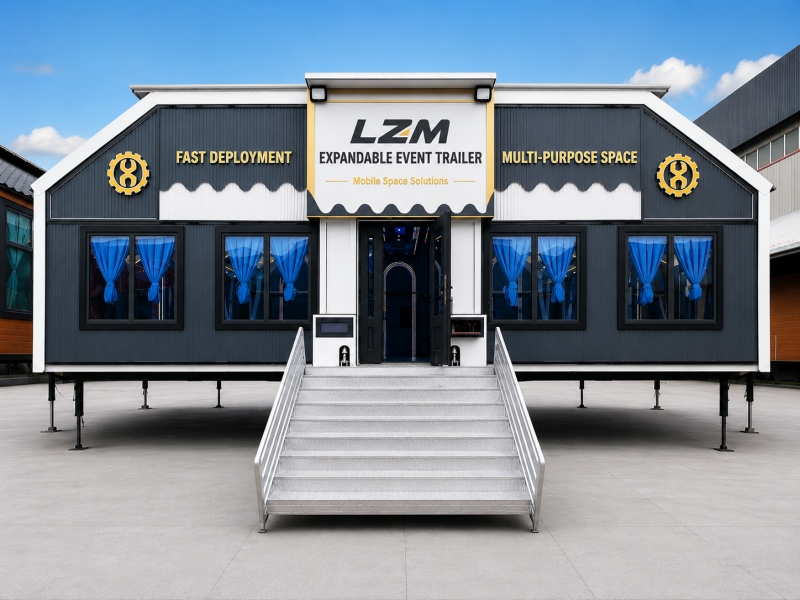
This creates a different operating model:
Semi-permanent deployment with future relocation capability.
For some buyers, this can be more useful than either a conventional event trailer that moves constantly or a permanent building that cannot move at all.
The word “mobile” often creates the wrong impression.
Buyers sometimes assume that a mobile venue must be:
Opened every morning
Closed every evening
Transported frequently
Operated like a rental trailer
But mobility simply means the structure has been designed so that it can be transported and redeployed.
How frequently it actually moves depends on the business model.
Consider three different users.
May relocate the trailer every few days.
May deploy the trailer for the entire wedding season.
May leave it in one location throughout a construction or renovation period.
They can use essentially the same expandable concept in very different ways.
Frequent relocation is useful when mobility generates revenue.
But moving the venue unnecessarily creates additional:
Transport cost
Labor
Setup time
Mechanical cycles
Logistics planning
If the venue is generating value at one location, there may be no commercial reason to close it.
Long-term deployment can therefore make sense for applications such as:
Wedding resorts
Hotels
Seasonal event venues
Schools
Corporate campuses
Sports facilities
Hospitality projects
Temporary commercial buildings
The expandable system provides the option to relocate later.
It does not require constant relocation.
Commercial buyers often face two extremes.
Provides a stable long-term building but may require:
Large capital investment
Long construction period
Fixed location
Significant permitting
Demolition or abandonment when no longer needed
Can be installed quickly but may not provide the same:
Interior quality
Climate control
Structural feel
Repeatability
An expandable event trailer can occupy a middle position.
It can function as a substantial enclosed venue while remaining relocatable when the project changes.
Imagine a resort that already has:
Hotel rooms
Kitchen
Restrooms
Landscaping
Parking
Ceremony area
But its existing ballroom cannot accommodate all wedding demand.
The resort may deploy an expandable banquet hall next to the existing facilities.
Rather than retracting it after every wedding, the venue might remain open throughout:
Spring → Summer → Autumn Wedding Season
During that period, it functions almost like another ballroom.
At the end of the season, the operator can decide whether to:
Keep it deployed
Close it for winter
Relocate it
Store it
Move it to another property
That flexibility is fundamentally different from constructing another permanent building.
Schools sometimes need additional space because of:
Campus expansion
Renovation
Enrollment growth
Temporary building closure
An expandable structure could potentially serve as:
Student cafeteria
Multipurpose hall
Activity space
for months rather than days.
In this situation, rapid weekly relocation is not important.
Priorities shift toward:
Reliable HVAC
Stable floor
Utility connections
Durable interior materials
Easy cleaning
Long-term weather protection
The same expandable technology is being used, but the operating requirements change.
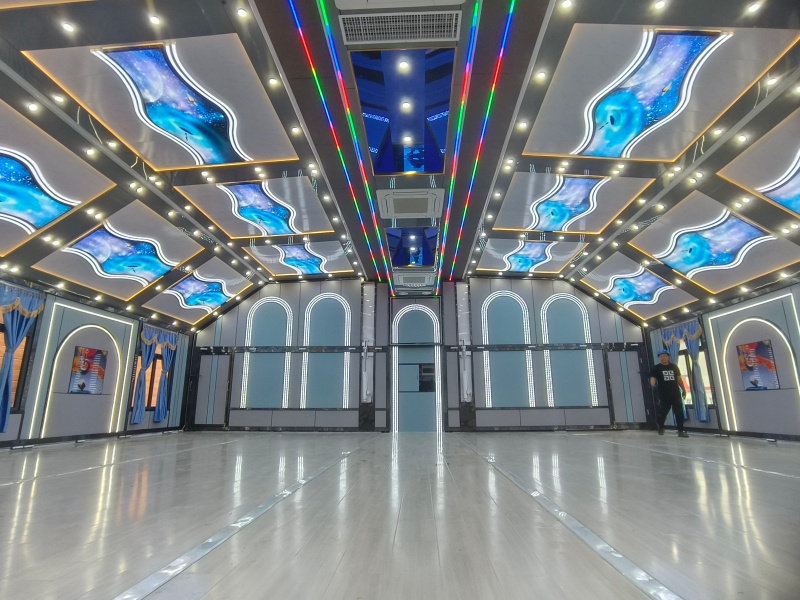
A trailer staying on site for several months should not be positioned casually.
The installation location needs to be evaluated carefully.
Important factors can include:
Ground bearing capacity
Drainage
Site slope
Access
Utilities
Wind exposure
Surrounding buildings
Emergency access
A location that works for a two-day event may not necessarily be ideal for a six-month deployment.
When a structure remains deployed, ground movement matters.
Potential problems include:
Settlement
Softening after rain
Freeze-thaw effects
Erosion
Poor drainage
If one support point settles gradually, the structure can lose level.
That may affect:
Floor alignment
Doors
Seals
Structural geometry
Long-term installations therefore benefit from a properly prepared supporting surface.
Not necessarily in every project.
One advantage of an expandable trailer is that it may not require the same type of permanent foundation as a conventional building.
However, this does not mean it can be placed on any ground condition.
Depending on the project, suitable support could involve:
Concrete surface
Engineered pads
Compacted base
Designed load-spreading points
Other site-specific preparation
The appropriate solution depends on:
Trailer weight
Support reactions
Soil conditions
Deployment duration
Local requirements
For long-term installations, site preparation should be evaluated professionally.
Leveling is not only important during the first day of setup.
For an extended installation, the operator should periodically confirm that the structure remains properly supported.
Potential warning signs can include:
Doors beginning to bind
Visible floor variation
Unexpected gaps
Changes in seal alignment
These can indicate movement in the supporting surface.
Periodic inspection is much easier than waiting until settlement becomes a larger structural problem.
Hydraulic or structural supports may remain loaded while the venue is deployed.
This means they should be considered part of the long-term installation.
Operators should inspect relevant:
Support feet
Mounting structures
Cylinders
Pins
Hydraulic connections
Ground interfaces
The objective is to ensure the loads continue to transfer safely to the site.
Depending on the trailer engineering, deployed structural support may involve more than simply maintaining hydraulic pressure indefinitely.
Hydraulic systems and mechanical support arrangements should follow the manufacturer's designed operating condition.
Buyers should ask:
How is the trailer structurally supported once fully deployed for long periods?
This is more useful than assuming that hydraulic cylinders alone carry every load throughout months of operation.
A two-day event may experience one rainstorm.
A six-month installation may experience:
Repeated rain
Wind
Temperature changes
Humidity
Dust
Sun exposure
The venue therefore needs appropriate sealing at:
Expandable joints
Roof interfaces
Doors
Windows
Utility penetrations
Long-term operators should inspect seals periodically rather than waiting for a leak to appear inside the finished interior.
Good drainage is essential.
The installation site should not allow rainwater to accumulate underneath or around critical structural areas.
Standing water can contribute to:
Corrosion
Ground softening
Humidity
Difficult maintenance access
The site may require appropriate grading or drainage planning.
Long-term performance depends partly on what happens around the trailer—not only what the manufacturer builds into it.
Large expandable venues create significant roof area.
Rainfall therefore produces substantial water runoff.
The design and site arrangement should allow water to leave the roof and surrounding area effectively.
Blocked drainage paths should be cleared during routine inspection.
In cold climates, snow and ice create additional structural considerations that should be addressed according to the project design and local conditions.
A temporary event trailer may operate for a few hours.
A semi-permanent venue may operate every day.
HVAC therefore becomes a major lifecycle consideration.
The system needs to handle the real climate of the location, which may include:
Summer heat
High humidity
Cold winters
Large daily temperature variation
Sizing HVAC only for a short demonstration at the factory is not sufficient.
The intended operating environment should be known during design.
If the venue operates air conditioning for months, electricity becomes a significant operating cost.
Buyers should therefore consider:
Insulation
Air leakage
Door-opening frequency
Glass area
HVAC efficiency
Operating schedule
Better thermal performance can reduce ongoing energy demand.
For a long-term installation, the economics of energy efficiency become more important than for a trailer used only occasionally.
Insulation is not simply a winter feature.
In hot climates, it helps reduce heat entering the venue.
In cold climates, it helps retain heat.
This influences:
Guest comfort
HVAC equipment sizing
Energy consumption
For long-term projects in places such as the Middle East or northern North America, thermal design can materially affect operating cost.
A trailer used for a weekend might connect to temporary utilities.
A trailer deployed for several months may benefit from more organized connections.
These can include:
Electrical supply
Fresh water
Wastewater
Internet
External drainage
The installation should still preserve the ability to disconnect and relocate the venue later.
The aim is:
Reliable Long-Term Connection
without unnecessarily turning the mobile asset into an irreversible permanent building.
Long-term operation may include daily use of:
HVAC
Lighting
Refrigeration
Screens
Computers
Catering equipment
The electrical connection therefore needs to support realistic peak loads.
Temporary extension cables are not a sensible long-term infrastructure strategy.
A properly planned distribution system improves:
Reliability
Safety
Appearance
Maintenance
A generator can be useful where grid power is unavailable.
But operating a large climate-controlled venue continuously from diesel generation can create substantial:
Fuel cost
Noise
Maintenance
Refueling logistics
For long-term installations, access to a suitable grid connection may be economically preferable where available.
The energy strategy should be evaluated early in the project.
A venue that remains in one location for an extended period may be a better candidate for supplemental solar generation than a trailer constantly moving.
However, solar output still needs to be compared with actual loads.
Large HVAC systems can consume significantly more energy than a limited roof-mounted solar system produces.
Solar should therefore be treated as part of an engineered energy strategy rather than assumed to replace the main power supply automatically.
A trailer with restrooms or food service may need:
Fresh water
Wastewater disposal
Pumps
Tanks
For short events, tank-based operation can be practical.
For a six-month installation, repeatedly filling and emptying tanks may become inefficient.
Where suitable infrastructure exists, a more direct site connection may be preferable.
The buyer should define the intended deployment duration before deciding how the sanitary system should work.
Some sites lack a permanent sewer connection.
Depending on local regulations and project requirements, possible solutions may involve:
Wastewater holding tanks
External tanks
Periodic pump-out service
Other approved site systems
But long-term sanitary capacity should be calculated differently from one-day event use.
A system adequate for a wedding weekend may be inconvenient for daily operation over several months.
For long-term sites with nearby permanent restrooms, the buyer may choose not to integrate toilets inside the trailer.
That preserves more interior area for:
Banquet seating
Student dining
Activity space
Lounge functions
For remote sites, integrated sanitary systems may provide greater operational independence.
The right decision depends on existing site infrastructure.
A venue that moves every week needs furniture and decoration that can tolerate frequent packing and transportation.
A semi-permanent installation has more freedom.
It may use:
Larger decorative installations
Additional lounge furniture
More elaborate entrance features
Fixed-looking reception areas
Landscaping around the venue
This can make the space feel even closer to a permanent commercial building.
A resort could combine the expandable banquet hall with:
Outdoor ceremony area
Walkways
Decorative lighting
Gardens
Guest reception
External catering area
The trailer becomes one component of a larger wedding property.
Because it remains deployed during the season, the operator does not need to rebuild the surrounding guest environment before every event.
This is the important limitation.
Any semi-permanent exterior or interior installation needs to respect the fact that the trailer may eventually close again.
Permanent-looking additions should not block:
Expandable sections
Hydraulic components
Support legs
Access panels
Transportation clearance
The venue can look permanent without losing its engineered mobility.
Buyers sometimes want to add:
Decks
Stairs
Canopies
Decorative walls
around the deployed trailer.
This can be possible depending on the project, but the interface needs careful planning.
The operator should understand:
Which sections move
Required clearance
Service access
Retraction sequence
A locally built deck that physically blocks the trailer from closing defeats one of the main reasons for choosing an expandable structure.
For long-term use, temporary portable steps may not provide the desired guest experience.
Operators may consider more developed:
Entrance stairs
Handrails
Accessibility solutions
Ramps
Deck areas
These should meet applicable local requirements.
They should also be designed so the trailer can eventually be disconnected and relocated.
If the venue serves the public, local accessibility requirements may apply.
This can influence:
Entrance level
Ramp design
Door width
Interior circulation
Restrooms
For long-term commercial installations, authorities may treat accessibility more seriously than buyers initially expect.
Destination requirements should therefore be reviewed before finalizing the site layout.
Calling the structure “temporary” or “mobile” does not automatically remove local life-safety requirements.
Depending on jurisdiction and intended use, authorities may require consideration of:
Occupancy
Emergency exits
Exit signage
Emergency lighting
Fire extinguishers
Alarm systems
Other fire-safety provisions
Requirements vary by destination.
Commercial buyers should confirm local regulations during project planning.
In some jurisdictions, regulatory treatment can differ between:
Very short event use
Seasonal installations
Long-term temporary structures
Permanent buildings
A structure installed for six months may be treated differently from one used for two days.
The buyer should therefore explain the expected deployment period to local authorities rather than simply describing the product as a trailer.
Once the trailer is deployed, attention naturally shifts to the building above it.
But the chassis remains part of the asset.
Long-term exposure can involve:
Moisture
Dirt
Salt
Vegetation
Standing water
Periodic inspection should include the underbody, chassis and structural components.
A trailer left outdoors for years still needs vehicle-oriented maintenance even if it rarely moves.
A trailer remaining in one place for months can still experience tire-related issues.
Depending on how the deployed load is supported and the chassis configuration, operators should follow appropriate procedures for:
Tire pressure
Inspection
Weathering
Long-term storage
Before the trailer is moved again, the running gear should be inspected carefully.
Do not assume that lack of road mileage means the tires require no attention.
A semi-permanent trailer may remain parked for a long time.
Before returning it to public roads, the operator should inspect relevant road-running systems such as:
Brakes
Tires
Lighting
Suspension
Coupling
The venue may have performed perfectly as a building while some road components have not been used for months.
Both functions need to remain serviceable.
A trailer left open for an extended period may not operate its expansion cylinders regularly.
When the operator eventually needs to retract it, the hydraulic system must still work.
Maintenance should therefore include appropriate inspection of:
Oil
Hoses
Fittings
Cylinders
Pump
Control system
according to the manufacturer's maintenance requirements.
Waiting until relocation day to inspect the system creates unnecessary risk.
Expansion joints contain sealing interfaces that help protect the interior from weather.
Over time, seals may experience:
UV exposure
Dust
Temperature changes
Compression
Aging
Regular inspection can identify problems before water reaches the interior finishes.
Preventive replacement of a seal can be much cheaper than repairing water-damaged flooring and wall panels.
Long-term deployment near the sea creates a demanding environment.
Salt-laden air can affect:
Steel structure
Chassis
Fasteners
Hydraulic components
Electrical components
A trailer used occasionally near the coast and stored inland experiences a different exposure profile from one deployed continuously beside the ocean.
If the intended site is coastal, the manufacturer should know this during specification.
Protective coatings are not necessarily maintenance-free forever.
Long-term operators should inspect for:
Scratches
Impact damage
Coating breakdown
Corrosion spots
Damaged protective layers should be repaired appropriately before corrosion spreads beneath surrounding coating.
This is particularly important in humid and marine environments.
Any commercial building needs inspection.
An expandable venue is no exception.
For long-term deployments, a maintenance schedule can include:
Roof
Seals
Doors
Windows
Expansion joints
Exterior panels
Drainage
A small problem discovered early is generally much easier to correct.
A rental trailer may receive a deep clean after every booking.
A semi-permanent venue requires an ongoing facility-cleaning schedule.
This can include:
Floors
Walls
HVAC filters
Restrooms
Windows
Service areas
Material selection should therefore consider repeated commercial cleaning.
Wedding, school and food-service projects may have very different hygiene requirements.
Long-term daily operation creates more HVAC runtime.
Filters can accumulate:
Dust
Pollen
Indoor particles
If neglected, airflow and performance can deteriorate.
Operators should follow the appropriate HVAC maintenance schedule.
In dusty or high-use environments, service intervals may need to be more frequent.
A venue generating revenue every day cannot wait several weeks for a simple replacement component.
International buyers may therefore want to maintain a local spare-parts inventory for selected systems.
Possible categories can include:
Electrical components
Hydraulic components
Lighting
Seals
HVAC consumables
The appropriate spare package depends on the project configuration.
For a long-term project, the buyer should ask:
Can local technicians maintain the major systems?
Systems such as:
HVAC
Hydraulics
Electrical equipment
should ideally use serviceable components that competent local specialists can understand.
A technically impressive product becomes commercially difficult if every minor issue requires international service personnel.
If the venue will remain open for months, furniture does not need to be optimized primarily for repeated transport.
The operator may choose heavier, more comfortable items.
However, they still need a plan for future relocation.
Before the trailer closes, furniture may need to be:
Removed
Secured
Transported separately
The business should understand the eventual demobilization process from the beginning.
A long-term venue accumulates operational materials.
Wedding venues may store:
Tableware
Decorations
Linens
Schools may need:
Cleaning equipment
Activity supplies
Corporate venues may have:
AV equipment
Marketing materials
If storage is not planned, these items eventually occupy visible guest space.
A semi-permanent project should therefore consider whether separate storage is required.
For an event rental company, weekly bookings can produce high revenue but require continuous logistics.
A long-term contract may provide lower daily revenue but greater certainty.
For example, a customer may lease the venue for:
Three months
Six months
One year
This can reduce:
Transportation frequency
Sales gaps
Setup labor
The operator should evaluate total project economics rather than only the daily rate.
A customer leasing the venue for six months is creating a very different cost structure from 180 individual one-day events.
There may be only:
One delivery
One deployment
One final collection
The rental company can therefore develop long-term pricing separately from event-by-event pricing.
The correct rate depends on:
Asset investment
Financing
Expected utilization
Maintenance responsibility
Customer obligations
Location
For a long-term rental, who performs routine maintenance?
The contract should clarify responsibilities such as:
Cleaning
HVAC servicing
Damage reporting
Utility management
Site drainage
Routine inspections
The owner may retain responsibility for major mechanical systems while the customer handles normal daily facility operation.
Ambiguity creates disputes.
A venue leased for months may begin to feel like the customer's own building.
They may want to:
Drill holes
Mount signs
Install equipment
Add plumbing
Build structures against it
Major modifications can affect:
Structure
Seals
Electrical systems
Future retraction
Rental agreements should define what alterations are permitted.
This distinction matters.
An expandable event trailer can remain deployed for an extended period, but it remains a relocatable engineered asset.
If a customer intends to keep the venue at the same site for decades and never move it, a conventional permanent building may eventually be the more logical solution.
Expandable systems create the most value when future flexibility has commercial importance.
A semi-permanent expandable venue is particularly attractive when the buyer needs space:
Quickly
but does not want to commit permanently to one location.
Examples include:
A wedding venue has more bookings than existing halls can support.
A school or business loses part of its building during renovation.
A resort needs additional space only during the high season.
A company wants to test demand before constructing permanent facilities.
A site is available for several years but not suitable for permanent construction.
In all of these cases, future relocation retains value.
A hotel might plan a new ballroom that will take two years to design and build.
Demand exists today.
An expandable venue could potentially provide additional event capacity during that period.
When the permanent ballroom opens, the mobile asset could then be:
Relocated to another property
Used for outdoor events
Rented externally
Sold
This gives the investment a possible second life.
Permanent construction is tied to land.
If the business location becomes less attractive, the building remains there.
A mobile venue can potentially follow:
Customers
New properties
New projects
New markets
That does not mean relocation is free.
Large trailers still involve transportation and setup costs.
But the physical venue itself does not have to remain permanently attached to one commercial site.
Hotel or resort groups can potentially relocate the venue between properties.
For example:
Property A — Summer
↓
Property B — Winter
This could allow one asset to support different seasonal demand patterns.
The practicality depends on transport distance, chassis configuration and local requirements.
But it illustrates a fundamental difference between expandable venues and permanent buildings.
Some buyers pay for mobility without ever planning to use it.
Before ordering, ask:
How often do we realistically expect this venue to move?
If the answer is:
Every week
the design should prioritize fast deployment and road operation.
If the answer is:
Once every six months
long-term comfort and utility connections may become more important.
If the answer is:
Maybe once every five years
the project may need to be compared carefully with modular or permanent construction.
The operating model should drive the product specification.
A high-frequency rental trailer may prioritize:
Durable lightweight furnishings
Fast utility connections
Rapid rebranding
Easy transport
Simplified site setup
A semi-permanent hospitality trailer may prioritize:
More elaborate interior
Larger furniture
Permanent-style utility interfaces
Long-duration HVAC operation
Exterior landscaping integration
Both are expandable event trailers.
But the best configuration is different.
This is a simple but useful project question.
Instead of telling the manufacturer only:
“We need a 15m event trailer.”
also explain:
“It will normally remain deployed for six months and move twice per year.”
That information helps discussions about:
HVAC
Utilities
Materials
Site support
Chassis
Maintenance
Interior layout
The operating pattern is part of the technical specification.
For semi-permanent operation, buyers should create a complete site plan showing:
Trailer footprint
Expanded dimensions
Entrance
Emergency exits
Parking
Utility connections
External stairs or ramps
Drainage
Nearby buildings
Service access
This turns the project from “parking a trailer” into planning a functioning commercial venue.
Long-term operators sometimes gradually fill the surrounding area with:
Storage
Decorations
Furniture
Landscaping
Temporary structures
Service access should remain available.
Technicians may eventually need access to:
Hydraulic components
HVAC
Chassis
Electrical systems
A venue that cannot be maintained without dismantling surrounding structures has been poorly site-planned.
This is particularly relevant to semi-permanent projects.
It is easy to create:
Beautiful landscaping
Permanent gates
Decks
Decorative structures
after the trailer is installed.
But will the trailer still be able to leave?
The future transport route should remain practical.
A relocatable building has value only if relocation remains possible.
Before leaving an expandable event trailer deployed for an extended period, review:
Ground bearing conditions
Leveling
Support system
Drainage
Weather sealing
HVAC capacity
Electrical supply
Water and wastewater
Local approval requirements
Emergency access
Corrosion environment
Maintenance schedule
Future transport route
These items should be considered as one complete installation plan.
A trailer that does not move is not a trailer that requires no maintenance.
In fact, long-term environmental exposure creates its own inspection requirements.
Operators should maintain an appropriate schedule for:
Structure + Supports + Seals + Roof + HVAC + Electrical + Hydraulics + Chassis
The exact intervals depend on equipment, environment and manufacturer recommendations.
After months of deployment, the operator should not simply press the closing control.
First check:
Interior items removed or secured
External structures disconnected
Utilities disconnected
Expansion zones clear
Seals and joints inspected
Hydraulic system ready
Support conditions
No unauthorized modifications blocking movement
Long-term operation may have changed the site substantially since the original deployment.
If the trailer has remained stationary for a long period, inspect the transport system before returning to the road.
This can include relevant:
Tires
Brakes
Axles
Suspension
Coupling
Road lights
A venue can be perfectly functional inside while its road equipment still needs attention.
This is one of the unique maintenance characteristics of a mobile building.
There is no useful universal answer such as:
“Exactly six months.”
The more meaningful question is:
Has the trailer, installation site and maintenance plan been designed for the intended deployment period?
A well-planned semi-permanent installation is very different from parking a trailer on unsuitable soil and forgetting about it.
Duration is only one part of the engineering problem.
Some businesses may rarely relocate the venue.
Yet the ability to move it still has value.
Business conditions change.
A property may be sold.
A lease may end.
Demand may move.
Another location may become more profitable.
With a permanent ballroom, the asset stays with the land.
With an expandable mobile venue, the business may retain another option:
Move the revenue-producing space somewhere else.
That strategic flexibility can be one of the strongest reasons to choose a mobile expandable structure even for long-term deployment.
For many projects, “event trailer” describes how the venue travels better than how it operates.
Once deployed for several months, the customer may experience it more like:
Banquet hall
Wedding venue
Dining hall
Hospitality suite
Multipurpose space
The trailer chassis becomes almost invisible to everyday users.
But when the project changes, the transport capability becomes important again.
This combination of building-like use and future mobility is what distinguishes the concept.
LZM manufactures expandable event trailers for both frequent mobile operation and long-term semi-permanent deployment, with project-specific layouts, HVAC, electrical systems, hydraulic expansion, insulation and interior configurations according to the intended application and operating environment.
Explore expandable event trailer configurations for long-term, seasonal and semi-permanent commercial venue projects:
Expandable Event Trailer for Long-Term & Semi-Permanent Use