Welcome: Laizhou Machinery Group



An expandable event trailer can look impressive in photographs and videos.
But a commercial buyer should not make a purchasing decision from appearance alone.
Before placing an order, the buyer needs to understand exactly what is being manufactured.
How large is the trailer during transportation?
How large is it after expansion?
What is the usable interior area?
What does it weigh?
How does the hydraulic system operate?
What electrical supply does it require?
Can the chassis meet the destination's transportation requirements?
These questions become particularly important when comparing quotations from different expandable event trailer manufacturers.
Two suppliers may both describe their product as a:
15m Expandable Event Trailer
but the actual engineering specifications can be very different.
Before comparing prices, buyers should verify the following technical information.
The first dimensions to check are not the expanded dimensions.
They are the dimensions when the trailer is prepared for transportation.
Ask the manufacturer to provide:
Overall closed length
Overall closed width
Overall transport height
Chassis dimensions where applicable
Transport dimensions influence:
Road transportation
Shipping
Site access
Route planning
Destination compliance
A trailer that creates an excellent venue after expansion still needs a practical method of reaching the event site.
For international projects, this should be evaluated before production.
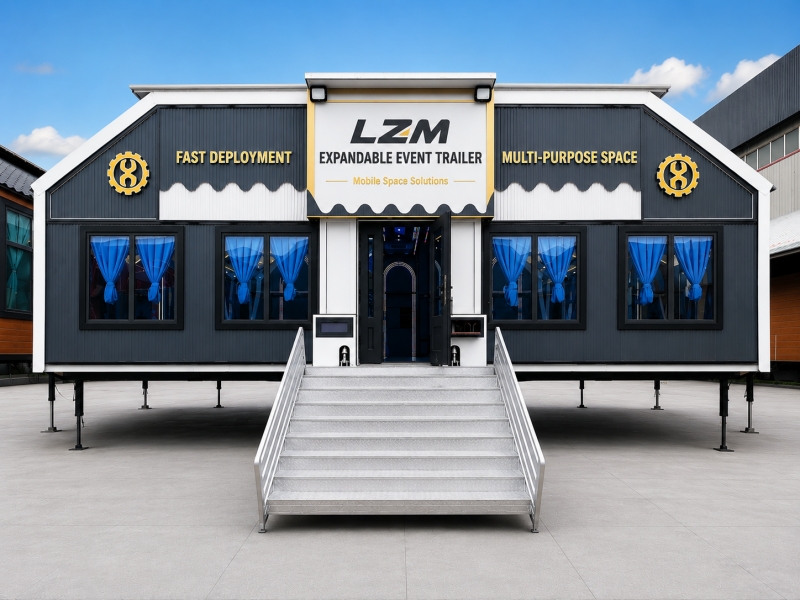
Next, verify the dimensions after deployment.
Buyers should understand:
Closed Size → Expanded Size
and not rely only on promotional statements such as:
“Expands to a very large event space.”
Ask for actual dimensions.
This helps determine whether the venue can accommodate the intended:
Banquet layout
Guest capacity
Brand activation
Hospitality area
Corporate event
Student facility
Other commercial application
It also tells the operator how much clear site area is required for deployment.
External dimensions do not automatically equal usable event space.
Structural components, fixed equipment and internal service areas may reduce the area available to guests.
Ask:
What is the actual usable interior floor area after expansion?
For a wedding project, this affects the number of tables.
For a corporate event, it affects seating.
For brand activation, it affects visitor circulation.
For a school dining hall, it affects the number of students per sitting.
Usable area is usually more commercially meaningful than external dimensions alone.
Floor area receives most of the attention, but interior height also matters.
A commercial event venue may contain:
Large LED screens
Decorative lighting
Branding
Hanging decorations
AV equipment
Some specialized applications may have even greater height requirements.
Buyers should therefore confirm the clear usable interior height, not simply the overall transport height.
This is especially important when a project has specific interior equipment that needs vertical clearance.
Weight is one of the most important specifications for a mobile structure.
Ask for available information regarding:
Trailer empty weight
Chassis weight where applicable
Expected equipment weight
Weight distribution
Axle loading where relevant
Do not assume the final weight remains unchanged when major customization is added.
Systems such as:
Large LED displays
HVAC
Furniture
Water tanks
Batteries
Generators
Kitchen equipment
can affect the completed configuration.
For customized projects, final engineering should consider the actual equipment package.
This specification is particularly important when the trailer will support more than ordinary event furniture.
Ask the manufacturer:
What floor load is the structure designed to support?
Typical event use may include:
Guests
Banquet tables
Chairs
Lounge furniture
Event equipment
Display systems
But some buyers may want to install significantly heavier equipment.
That requirement should be identified before ordering.
A structure designed for commercial events should not automatically be assumed suitable for industrial machinery or unusually concentrated loads.
Where heavy equipment is planned, provide:
Equipment weight
Footprint
Number of support points
Load concentration
The engineering team can then evaluate the requirement properly.
The hydraulic system is one of the core mechanical systems of an expandable trailer.
Buyers should understand which operations are hydraulic.
Depending on the design, these may include:
Expansion
Retraction
Supporting functions
Leveling-related operations
Ask the supplier to explain the deployment procedure.
A useful technical review should cover:
Transport Mode → Positioning → Deployment → Operational Mode → Retraction
Videos can help demonstrate the process, but buyers should also request technical documentation for the final project.
Once expanded, the venue needs stable support.
This becomes especially important because event sites are not always perfectly level.
The buyer should understand:
How the structure is supported
How leveling is performed
What site conditions are required
What preparation the operator needs before deployment
Ground conditions should also be considered.
A paved exhibition site, hotel property and temporary outdoor event field can present very different installation conditions.
The manufacturer should know the expected operating environment.
Do not simply ask:
“Does it have air conditioning?”
Ask:
What HVAC configuration is proposed for my operating conditions?
HVAC demand depends on:
Expanded interior volume
Guest numbers
Outdoor temperature
Humidity
LED screens
Lighting
Electrical equipment
Door-opening frequency
A large wedding reception filled with guests places a very different load on the system from an empty trailer in a factory demonstration video.
For hot, cold or humid destinations, environmental conditions should be provided during engineering.
Electrical configuration is another specification that should never be assumed.
The buyer should confirm:
Voltage
Frequency
Phase
Main electrical capacity
Distribution
Major equipment loads
Potential electrical consumers include:
HVAC + Lighting + LED Screens + Audio + Refrigeration + Computers + Event Equipment
For international projects, the electrical system should be developed around the destination and intended equipment.
A buyer should not discover after delivery that the trailer's electrical configuration does not match the operating site.
Interior appearance is only one part of the structure.
Buyers should ask what materials and systems are used for:
Structural frame
Exterior panels
Interior walls
Roof
Flooring
Insulation
Sealing
This becomes particularly important in demanding environments.
For example, a project operating near the coast may need additional consideration for corrosion protection because of high humidity and salt exposure.
A project operating in a cold climate may place greater emphasis on insulation and heating.
The destination should therefore influence the technical specification.
For international buyers, this may be the most important item on the entire checklist.
A complete trailer manufactured in China still needs to comply with the requirements that apply where it will operate.
Depending on the destination, requirements may involve:
Overall dimensions
Axles
Brakes
Lighting
Coupling
Weight
Registration
Road approval
These requirements differ between countries.
Buyers should investigate the applicable destination requirements before confirming the chassis configuration.
For some projects, another procurement model may be more practical:
Expandable Superstructure + Locally Sourced Chassis
In this arrangement, the expandable structure is manufactured separately and installed on a suitable locally sourced chassis according to the project design.
This approach may be considered where importing a complete Chinese chassis creates local road-compliance difficulties.
However, the interface needs engineering coordination.
The buyer and manufacturer should confirm:
Mounting points
Structural dimensions
Weight distribution
Chassis dimensions
Installation requirements
This should be planned before manufacturing begins.
A catalogue is useful during the first stage of purchasing.
It is not enough for a customized project.
Before final production, buyers should review appropriate project drawings showing relevant information such as:
Overall dimensions
Expanded dimensions
Interior layout
Doors
Windows
Equipment positions
Functional zones
The exact drawing package depends on the project.
The important point is that the buyer should understand what will actually be manufactured.
A manufacturer may provide an estimated capacity.
The buyer should still test that capacity against the intended layout.
For example, a wedding project may need:
Round Tables + Chairs + Dance Floor + Main Aisle + Entertainment
A school project may need:
Dining Tables + Serving Area + Student Circulation
A brand activation may need:
Product Display + Sampling + Visitor Flow + Hospitality
The same floor area produces different practical capacities.
This is why capacity should be evaluated from a real layout.
Before comparing two prices, confirm whether both suppliers are quoting the same scope.
A quotation may or may not include:
Chassis
HVAC
LED screens
Furniture
Lighting
Electrical system
Interior finishing
Hydraulic equipment
Generator
Water system
Restrooms
Kitchen equipment
If Supplier A includes several major systems and Supplier B does not, comparing only the final price is meaningless.
Create a simple specification table and compare each item.
Expandable structures contain moving mechanical systems.
Before purchasing, understand the expected maintenance for components such as:
Hydraulic system
Hinges
Seals
Moving structures
Electrical system
HVAC
Support system
For a commercial rental company, downtime can mean lost bookings.
Maintenance accessibility and spare-parts planning therefore have commercial value.
International equipment creates an obvious problem:
the manufacturer may be thousands of kilometers away.
Buyers should therefore discuss:
Recommended spare parts
Consumable components
Hydraulic components
Electrical components
Replacement procedures
Remote technical support
It is much easier to prepare a small spare-parts package during shipment than to discover a critical component is needed during an event season.
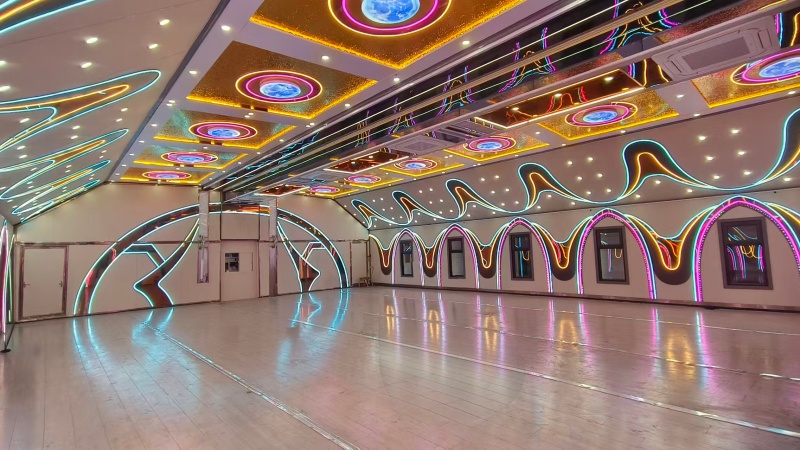
Before shipment, the buyer should understand how the trailer operates.
A complete demonstration may cover:
Positioning
↓
Support / Leveling
↓
Expansion
↓
Electrical Connection
↓
HVAC and Equipment Operation
↓
Retraction
↓
Transport Preparation
Video documentation can also be useful for training future operators.
For rental companies with multiple staff members, standardized procedures become increasingly important.
A common purchasing mistake is reviewing the original specification and assuming it remains unchanged.
But customization can affect:
Weight
Electrical load
HVAC demand
Interior capacity
Floor layout
If major equipment is added during design, the project should be reviewed again before manufacturing is finalized.
The final approved configuration—not the first catalogue specification—is what matters.
Before confirming an expandable event trailer order, make sure you understand:
Closed transport dimensions
Fully expanded dimensions
Usable interior floor area
Interior clear height
Weight and weight distribution
Floor load capacity
Hydraulic expansion system
Support and leveling
HVAC configuration
Electrical specification
Structural materials and environmental protection
Chassis and destination compatibility
Then verify:
Layout + Included Equipment + Drawings + Maintenance + Spare Parts + Destination Requirements
Only after these items are reasonably clear should price become the deciding factor.
A low quotation can become expensive if the buyer later discovers that it needs:
Additional HVAC
Electrical modifications
Different chassis
Structural changes
Additional equipment
Local rework
Conversely, paying for unnecessary systems also wastes money.
The objective is not to specify everything possible.
It is to specify everything the project actually needs.
At the beginning of an enquiry, the buyer may have only a concept:
“We want a mobile wedding venue.”
or:
“We need a large expandable event space.”
That is enough to start a conversation.
But before manufacturing begins, that concept needs to become measurable:
Dimensions. Weight. Layout. Capacity. Loads. HVAC. Electrical System. Chassis. Materials.
That transition is what turns an attractive product idea into an engineered commercial asset.
LZM manufactures expandable event trailers in multiple sizes and develops project-specific configurations according to the intended application, destination, layout and technical requirements.
Review expandable event trailer specifications and configuration options for your project:
Expandable Event Trailer Specifications & Configuration Options