Welcome: Laizhou Machinery Group



A buyer sends an enquiry:
“Please quote your expandable event trailer.”
The manufacturer replies:
“What size do you need?”
The buyer answers:
“Please send all sizes and prices.”
This exchange happens frequently in international equipment purchasing, but it rarely produces a useful quotation.
An expandable event trailer is not a standardized product where every buyer receives exactly the same configuration.
The final price can be affected by:
Trailer dimensions
Expanded floor area
Interior layout
Application
HVAC
Electrical system
LED screens
Doors and windows
Interior finishes
Destination
Transportation solution
Other customization
A useful quotation therefore begins before the manufacturer calculates the price.
It begins with the buyer providing enough information to define the project.
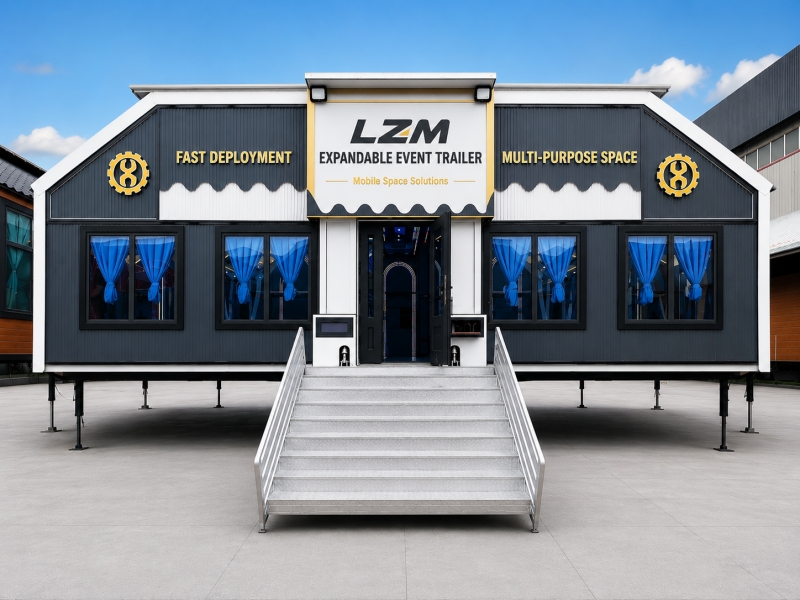
Two trailers may have the same overall length but very different specifications.
Consider two 15m projects.
The first buyer needs a relatively simple corporate event venue.
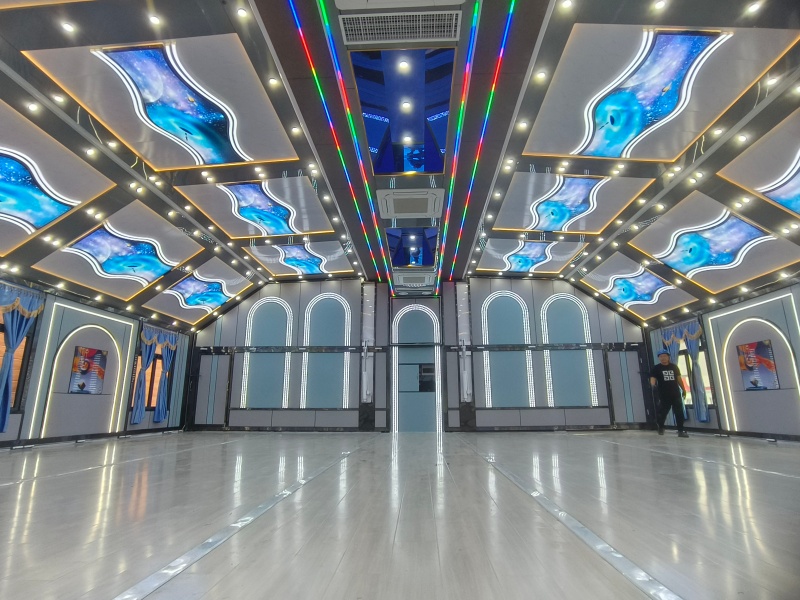
The second needs a premium wedding hall with upgraded interior finishes, large LED displays, substantial HVAC and additional electrical equipment.
Both can be described as:
15m Expandable Event Trailer
But they are not commercially equivalent products.
This is why comparing only:
Length + Price
can produce the wrong purchasing decision.
A meaningful comparison needs:
Dimensions + Configuration + Equipment + Materials + Destination Requirements + Price
The first information a manufacturer needs is not necessarily the trailer length.
It is:
What will the trailer be used for?
Possible applications include:
Wedding receptions
Banquets
Corporate events
Brand activations
VIP hospitality
Sports events
Exhibitions
Product launches
Event rental
The application affects almost every subsequent design decision.
A wedding operator may prioritize banquet capacity and interior finish.
A marketing agency may prioritize branding, LED displays and flexible visitor circulation.
A hospitality operator may require lounge areas and private meeting space.
Without knowing the application, the manufacturer can only provide a generic configuration.
The next question is usually:
How many people will use the venue?
But even this needs more detail.
A buyer should ideally specify:
Normal guest capacity
Maximum guest capacity
Seating or standing
Table arrangement
Type of event
For example:
200 guests for a wedding reception using round tables
is much more useful than:
200 people.
The first description gives the manufacturer information that can influence the actual floor plan.
Buyers sometimes hesitate to send a sketch because it is not a professional engineering drawing.
That does not matter.
A simple drawing can be extremely useful.
It might show:
Entrance
Banquet Area
Dance Floor
LED Screen
Reception
Meeting Room
Service Area
Even a hand-drawn concept can help the manufacturer understand the intended use of the space.
The engineering team can later develop a more detailed layout.
Some buyers already have a specific size requirement.
For example:
We need approximately a 15m trailer because of our site restrictions.
That information should be provided.
Other buyers know the event requirements but do not know which trailer size is appropriate.
In that case, it is better to provide the application and capacity and allow different models to be evaluated.
LZM expandable event trailers can be developed in different lengths, including 12m, 15m, 17m, 19m and 21m configurations.
The correct model should follow the project requirements rather than being selected only because it is the largest available option.
Destination is important.
A project in Canada may face different environmental and operating conditions from one in Saudi Arabia, Singapore or South Africa.
The buyer should provide at least:
Destination country
State or province where relevant
Typical climate
Coastal or inland location
Expected road use
Typical event environment
This information can influence discussions about:
HVAC
Corrosion protection
Electrical configuration
Transportation
Chassis requirements
Local compliance
The earlier the destination is known, the fewer assumptions need to be made.
A buyer planning to operate close to the sea should mention this during the quotation stage.
Coastal environments can expose structures and components to:
Humidity + Moisture + Airborne Salt
These conditions may require additional consideration for corrosion protection.
The manufacturer should therefore know whether the trailer will:
Operate near the coastline
Remain outdoors for long periods
Be stored near the coast
Travel on salted winter roads
Environmental requirements can then be evaluated before the technical specification and quotation are finalized.
Writing:
“Air conditioning required”
is only the beginning.
The manufacturer may also need to know:
Outdoor summer temperature
Winter temperature
Humidity
Expected guest capacity
Event duration
Door-opening frequency
A large event trailer filled with guests, lighting and LED displays creates significant internal heat.
HVAC capacity should therefore be considered under actual operating conditions.
For premium weddings and hospitality applications, indoor comfort is a core part of the product.
International electrical requirements vary.
The buyer should provide:
Voltage
Frequency
Phase requirements where applicable
The equipment list should also be discussed.
Potential loads can include:
HVAC
LED screens
Lighting
Sound systems
Refrigeration
Computers
Catering equipment
Other event technology
The manufacturer can then evaluate the electrical system according to the intended configuration.
There is a major difference between a small information display and a large event LED wall.
If screens are required, provide:
Approximate dimensions
Quantity
Installation position
Indoor or exterior use
Intended function
Large displays can affect:
Structural provisions
Electrical demand
Interior layout
Viewing distance
Defining them early reduces later design changes.
Furniture determines usable capacity.
For a wedding project, specify whether you expect:
Round tables
Rectangular tables
Banquet chairs
Lounge furniture
For corporate events:
Theater seating
Meeting tables
Conference seating
For hospitality:
Sofas
Lounge chairs
Coffee tables
A trailer that appears large on an empty floor plan can feel very different after furniture and circulation space are added.
Terms such as:
luxury interior
are subjective.
A buyer should provide reference photographs where possible.
This helps communicate expectations for:
Flooring
Wall finish
Ceiling
Lighting
Furniture
Decorative style
Reference images do not necessarily mean the manufacturer will copy the design exactly.
They help establish the expected quality and visual direction.
The buyer should consider:
Number of entrances
Preferred entrance position
Window requirements
Glass areas
Service doors
Emergency access
These elements affect the structure and interior layout.
Changing major door or window positions after production has started can be much more difficult than defining them during the design stage.
Some projects need integrated restrooms.
Others can use existing facilities at the event site.
This decision matters because restrooms require:
Interior space
Water
Wastewater
Plumbing
Ventilation
Additional equipment
A buyer who initially requests maximum banquet capacity and later adds several restrooms may find that the original floor plan no longer works.
Therefore, restroom requirements should be included in the initial project brief.
A complete kitchen can consume substantial space and electrical capacity.
Before requesting one, buyers should determine whether food will actually be prepared inside the trailer.
Many event businesses instead use:
Existing hotel kitchens
External catering
Separate mobile kitchens
Back-of-house facilities
The main event trailer may then require only a service or beverage area.
This can preserve more floor area for guests.
Mobility requirements vary dramatically.
One buyer may move the trailer twice per year.
Another may operate a rental fleet and relocate it every week.
The manufacturer should understand the expected operating model.
Frequent relocation makes factors such as:
Deployment
Retraction
Furniture storage
Equipment security
Maintenance access
Component durability
particularly important.
For some international projects, buyers may prefer to source a suitable chassis locally and purchase the expandable superstructure separately.
This can be relevant where destination road requirements make importing a complete trailer difficult.
If this approach is being considered, tell the manufacturer at the beginning.
The project can then be discussed as:
Complete Expandable Trailer
or
Expandable Superstructure + Locally Sourced Chassis
These are different project scopes and should not be quoted as if they were identical.
Another important question is:
How will the trailer move after delivery?
Possible operating models include:
Frequent public-road transportation
Occasional relocation
Movement within private property
Semi-permanent installation
The answer affects the project discussion.
For public-road operation, applicable destination requirements involving dimensions, weight, axles, brakes, lighting, coupling and registration need to be evaluated.
Buyers should investigate local requirements before finalizing the order.
A buyer may want a 21m trailer because it creates the largest single-unit venue.
But the intended sites may not have enough room.
Provide information about:
Site dimensions
Access road
Gate width
Turning area
Ground conditions
Expanded footprint available
Utility locations
Photographs or site drawings can be particularly useful.
For a rental company serving many locations, typical site conditions are more relevant than one ideal installation site.
International quotations should clearly distinguish between:
Final Operating Location
and
Destination Port
For example, the trailer may operate inland but arrive through a coastal port.
The buyer should provide the intended shipping destination when requesting CIF or other freight-inclusive pricing.
Oversized event trailers may require different logistics from conventional containerized products, so shipping should be evaluated before the order is finalized.
Custom manufacturing takes time.
Buyers planning around a specific:
Wedding season
Exhibition
Sports event
Product launch
Corporate event
should provide the required date early.
The schedule needs to account for:
Design Confirmation + Manufacturing + Testing + Export Preparation + Shipping + Destination Handling
An event date is not the same as a factory completion date.
International buyers should allow enough time after production for logistics and local preparation.
Do not assume the manufacturer automatically knows every certification or approval required for the destination.
If the project requires specific:
Electrical standards
Vehicle approvals
Structural documentation
Fire-related requirements
Material requirements
Inspection
Certification
these should be provided during the technical discussion.
The manufacturer can then evaluate what can be supplied and whether additional work is required.
This is much safer than discovering a mandatory requirement after production.
Buyers do not need to explain everything in technical language.
Reference images can quickly communicate:
Interior style
Furniture
Lighting
Event atmosphere
Exterior appearance
Functional zones
A useful project enquiry might contain:
Written Requirements + Simple Layout + Reference Images
This gives the manufacturer much more information than a one-line request for price.
Once the project requirements are reasonably clear, the quotation should identify the major configuration being offered.
This allows the buyer to understand what the price actually represents.
When comparing several suppliers, compare equivalent scopes.
A lower number means little if one quotation excludes important systems included in another.
The objective should be:
Compare like with like.
A practical initial enquiry can contain:
Application:
Wedding, banquet, corporate event, brand activation, hospitality, etc.
Destination:
Country and operating environment.
Capacity:
Expected number of guests or visitors.
Preferred Size:
If already known.
Layout:
Furniture and functional areas.
HVAC:
Heating/cooling requirements and climate.
Electrical:
Voltage, frequency and major equipment.
LED Displays:
Quantity and approximate dimensions.
Interior:
Required finish level and reference images.
Restrooms/Kitchen:
Whether required.
Mobility:
How frequently the trailer will relocate.
Chassis:
Complete trailer or superstructure only.
Site:
Access and available deployment space.
Delivery:
Required project schedule.
With this information, the manufacturer can move from a generic catalogue price toward a project-specific proposal.
For a highly customized expandable event trailer, quotation and engineering are connected.
The manufacturer first needs to understand:
What the buyer wants to achieve.
Then:
What configuration can achieve it.
Only after that does the price become meaningful.
This is why the best first question is often not:
How much is your largest expandable event trailer?
A better starting point is:
Here is how we plan to use the trailer. What configuration would you recommend?
That conversation produces a much more useful purchasing process.
LZM manufactures expandable event trailers in multiple sizes for weddings, banquets, brand activations, corporate events, sports hospitality and other commercial applications. Project configurations can be developed according to layout, destination, HVAC, electrical systems, interior requirements and intended operating conditions.
Send your project requirements and compare expandable event trailer configurations here:
Expandable Event Trailer Specifications & Project Options