Welcome: Laizhou Machinery Group



Sports sponsorship can put a brand in front of thousands—or millions—of people.
But visibility alone does not necessarily create engagement.
A logo on a banner, scoreboard or advertising board may be seen for only a few seconds. A physical brand experience gives fans an opportunity to enter the brand's space, interact with products, participate in activities and spend meaningful time with the sponsor.
This is where an expandable event trailer can play a different role.
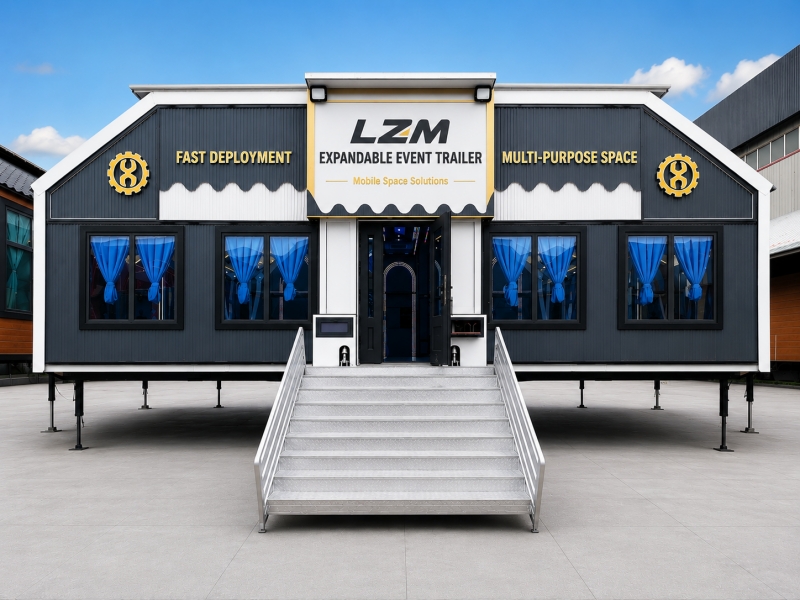
Instead of functioning simply as advertising equipment, it can become a mobile sports sponsorship activation venue that travels between events and provides a consistent branded environment at each location.
Traditional sports sponsorship often focused heavily on logo exposure.
Modern campaigns increasingly need to create direct interaction.
A sponsor may want fans to:
Try a product
Watch exclusive content
Participate in a competition
Meet athletes or influencers
Register for membership
Download an app
Create social media content
Enter a VIP hospitality area
These activities require physical space.
An expandable trailer provides an enclosed environment that can be customized around the objectives of the sponsorship campaign.
A sports sponsorship activation trailer is a mobile branded venue used by sponsors, agencies and event operators to create face-to-face engagement around sporting events.
Instead of rebuilding a temporary activation area at every venue, the same expandable facility can travel with the campaign.
Once deployed, the interior can be configured for different functions such as:
Fan Engagement + Product Experience + Digital Content + Hospitality + Promotion
The exterior also becomes part of the campaign, providing a large surface for sponsor branding and visual identity.
The first design question should not be:
How many screens can we install?
It should be:
What do we want the fan to do inside the activation?
A beverage company, automotive brand, telecommunications company and sportswear brand may all sponsor the same sporting event, but their activation objectives can be completely different.
For example:
Beverage Brand
Sampling, social content and hospitality.
Automotive Brand
Vehicle technology presentations, digital configurators and customer meetings.
Sportswear Brand
Product displays, athlete appearances and product trials.
Technology Brand
Interactive demonstrations, gaming and digital experiences.
The interior layout should follow the campaign objective.
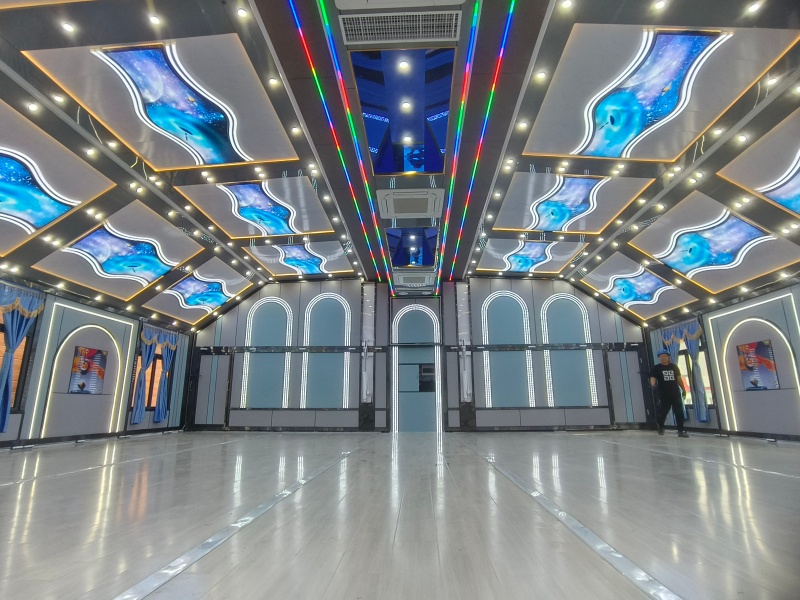
A successful activation should consider how visitors move through the space.
A possible journey might be:
Attraction → Entry → Interaction → Product Experience → Digital Engagement → Exit
This helps prevent the interior from becoming a collection of unrelated displays.
The entrance may use strong branding and digital content to attract visitors.
The central area can provide the main interactive experience.
The final area can support registration, promotional giveaways or another call to action.
The trailer should be designed around the visitor journey, not simply filled with equipment.
Sports events generate continuous visual content.
An activation trailer can incorporate LED displays for:
Live event coverage
Sponsor advertising
Athlete interviews
Product videos
Campaign graphics
Social media content
Competition results
Promotional messages
Content can change throughout the event.
Before the competition, screens may show promotional material.
During the event, they can display live or supporting content where appropriate.
Afterwards, they can be used for interviews, highlights or sponsor messaging.
This makes the physical venue part of a larger digital campaign.
One of the commercial advantages of an experiential activation is the opportunity to keep visitors engaged longer than a conventional advertisement.
Depending on the campaign, the interior could support:
Interactive displays
Gaming experiences
Product demonstrations
Photo opportunities
Digital competitions
Simulators
Touchscreen experiences
Social media activities
The appropriate technology depends on the sponsor.
The important point is that the venue provides enough controlled indoor space to create an experience rather than only displaying a product.
Sampling campaigns can generate high visitor volumes.
A beverage or consumer-products sponsor may therefore prioritize throughput rather than long visitor dwell time.
The layout could include:
Entry → Brand Experience → Sampling Counter → Promotion → Exit
Storage also becomes important.
The operator may need space for:
Product inventory
Refrigeration
Promotional materials
Waste handling
Staff supplies
These requirements should be defined before the interior design is finalized.
Not every visitor needs to use the same area.
Sports sponsorship often includes hospitality for:
Corporate customers
Distributors
Business partners
Media
Influencers
Athletes
Invited guests
Depending on the trailer size and layout, part of the expandable space can be configured as a more controlled hospitality area.
This could include:
Lounge seating
Meeting tables
Screens
Refreshment area
Private conversation space
The sponsor can therefore use one mobile asset for both public fan engagement and selected guest hospitality.
A busy activation is not automatically an effective activation.
Brands increasingly want measurable results.
Where appropriate and subject to applicable privacy requirements, campaign operators may use registration systems to measure activities such as:
Visitor registrations
Competition entries
Product enquiries
App downloads
Membership sign-ups
Survey responses
This allows the sponsor to evaluate more than foot traffic.
The activation becomes a platform for both physical engagement and measurable campaign performance.
An expandable trailer has another advantage at crowded sporting events: scale.
Large exterior surfaces can support:
Sponsor graphics
Campaign slogans
Product imagery
Digital displays
Directional information
The exterior should be considered part of the activation design rather than simply the outside of the building.
A strong visual identity can help the venue stand out among other temporary structures around the event site.
For sponsors involved in multiple events, mobility becomes particularly valuable.
A campaign might operate:
Event 1 → Event 2 → Event 3 → Championship Event
Instead of building a new temporary branded environment at every location, the sponsor can reuse the same core facility.
Graphics, digital content and selected interior elements can be updated while the main expandable structure remains the same.
For marketing agencies, this can also make the trailer a reusable campaign asset for different clients.
Motorsport is particularly compatible with mobile hospitality and activation infrastructure because the event itself already moves between circuits.
Sponsors may require temporary spaces for:
Fan experiences
Product demonstrations
VIP guests
Media activities
Partner meetings
A relocatable expandable venue can follow selected events rather than requiring permanent facilities at every circuit.
The same principle can apply to racing series, motorcycle events and other touring competitions.
Major football and stadium events bring large numbers of fans together within a relatively small geographic area.
That concentration creates opportunities for sponsors to build experiences around:
Stadium approaches
Fan zones
Sponsor villages
Hospitality areas
Festival-style event zones
The exact installation location depends on event permissions, site planning and organizer requirements.
The activation facility should therefore be designed together with the expected event environment.
Not every sports activation needs maximum visitor throughput.
Golf, equestrian events and other premium sporting environments may place greater emphasis on:
Client hospitality
Business networking
Product presentation
Comfortable viewing
VIP experience
For these applications, interior finishes, climate control and guest comfort may be more important than creating the highest possible visitor capacity.
This illustrates why sports activation trailer does not describe one standard interior configuration.
A premium sponsorship activation can lose impact quickly if the interior is uncomfortable.
HVAC requirements should consider:
Trailer dimensions
Number of visitors
Number of staff
LED screens
Interactive equipment
Lighting
Outdoor temperature
Door-opening frequency
For outdoor sports events in hot or cold climates, an enclosed climate-controlled venue can also provide a different experience from open temporary structures.
Modern brand activations can use substantial electrical equipment.
Loads may include:
LED screens
Digital signage
Computers
Interactive systems
Lighting
Sound equipment
HVAC
Refrigeration
The operator should calculate expected electrical demand before the campaign begins.
Depending on the event site, power may be supplied through site infrastructure or an appropriately specified generator system.
Electrical configuration should be planned according to the actual equipment list.
A sports sponsorship activation trailer does not necessarily need to be owned by the sponsoring brand.
Experiential marketing agencies and event production companies can potentially operate the asset themselves.
One campaign might use the trailer for a beverage sponsor.
The next could use it for an automotive brand.
Another could transform it into a technology experience.
This requires a relatively adaptable base interior.
Changeable elements can include:
Exterior graphics
Digital content
Display furniture
Product fixtures
Lighting
Signage
This makes rebranding speed an important consideration for agencies serving multiple clients.
Buyers often begin by comparing trailer dimensions.
That matters, but commercial users should also ask:
How many campaigns can this asset support?
How many visitors can the layout process effectively?
Can it serve multiple sponsors?
Can it move between events efficiently?
How quickly can it be rebranded?
Can public activation and VIP hospitality coexist?
These questions relate directly to commercial utilization.
A larger trailer is not automatically a better investment if its configuration does not match the campaign model.
Before selecting an expandable event trailer, the buyer should provide:
Type of sport or event
Expected visitor volume
Campaign objectives
Public or VIP use
Product display requirements
LED screen requirements
Interactive equipment
Branding requirements
Storage requirements
HVAC requirements
Electrical loads
Expected number of campaign locations
Typical site conditions
Rebranding frequency
Road transportation, electrical systems, accessibility, fire safety, public occupancy, event permissions, structural requirements and other applicable regulations should be evaluated according to the destination market and actual deployment sites.
Sports sponsorship creates visibility.
A well-designed activation creates interaction.
An expandable event trailer can provide a reusable physical environment for fan engagement, product experiences, digital content, sponsor hospitality and multi-event campaigns.
For brands, rights holders, experiential marketing agencies and event production companies, the commercial value lies not only in creating an impressive space at one sporting event.
It lies in the ability to use the same mobile platform repeatedly across a wider sponsorship program.
LZM manufactures expandable event trailers with customizable branding, interior layouts, LED display provisions, HVAC, lighting and electrical systems for sports sponsorship and experiential marketing projects.
For more information about the broader sports brand-activation application, see LZM's existing article on expandable event trailers for brand activation at sporting events.
Explore the expandable event trailer platform for sports sponsorship activation and fan engagement projects:
Expandable Event Trailer for Sports & Brand Activation