Welcome: Laizhou Machinery Group



Blood donation programs face a logistical challenge that has little to do with the willingness of people to donate.
Potential donors may be spread across a city, work in large industrial facilities, attend universities, live in residential communities, or gather at major public events.
Asking every donor to travel to a permanent hospital or blood center can limit participation.
Another approach is to take the donation facility closer to the donors.
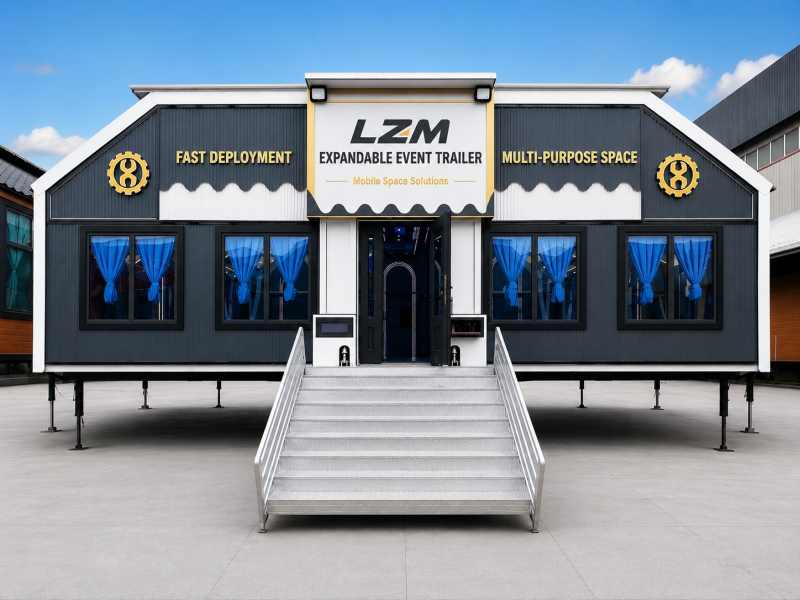
For blood-service organizations, hospitals, nonprofit organizations, and community health programs in Manila, Philippines, an expandable event trailer could provide temporary indoor capacity for organized blood donation campaigns at different approved locations.
A blood donation program involves a sequence of activities.
Donors do not simply enter the facility, donate blood, and leave immediately.
A typical operational flow may include:
Arrival → Registration → Screening → Waiting → Donation → Recovery → Exit
Each stage requires different space.
The interior therefore needs to be designed around donor flow, not simply the maximum number of collection stations that can physically fit inside the trailer.
The first part of the facility may include:
Reception
Registration desks
Queue management
Information
Forms
Donor waiting
This is the public-facing part of the operation.
Depending on the program, donors may need to complete documentation before proceeding to the next stage.
A clear layout can help prevent arriving donors from interfering with people who have already completed the donation process.
Before donation, appropriate health screening may be required according to the procedures established by the blood-service organization.
Unlike registration, some screening activities require privacy.
The layout could therefore include separate screening rooms or consultation areas.
These spaces may require:
Desk and seating
Privacy partitions
Medical equipment positions
Electrical outlets
Storage
Hand-hygiene facilities where required
Privacy requirements should be established by the medical operator before the interior configuration is finalized.
LZM provides the physical expandable facility; clinical procedures and medical requirements must be determined by the qualified healthcare organization operating the project.
The main operational area is the blood collection zone.
The buyer should define:
Number of simultaneous donors
Type of donor chairs or beds
Dimensions of equipment
Staff working space
Required separation
Medical trolley positions
Electrical requirements
Storage requirements
Equipment dimensions are particularly important.
If specialized donor chairs, medical refrigerators, collection monitors, or other equipment will be installed, their specifications should be provided during the design stage.
The trailer should be designed around the medical workflow and equipment—not the equipment fitted into the remaining space afterwards.
After donation, donors normally need an appropriate period of observation and recovery according to the operator's procedures.
This means the facility may also require a separate area with seating or other appropriate furniture.
The recovery area could potentially include:
Donor seating
Refreshment station
Staff observation position
Water
Information materials
The number of recovery positions should be considered alongside the number of collection stations.
Increasing the number of donation chairs without sufficient downstream recovery capacity could create another operational bottleneck.
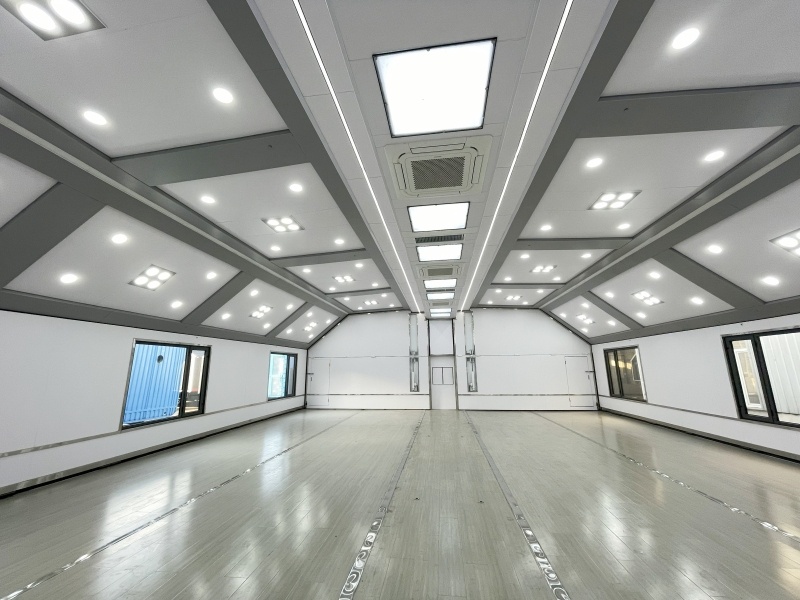
A blood drive involves more than donors.
The facility may also need to accommodate:
Nurses
Medical personnel
Registration staff
Administrative staff
Volunteers
Technical staff
Depending on the project, staff may require:
Workstations
Storage
Break area
Document area
Medical supply storage
These requirements consume floor space and should be included in the initial capacity calculation.
Collected blood cannot simply be placed in ordinary event-space storage.
The operating organization may require specialized refrigeration, monitoring, handling, and transportation equipment according to its medical procedures and applicable regulations.
If such equipment will be installed inside the trailer, the buyer should provide:
Equipment dimensions
Weight
Electrical consumption
Ventilation requirements
Required operating temperature
Backup power requirements
This allows suitable physical and electrical provisions to be considered.
Medical cold-chain requirements should always be specified and controlled by the qualified blood-service operator.
A normal event can sometimes tolerate a temporary power interruption.
A medical collection operation may not.
Depending on the equipment installed, the project may require power for:
HVAC
Medical refrigeration
Computers
Lighting
Collection equipment
Network equipment
Monitoring systems
The operator may also require an appropriate backup-power strategy.
Electrical specifications should therefore be established early in the project rather than after production.
A blood donation facility needs a controlled indoor environment for both donors and staff.
Manila's hot and humid climate makes cooling and ventilation important considerations.
HVAC planning should take into account:
Trailer dimensions
Number of donors
Number of staff
Medical equipment
Refrigeration equipment
Outdoor temperature
Humidity
Operating hours
Door-opening frequency
The required conditions should ultimately follow the operating organization's medical and equipment requirements.
An event trailer used for a wedding or exhibition can prioritize decorative appearance.
A blood donation facility has different priorities.
Interior surfaces may need to support regular cleaning and disinfection.
Buyers may therefore need to consider:
Easy-to-clean flooring
Suitable wall surfaces
Durable worktops
Reduced dirt traps
Appropriate waste handling
Hand-hygiene provisions
The exact material requirements should be confirmed according to the medical operator's procedures and applicable local standards.
Medical operations can generate different types of waste.
The operator should determine how waste will be:
Collected
Separated
Temporarily stored
Removed from the facility
Where regulated medical waste is involved, applicable handling requirements must be followed.
The site layout may also need a service route that keeps waste removal away from the main donor entrance where practical.
One advantage of a mobile facility is the ability to deploy closer to groups of potential donors.
For example, an organization could potentially arrange a blood drive at:
Corporate campuses
Industrial facilities
Universities
Government facilities
Community locations
Large public events
Instead of transporting many donors to a permanent collection center, the donation infrastructure can be positioned at an approved site closer to them.
For large employers, this could make participation more convenient during organized workplace blood drives.
A large university can contain thousands of students and staff within one campus.
Temporary blood donation campaigns may therefore benefit from being located where this population already spends its day.
An expandable facility could remain on site during a scheduled campaign and then relocate after the program ends.
This is different from a small bloodmobile designed primarily around mobility.
The expandable concept emphasizes temporary indoor capacity once deployed.
A small vehicle can be suitable for low-volume mobile collection.
But larger organized campaigns may require more simultaneous capacity.
An expandable layout can potentially provide separate zones for:
Registration + Screening + Collection + Recovery
inside one larger temporary facility.
The appropriate size depends on the target number of donors per day and the time required at each stage of the process.
A blood-service organization may operate campaigns throughout a region.
Instead of constructing temporary facilities from zero for each large program, a mobile unit could potentially move between approved deployment sites.
For example:
Corporate Blood Drive → University Campaign → Community Program → Regional Event
The trailer can carry the basic facility infrastructure while medical consumables and specialized equipment are managed according to the operator's procedures.
Transportation schedules, setup requirements, site utilities, and cleaning procedures should be considered in the operating plan.
Blood donors can include people with different mobility requirements.
Site and entrance planning should therefore consider:
Accessible entrance
Ramp requirements
Door width
Interior circulation
Waiting-space layout
Emergency exits
Local accessibility requirements should be reviewed for the intended deployment location.
Potential project operators could include:
Blood-service organizations
Hospital systems
Healthcare organizations
Nonprofit organizations
Government health programs
Community health organizations
Large companies or universities could also host donation campaigns, although the medical operation itself would need to be conducted by appropriately authorized healthcare organizations.
Before selecting the expandable trailer model and layout, the operating organization should provide:
Target donors per day
Number of simultaneous collection positions
Registration requirements
Screening-room requirements
Recovery capacity
Medical equipment dimensions
Equipment weights
Refrigeration requirements
Electrical requirements
Backup-power requirements
HVAC requirements
Storage requirements
Hygiene requirements
Accessibility requirements
Expected relocation frequency
Medical licensing, clinical procedures, blood handling, cold-chain requirements, electrical systems, accessibility, fire safety, sanitation, medical waste, transportation, site permissions, and other applicable requirements should be evaluated according to Philippine and local regulations.
Permanent blood centers and hospitals remain essential parts of the healthcare system.
But organized blood drives do not always need to take place inside those permanent facilities.
An expandable event trailer can provide temporary indoor space for donor registration, screening, collection, recovery, staff operations, and supporting equipment, allowing a blood-service organization to deploy additional capacity closer to concentrated groups of potential donors.
For authorized healthcare and blood-service organizations in Manila and other markets, the concept can support corporate campaigns, university programs, community blood drives, and other temporary collection activities.
LZM develops expandable event trailers according to required floor plan, occupancy, equipment dimensions, electrical loads, HVAC requirements, storage, and individual project specifications.
Explore the expandable platform for mobile blood donation and temporary healthcare facility projects:
Expandable Mobile Blood Donation Facility