Welcome: Laizhou Machinery Group



A caravan that performs well during summer does not automatically become a four-season caravan simply because a heater is installed.
For Canadian dealers developing off road caravan products, low-temperature operation can affect several systems simultaneously:
Body insulation
Heating
Windows and doors
Lithium batteries
Water tanks
Plumbing
Hot-water equipment
Ventilation
Condensation control
This means a cold-climate caravan should be designed as a complete thermal and mechanical system.
For OEM projects, the first question should not be "What heater can we install?"
The better question is:
What parts of the caravan need to continue functioning at the intended operating temperature?
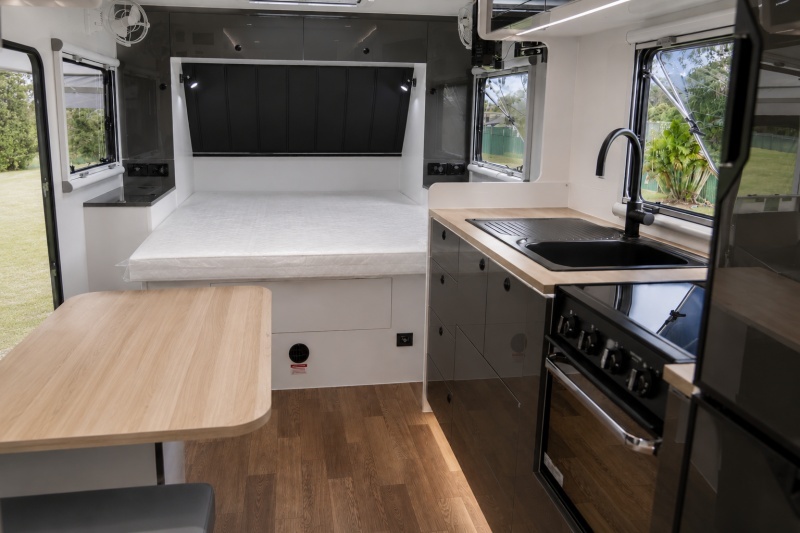
Heating capacity is important, but interior comfort also depends on how quickly the caravan loses heat.
Heat can escape through:
Roof
Walls
Floor
Windows
Doors
Ventilation openings
Structural thermal bridges
If heat loss is excessive, a larger heater may simply consume more energy while trying to maintain the desired interior temperature.
A cold-climate specification therefore needs to consider:
insulation + sealing + heating + ventilation
together.
Dealers often ask about wall insulation first.
However, the complete body envelope matters.
The roof can lose heat to cold exterior conditions, while the floor can also become an important thermal boundary.
For an OEM caravan, dealers should discuss:
Wall construction
Roof construction
Floor construction
Insulation materials
Insulation thickness
Door construction
Window configuration
A single insulation figure does not necessarily describe the performance of the entire caravan.
Windows generally provide less insulation than heavily insulated wall sections.
In cold conditions, they can influence:
Heat loss
Interior comfort
Condensation
Heating demand
Window size and construction should therefore be considered during cold-climate product development.
Large panoramic windows may be attractive in a showroom, but dealers should understand the thermal trade-off.
Small air leaks that are barely noticeable in mild weather can become much more obvious when exterior temperatures fall.
Dealers should pay attention to:
Door alignment
Sealing strips
Locking pressure
Threshold
Service openings
Exterior compartment seals
Good sealing helps control unwanted air infiltration, but the caravan still requires appropriate ventilation.
Heating requirements depend on factors including:
Interior volume
Insulation
Exterior temperature
Number of occupants
Window area
Desired indoor temperature
A compact two-person caravan and a 21ft family caravan should not automatically receive the same heating specification.
Dealers should define the intended operating environment before selecting the heating system.
The phrase four-season caravan is widely used in marketing, but it does not by itself define a technical standard.
For an importer, a more useful approach is to define actual requirements.
For example:
Expected minimum operating temperature
Required interior temperature
Water-system operation
Battery operation
Hot-water availability
Heating requirements
This converts a marketing phrase into a technical specification that can be discussed with the manufacturer.
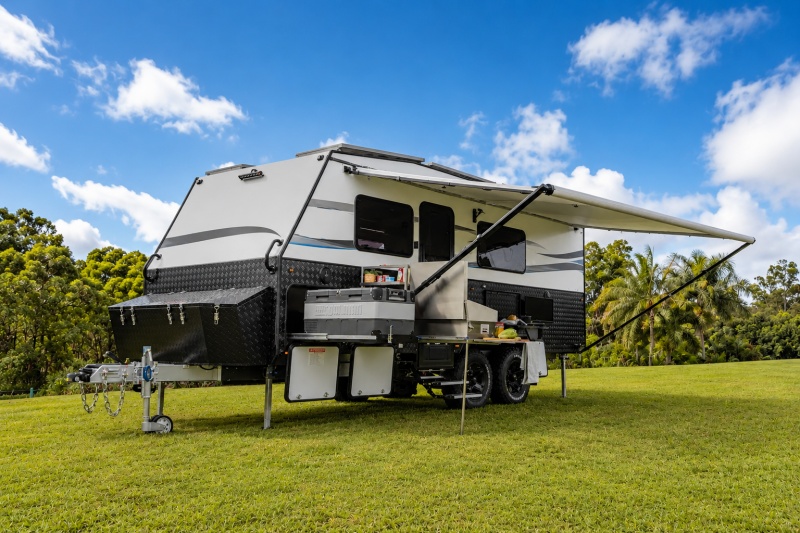
Lithium battery systems can have temperature-related operating and charging limitations depending on the battery chemistry and battery-management system.
Canadian dealers should therefore confirm:
Battery operating temperature
Charging temperature limits
Battery-management functions
Battery installation location
Thermal protection where required
The exact requirements depend on the selected battery.
Dealers should not assume that every lithium battery behaves identically in low temperatures.
A battery mounted in an exposed exterior area may experience different temperatures from one installed within a more protected environment.
OEM planning should therefore consider both:
battery specification and installation location.
This becomes particularly important when customers expect the caravan electrical system to operate during winter travel.
Solar panels can still generate electricity during colder seasons, but available energy depends on conditions such as:
Daylight duration
Sun angle
Weather
Snow or obstruction
Panel capacity
Customer consumption
At the same time, heating and other winter equipment may increase energy demand.
A dealer should therefore avoid assuming that a summer off-grid electrical configuration will provide identical autonomy during winter.
A caravan may remain warm inside while water-system components are located in colder areas.
Potentially vulnerable components can include:
Freshwater tanks
Grey-water tanks
Pipes
Valves
Pumps
Drainage
Exterior connections
If water freezes inside vulnerable components, it can interfere with operation and potentially damage plumbing.
For Canadian applications, dealers should identify where the complete water system is installed, not simply ask how large the tanks are.
A freshwater tank installed inside or within a protected area can experience different conditions from an exposed underbody tank.
The same applies to plumbing.
Dealers planning winter operation should discuss:
Tank location
Pipe routing
Component exposure
Insulation
Accessibility
Drainage strategy
Cold-climate water-system design needs to be considered during manufacturing rather than corrected after delivery.
Freshwater receives most of the attention, but wastewater can also freeze.
A winter-oriented specification should therefore consider the complete system:
fresh water → pump → hot water → fixtures → drainage → grey water
Protecting only the freshwater tank does not necessarily protect the entire plumbing system.
Customers travelling in cold weather may place greater demand on hot-water systems.
Dealers should consider:
Energy source
Hot-water capacity
Installation location
Plumbing
Electrical demand
Serviceability
Hot water should be coordinated with heating and the overall energy system.
Customers may be tempted to close every vent to keep heat inside.
However, occupants produce moisture through:
Breathing
Cooking
Showering
Drying wet clothing
Without appropriate ventilation, this moisture can contribute to condensation.
A winter caravan therefore needs to balance:
heat retention with moisture management.
Cold exterior conditions create colder interior surfaces.
When warm, moisture-containing indoor air contacts sufficiently cold surfaces, condensation can form.
Common locations may include:
Windows
Frames
Corners
Metal components
Areas with greater thermal bridging
Better insulation can help reduce cold surfaces, but ventilation and moisture management remain important.
Cold-climate upgrades may add equipment such as:
Heating systems
Additional insulation
Larger batteries
Additional electrical equipment
Plumbing protection
Dealers should therefore continue to monitor:
Tare weight
Payload
Final loaded weight
Weight distribution
A winter package should not be developed without considering the complete caravan mass.
Instead of customizing every caravan independently, dealers may develop defined equipment packages.
For example:
Designed primarily for moderate seasonal travel.
Adds equipment intended to support travel in a wider temperature range.
Developed around defined requirements for insulation, heating, batteries and water-system protection.
The exact specification should be based on the dealer's target market and applicable technical requirements.
Standardization makes repeat production and after-sales support easier.
Before confirming a cold-climate OEM caravan, dealers should ask:
What is the wall construction?
How are the roof and floor insulated?
What window configuration is used?
What heating options are available?
What minimum operating conditions are expected?
Where are the batteries installed?
What are the battery charging temperature limits?
Where are freshwater and grey-water tanks installed?
Which pipes or valves are exposed?
How is the plumbing system protected in cold conditions?
What ventilation is provided?
How is condensation managed?
How do winter upgrades affect total caravan weight?
Can the same cold-climate specification be maintained across repeat orders?
These questions are more useful than simply asking whether the caravan is "four season."
LZM works with international caravan dealers requiring different body, electrical, water and equipment configurations according to their target markets.
For cold-climate dealer projects, insulation, heating, batteries and plumbing requirements can be considered as part of the complete OEM specification.
Canadian businesses can review the LZM Off Road Caravan Solutions for International Dealers.
A larger family caravan presents additional winter considerations because more interior volume and more occupants can influence:
Heating demand
Moisture production
Water consumption
Electrical demand
Storage requirements
Dealers evaluating a larger platform can review the LZM 21ft Family Off Road Caravan for Four-Season Projects.
The final cold-climate specification should then be developed according to the dealer's intended operating conditions.
For a Canadian dealer, one of the most useful pieces of information is the actual temperature range in which customers expect to use the caravan.
When requesting an OEM quotation, provide:
Intended sales region
Expected minimum temperature
Number of occupants
Heating requirements
Required water capacity
Winter water-system requirements
Battery capacity
Solar requirements
Caravan size
Initial purchasing quantity
This gives the manufacturer a much clearer technical target than simply requesting a "winter caravan."
Cold-climate caravan engineering is not about adding a powerful heater to a standard product.
A practical winter-oriented caravan requires coordination between insulation, sealing, heating, batteries, plumbing, water tanks, ventilation and condensation control.
For Canadian dealers, defining actual operating conditions before production makes the OEM discussion much more precise.
Instead of selling an undefined "four-season" label, dealers can develop a repeatable caravan specification based on the conditions their customers are genuinely expected to encounter.