Welcome: Laizhou Machinery Group


For an Australian caravan dealer, approving an attractive prototype is only the beginning of an OEM program.
The more important challenge begins when production moves from one sample caravan to repeat dealer orders.
A caravan contains hundreds of components and multiple interconnected systems:
Chassis and suspension
Body structure
Doors and windows
Electrical equipment
Plumbing
Appliances
Furniture
Exterior accessories
Braking and towing components
A problem with any one of these areas can create additional work after the caravan arrives in Australia.
For this reason, dealers should think about factory quality control and pre-shipment inspection before placing repeat orders, rather than relying only on final photographs.
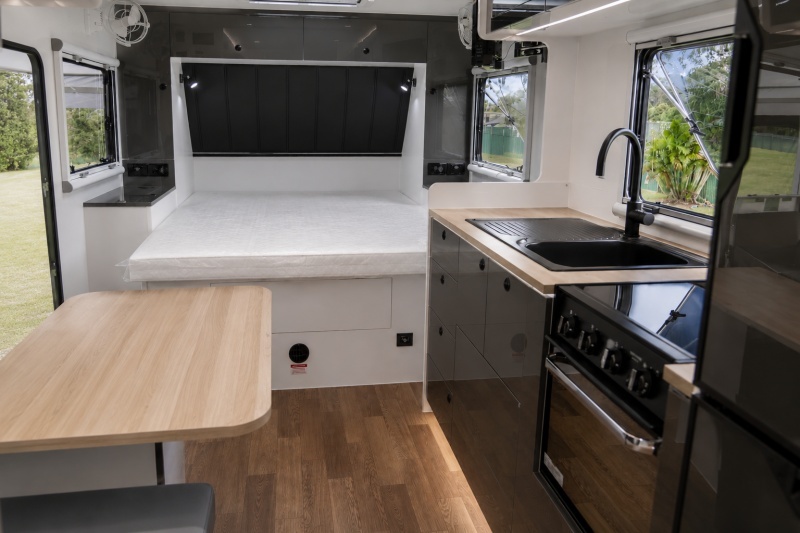
A manufacturer may spend considerable time preparing the first sample caravan.
But a dealer needs more than one good prototype.
The real objective is:
Can the factory reproduce the approved specification consistently across future units?
Repeat production should control areas such as:
Dimensions
Materials
Components
Interior layout
Electrical configuration
Plumbing
Finishes
Optional equipment
This is particularly important when a dealer plans to build its own brand around an OEM product.
Inspection becomes difficult if the original order is not clearly defined.
Before production, the dealer and manufacturer should confirm the major specification, including:
Model
Layout
Exterior finish
Interior materials
Battery system
Solar system
Appliances
Water system
Suspension
Wheels and tyres
Optional equipment
The factory inspection should then compare the completed caravan against the approved specification, not against someone's memory of the order.
The caravan body is one of the first areas to inspect.
Important points can include:
Exterior panel condition
Surface finish
Panel alignment
Roof condition
Doors
Windows
External storage compartments
Sealing
Lights
Exterior accessories
Inspectors should look for obvious issues such as:
Scratches
Dents
Poor alignment
Loose hardware
Incomplete sealing
Missing components
Small cosmetic defects may not affect operation, but repeated quality issues can damage a dealer's brand perception.
Visual inspection alone is not enough.
Doors and windows should be opened, closed and checked for normal operation.
Inspection can include:
Alignment
Lock operation
Handles
Hinges
Seals
Latches
Screens where applicable
An incorrectly adjusted door may look acceptable in a photograph but become immediately obvious when physically operated.
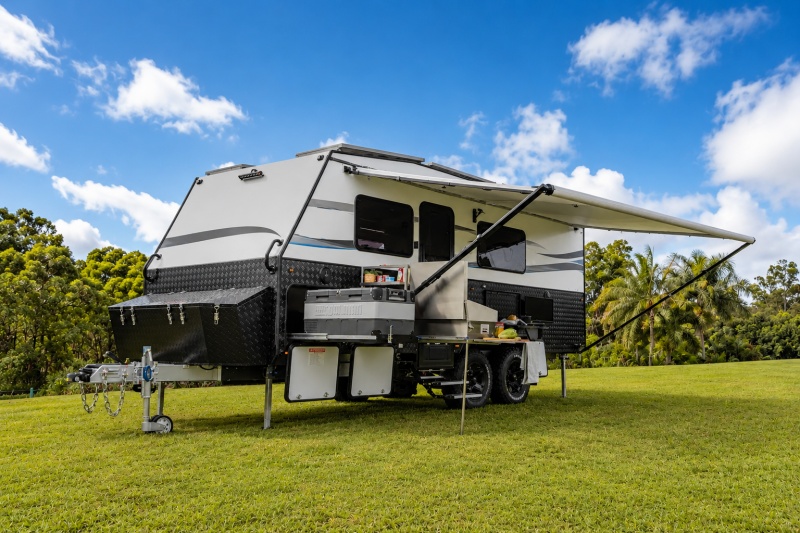
Depending on the specification, roof-mounted equipment may include:
Air conditioner
Solar panels
Roof vents
Antenna
Cable entry points
Installation points should be checked for:
Mounting
Sealing
Visible damage
Correct equipment
General installation condition
Water ingress can become an expensive after-sales issue, so roof penetrations deserve particular attention.
The underside of the caravan should not be ignored simply because customers do not normally see it.
Inspection areas can include:
Chassis condition
Suspension
Axle area
Braking components
Water tanks
Plumbing
Electrical routing
Stabilizers
Protective components
Spare-wheel mounting
Inspectors should look for:
Loose components
Poor routing
Unprotected connections
Installation interference
Visible damage
For off road products, underbody installation quality is particularly important because these components may later experience vibration and rough-road conditions.
Electrical inspection should go beyond confirming that the lights turn on.
Depending on the caravan specification, testing may include:
Interior lighting
Exterior lighting
USB outlets
12V equipment
Battery system
Solar charging
Inverter
Water pump
Refrigerator
Control panels
Other installed electrical equipment
Where applicable, AC systems and electrical safety should be assessed according to the relevant destination-market requirements by appropriately qualified parties.
One useful quality-control principle is:
Do not assume installed equipment works simply because it is new.
Individual equipment can be function-tested where practical.
Examples may include:
Refrigerator
Air conditioner
Water pump
Lighting
Ventilation fan
Control panel
Electric steps
Other accessories
Discovering a faulty component at the factory is considerably easier than discovering it after international shipping.
A plumbing system may appear perfectly installed while dry.
Testing with water can reveal problems that visual inspection cannot.
Depending on the configuration, inspection may include:
Freshwater tank
Water pump
Sink
Shower
Toilet
Hot-water system
Pipe connections
Drainage
Grey-water system
Inspectors should look for leaks around:
Fittings
Pumps
Connections
Taps
Tanks
Even a small leak can cause significant interior damage if it remains unnoticed.
Cabinets, drawers and furniture experience vibration during towing.
Inspection should therefore include operation of:
Cabinet doors
Drawers
Locks
Latches
Folding tables
Bed mechanisms
Other movable furniture
The inspector should confirm that these items:
Open correctly
Close correctly
Lock correctly
Are securely installed
For an off road caravan, furniture retention during travel is particularly important.
OEM dealers often request specific components.
For example:
Battery brand or capacity
Solar specification
Inverter
Refrigerator
Air conditioner
Suspension
Tyres
Water capacity
The completed caravan should be checked against the agreed specification.
A visually similar component is not necessarily the component the dealer ordered.
During repeat production, a manufacturer may occasionally need to change a component because of supply availability.
This can create problems if substitutions occur without dealer approval.
Different components may affect:
Performance
Appearance
Spare parts
Installation
Customer documentation
After-sales support
For a dealer program, major component substitutions should therefore be controlled rather than made casually.
Leaks are particularly troublesome because they may not become visible immediately.
Depending on factory procedures and product design, appropriate inspection methods can be used to identify potential sealing problems.
Important areas include:
Roof penetrations
Windows
Doors
Exterior joints
Service openings
The specific testing method should be appropriate to the caravan construction.
The completed caravan may weigh more than the original basic specification after adding:
Batteries
Solar equipment
Air conditioning
Water tanks
Spare wheels
Appliances
Dealer options
For this reason, dealers should understand the weight of the actual production configuration, particularly where weight affects compliance, payload and towing requirements.
For private-label or OEM projects, quality control may also include:
Dealer logo
Exterior graphics
Model designation
Interior branding
Labels
Manuals
Packaging
Incorrect branding can be surprisingly expensive to correct after the caravan reaches the destination market.
Dealers do not necessarily need to personally visit China for every production batch.
Inspection records can potentially include:
Photographs
Videos
Checklists
Equipment testing records
Serial or identification information
Specification confirmation
The exact process depends on the project and agreement with the manufacturer.
The important point is to create a repeatable inspection procedure.
A single sample inspection tells the dealer about one caravan.
A batch inspection should also consider consistency between units.
For example, if five caravans are produced, the dealer may want to confirm that all five use the agreed:
Batteries
Appliances
Tyres
Interior materials
Electrical configuration
Plumbing configuration
Branding
This becomes increasingly important as purchasing volume grows.
Factory quality control and Australian regulatory compliance are related, but they are not the same thing.
A caravan can be manufactured neatly and still require assessment against applicable Australian requirements.
Likewise, compliance documentation does not eliminate the need for manufacturing quality control.
Australian importers should therefore treat:
product quality + specification conformity + regulatory compliance
as separate but connected responsibilities.
Before approving shipment, dealers can organize inspection around several categories.
Body panels
Doors
Windows
Seals
Roof equipment
Exterior lighting
Chassis
Suspension
Braking components
Coupling
Wheels and tyres
Spare wheel
Batteries
Solar
Inverter
Lighting
Outlets
Appliances
Control systems
Tanks
Pump
Sink
Shower
Toilet
Hot water
Drainage
Furniture
Cabinets
Beds
Locks
Interior finish
Appliances
Ordered components
Colour
Branding
Accessories
Documentation
A standardized checklist makes inspection more consistent between production batches.
LZM works with international caravan dealers requiring OEM models and repeat production.
When developing a dealer program, the approved configuration can cover body, interior, electrical systems, water systems and other equipment so that future production can follow a defined specification.
Businesses evaluating manufacturing options can review the LZM Off Road Caravan OEM Manufacturing Range.
For a larger family caravan, the number of installed systems and components increases, making systematic pre-shipment inspection particularly useful.
Dealers considering this platform can review the LZM 21ft Family Off Road Caravan for Dealer Orders.
The final inspection checklist can then be developed around the dealer's confirmed OEM configuration.
For an Australian dealer developing a repeat-order caravan program, useful information includes:
Required model
Interior layout
Electrical package
Water system
Suspension
Appliances
Dealer branding
Required inspection points
Initial order quantity
Expected annual quantity
A clearly defined specification makes both production and quality control easier to manage.
For caravan dealers, quality control is not simply checking whether the finished product looks good before loading.
A useful factory inspection process verifies specification conformity, component operation, plumbing, electrical systems, sealing, chassis equipment, interior installation and OEM details.
More importantly, the same process should be repeatable across future production batches.
For Australian dealers building their own caravan range, consistent manufacturing can ultimately be more valuable than producing one exceptionally polished sample caravan.