Welcome: Laizhou Machinery Group



Community programs for older adults are usually organized around a fixed location. Participants travel to a community center, municipal facility, club, or other permanent building for classes and social activities.
That model works well when transportation is convenient.
But older residents may be distributed across different neighborhoods, and some communities may not have enough suitable indoor space for regular programs.
For municipalities, community organizations, and senior-service operators in Santiago, Chile, an expandable event trailer could provide another approach: a mobile activity center that can operate in different communities according to a planned schedule.
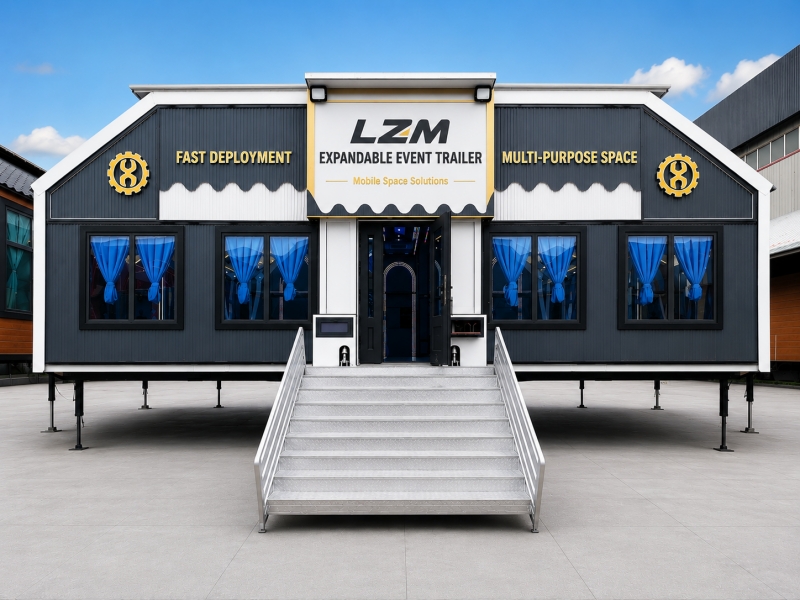
A senior activity center should not automatically be treated as a healthcare facility.
Its primary purpose may be to create an accessible environment for people to meet, learn, participate in activities, and maintain social connections.
Programs could include:
Art and craft classes
Music activities
Board games
Reading groups
Digital skills classes
Community presentations
Social gatherings
Light recreational activities
This distinction matters because the interior should be designed around community participation rather than clinical treatment.
Different activities require different arrangements.
A digital skills class may need tables, chairs, power outlets, and screens. A social gathering may benefit from a more open seating arrangement. Arts and crafts may require work surfaces and storage.
Instead of designing the interior for one permanent activity, buyers could consider flexible furniture and multipurpose zones.
Possible areas include:
Reception
Main activity area
Small-group tables
Presentation area
Staff desk
Storage
Refreshment area
The layout should reflect the programs the operator expects to run most frequently.
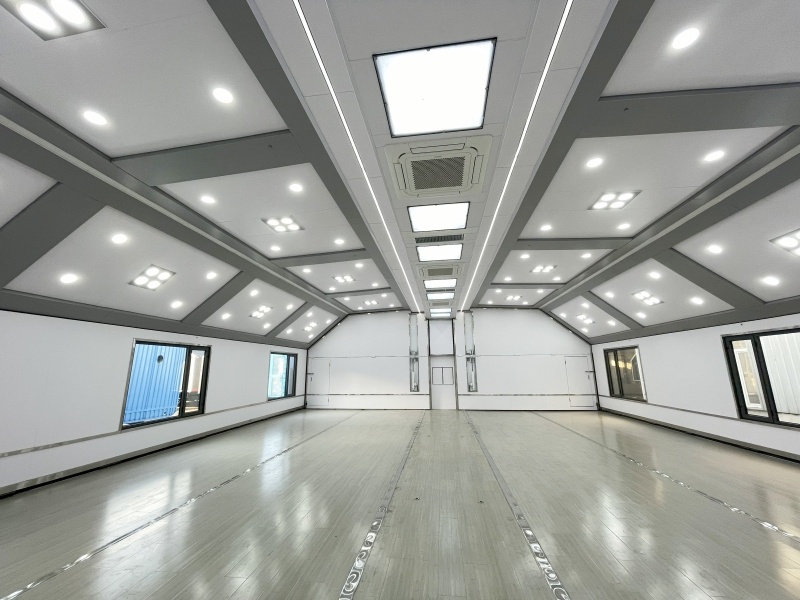
A permanent community center requires residents to reach the building.
A mobile facility changes that relationship.
The activity space can potentially rotate between communities rather than expecting every participant to travel to one central location.
For example, an operator could schedule the facility in one district for several days and later relocate it to another approved site.
This model may be relevant to:
Municipal programs
Community organizations
Senior living operators
Nonprofit organizations
Social-service providers
Corporate community programs
The value of mobility comes from extending the reach of the program, not simply from moving the building.
Older users may have different mobility requirements.
Some participants may use walking aids or wheelchairs, while others may find stairs or narrow circulation areas difficult.
Project planning should therefore consider issues such as:
Entrance access
Ramps or lifting arrangements where required
Door width
Interior circulation
Seating layout
Handrails where appropriate
Emergency access
Accessibility requirements should be evaluated according to applicable local standards and the intended users of the facility.
These requirements should be considered during the initial design rather than added after the interior has been completed.
For some event applications, buyers want to fit as many people as possible into the available space.
A senior community center may require a different priority.
Comfortable circulation, appropriate seating distances, accessible routes, and enough room for staff assistance may be more important than achieving the highest theoretical occupancy.
The buyer should therefore define:
Typical attendance
Maximum attendance
Type of activities
Furniture arrangement
Required circulation space
This information can help determine the appropriate trailer size and layout.
Many community programs now include help with smartphones, online services, video communication, and basic computer skills.
A mobile activity center could therefore require:
Wi-Fi equipment
Display screens
Computers or tablets
Charging points
Presentation equipment
Audio system
Electrical connections and equipment positions should be considered according to the planned activities.
A large screen could also support community presentations, films, educational sessions, and remote participation.
Community programs may last several hours.
Indoor comfort therefore affects how practical the facility is for regular use.
For Santiago, heating and cooling requirements should be evaluated according to:
Operating season
Trailer dimensions
Occupancy
Outdoor conditions
Electronic equipment
Operating hours
Ventilation should also be considered according to expected occupancy and local requirements.
A multipurpose community program can accumulate substantial equipment.
This might include:
Art materials
Games
Folding furniture
Teaching equipment
Audio equipment
Refreshment supplies
Program documents
If the facility relocates regularly, secure onboard storage becomes particularly useful because staff do not need to transport every item separately between locations.
Storage should therefore be included in the original floor plan rather than treated as leftover space.
The same expandable space does not necessarily need to serve only older adults every day.
Depending on the operator, it could potentially support different scheduled community programs at different times.
For example:
Senior activities → community education → public information sessions → local workshops
This can improve facility utilization, particularly for municipal or nonprofit operators serving several population groups.
Before choosing the trailer size and configuration, the organization should prepare information about how the facility will operate.
Important details include:
Expected participant capacity
Types of activities
Furniture requirements
Accessibility requirements
Staff numbers
Storage requirements
Audio and visual equipment
HVAC requirements
Available site utilities
Frequency of relocation
Accessibility, electrical, fire safety, public occupancy, transportation, and other applicable requirements should be evaluated according to Chilean and local project standards.
Permanent senior and community centers remain important infrastructure.
But not every neighborhood can justify or immediately provide another permanent building.
A mobile senior activity center offers a different model: use the same indoor facility to support social activities, education, recreation, and community engagement at different locations.
For organizations operating in Santiago and other markets, an expandable event trailer can be configured around participant capacity, accessibility, flexible furniture, technology, storage, and climate requirements.
LZM develops customized expandable event trailers according to individual community, commercial, education, and public-service applications.
Explore the expandable platform for senior and community activity programs:
Mobile Senior & Community Activity Center