Welcome: Laizhou Machinery Group



Importing an off road caravan is only the beginning of the relationship between a dealer and its customer.
After the caravan has been sold, customers may eventually require replacement components, maintenance information or technical assistance.
For a Brazilian importer planning to develop a caravan business, this raises an important purchasing question:
How will the product be supported after it arrives in Brazil?
Price, appearance and equipment are important when selecting a caravan, but dealers should also evaluate the long-term availability and serviceability of important components.
For an OEM project, after-sales planning should begin before the first production order, not after a customer experiences a problem.
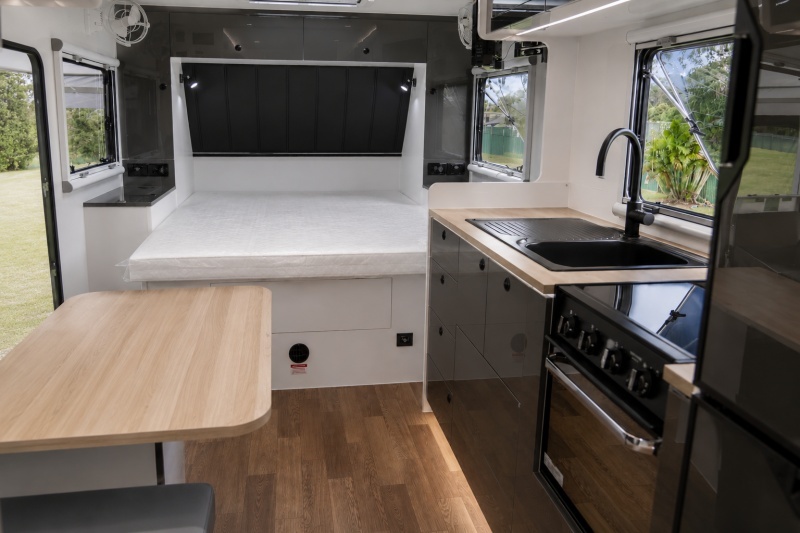
An individual customer may own one caravan.
A dealer may eventually have dozens or hundreds of units operating in the market.
As the installed product base grows, even relatively small replacement requirements can become important.
Common service requirements may involve:
Electrical components
Water pumps
Lights
Switches
Locks
Hinges
Seals
Plumbing components
Suspension components
Appliances
A dealer therefore needs to think beyond the first shipment.
OEM customization is useful, but excessive component variation can make after-sales support complicated.
Imagine importing several batches of caravans where every order uses different:
Lights
Water pumps
Electrical switches
Chargers
Inverters
Door hardware
The dealer may eventually need to maintain many different replacement components.
A better approach is to standardize important parts wherever practical.
This can make:
Spare parts inventory easier
Technician training simpler
Component identification faster
Repeat orders more consistent
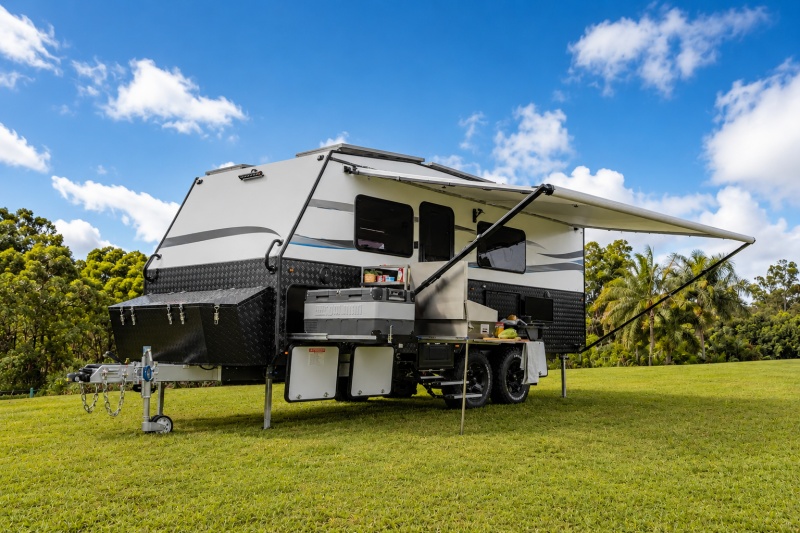
Not every component needs to be stored locally.
Importers can classify components according to replacement frequency and importance.
Depending on the caravan configuration, examples may include:
Lights
Switches
Fuses
Water fittings
Locks
Handles
Seals
These are generally easier to store.
Examples may include:
Chargers
Solar controllers
Inverters
Battery monitoring equipment
Control panels
These parts require clear model and specification identification.
Depending on the caravan design, service planning may involve:
Suspension components
Bearings
Braking components
Coupling-related parts
Wheels and related hardware
These components deserve particular attention because they relate directly to towing and road operation.
Not every replacement component should necessarily be imported from the original factory.
If an equivalent component is readily available in Brazil and meets the required specification, local sourcing may reduce:
Customer waiting time
International shipping cost
Dealer inventory requirements
For this reason, importers should discuss which components are:
Factory-specific
and which can potentially be replaced with suitable locally available equivalents.
This can make the after-sales system more practical.
One common after-sales problem is not obtaining a component—it is identifying exactly which component is required.
Dealers should keep clear information such as:
Part name
Model
Specification
Installation position
Electrical rating
Supplier reference when applicable
Photos can also help identify replacement parts during remote technical communication.
For repeat production, maintaining consistent specifications simplifies this process considerably.
Modern off road caravans can contain increasingly sophisticated electrical systems.
These may include:
Lithium batteries
Solar panels
Inverters
Chargers
Monitoring systems
Control panels
Appliances
If a dealer develops several OEM configurations, electrical documentation becomes particularly important.
Before production, the importer should confirm:
Component specifications
System voltage
Replacement options
Wiring information
Protection devices
A larger battery system is valuable only if the dealer can also understand and support the complete electrical system.
Water systems may include:
Freshwater tanks
Wastewater tanks
Pumps
Pipes
Connectors
Valves
Hot-water equipment
For commercial distribution, accessibility matters.
A component that can be inspected and replaced relatively easily is preferable to one that requires major interior disassembly for routine servicing.
Serviceability should therefore be considered during caravan design, not only after production.
Off road caravans may operate on demanding roads, making running components particularly important.
Dealers should understand the specifications of:
Suspension
Axles
Bearings
Brakes
Couplings
Wheels and tyres
The exact service requirements depend on the caravan configuration and local operating conditions.
Safety-critical towing and running components should always be maintained and replaced according to the applicable technical and regulatory requirements.
For some projects, preparing a small spare-parts package together with the initial shipment can be practical.
The appropriate package depends on:
Number of caravans
Installed components
Local parts availability
Expected usage
Dealer service capability
A dealer does not need a warehouse full of every possible component.
The objective is to identify high-value or frequently required parts before customers need them.
Before establishing a long-term product range, importers should discuss whether useful technical information can be provided for important systems.
This may include:
Component specifications
Basic operating instructions
Maintenance information
Electrical information
Replacement part identification
The exact documentation available will depend on the product and component.
Dealers should clarify these requirements during specification development rather than assuming everything will automatically be supplied later.
These two areas should not be confused.
Warranty concerns responsibility for eligible defects during an agreed period.
Spare parts support concerns the ability to maintain and repair products over a longer operating life.
A dealer may require replacement components years after the original warranty period has ended.
Therefore, long-term component availability can be important even when a warranty claim is no longer involved.
Before selecting an OEM caravan supplier, businesses should ask:
Which components are standardized?
Which parts are factory-specific?
Can commonly used spare parts be supplied with the order?
Can component specifications be provided?
Which parts can potentially be sourced locally?
How are electrical replacement parts identified?
Are suspension and braking component specifications available?
Can future production maintain the same major components?
How are technical questions handled after delivery?
What should the dealer keep in local spare-parts inventory?
These questions help determine whether a product is practical for long-term distribution.
LZM works with dealers and importers developing off road caravan products for international markets.
For commercial customers, product planning can include not only layouts and equipment but also component standardization and future service requirements.
Brazilian businesses evaluating suitable models can explore the Off Road Caravan Solutions for International Importers.
For dealers considering a larger family-oriented model, electrical equipment, water systems, hardware and other components should be confirmed as part of the complete OEM specification.
Keeping important components consistent across repeat orders can make future service considerably easier.
Explore the LZM 21ft Off Road Caravan for Dealer Projects.
If you are a Brazilian caravan importer or dealer, tell LZM about your intended sales and service model before confirming the order.
Useful information includes:
Expected initial quantity
Planned annual sales
Local service capability
Preferred electrical equipment
Locally available components
Required spare parts
OEM branding requirements
This allows after-sales considerations to become part of product planning rather than an issue addressed only after delivery.
For an importer, the real cost of a caravan does not end when the product leaves the factory.
Long-term commercial success also depends on whether the dealer can identify components, obtain replacement parts, perform routine maintenance and support customers efficiently.
A practical OEM caravan program should therefore consider product design, component standardization, spare parts and after-sales service as one system.
For Brazilian dealers entering the off road caravan market, establishing that system from the first order can make future expansion much easier.