Welcome: Laizhou Machinery Group



When evaluating an off road caravan, buyers often begin with visible specifications such as length, sleeping capacity and interior layout.
For dealers and importers, however, weight and payload are just as important as physical size.
Adding larger water tanks, lithium batteries, solar systems, air conditioning, spare wheels and customer equipment can substantially change the final operating weight of a caravan.
This means a caravan specification should not be developed by selecting individual options independently.
Dimensions, chassis capacity, payload, equipment and intended towing vehicle need to be considered together.
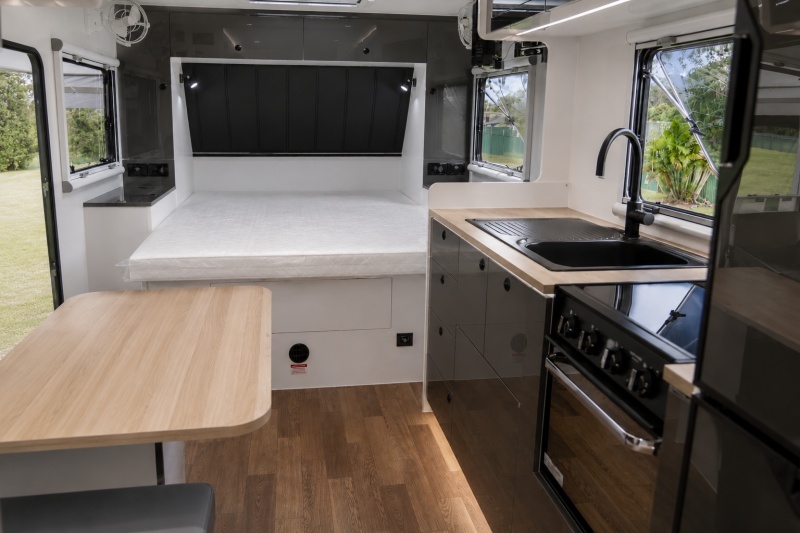
Two caravans with similar external lengths can have very different:
Empty weights
Payload capacities
Interior space
Water capacities
Battery systems
Storage
Equipment levels
A 21ft caravan designed for family touring, for example, may have very different weight requirements from a lighter caravan of similar length with fewer appliances and smaller tanks.
For dealers, comparing products only by length can therefore be misleading.
These terms are important when discussing caravan specifications.
Tare weight generally refers to the caravan's weight before customer cargo and certain operating loads are added, although the exact definition used for compliance should follow the applicable market requirements.
Dealers should confirm exactly what is included in the manufacturer's stated weight.
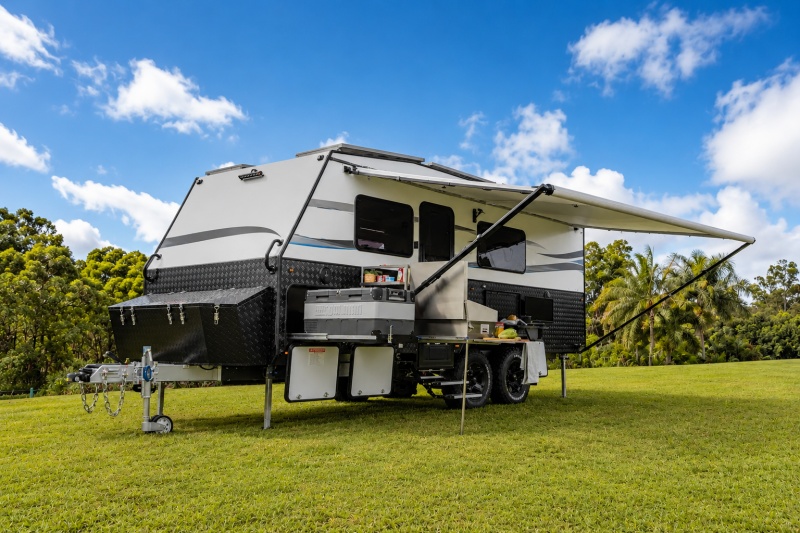
Payload is the available capacity for additional load.
Depending on the configuration and applicable definitions, this can include items such as:
Water
Personal belongings
Camping equipment
Food
Additional accessories
Customer-installed equipment
The actual operating weight can become considerably higher than the basic caravan weight once the caravan is prepared for travel.
This is why payload should not be treated as an insignificant specification.
Water is easy to overlook during product planning.
One litre of water has a mass of approximately one kilogram.
Therefore, increasing freshwater capacity by 200 litres can add roughly 200 kg of water alone when the tank is full.
Dealers requesting larger tanks for remote travel should therefore consider:
Chassis capacity
Suspension
Payload
Tank position
Weight distribution
A larger water tank may be useful, but it cannot be evaluated separately from the rest of the caravan.
Off-grid customers increasingly request larger lithium battery systems.
A dealer may want:
More battery capacity
Additional solar panels
Larger inverter
More electrical equipment
These features improve off-grid capability but also add components and weight.
The manufacturer should therefore evaluate electrical upgrades together with the caravan's overall weight plan.
A highly equipped caravan may include:
Air conditioning
Additional batteries
Solar equipment
Spare wheels
Larger water tanks
Outdoor kitchen equipment
Additional storage
Awning
Extra appliances
Individually, some options may not appear significant.
Combined, however, they can substantially affect the final caravan weight.
For dealers developing an OEM specification, the complete option package should be reviewed before production is finalized.
Total weight is only part of the engineering problem.
Where the weight is located also matters.
Heavy components may include:
Batteries
Water tanks
Spare wheels
Gas cylinders
Storage compartments
Poor weight distribution can affect towing behaviour and vehicle balance.
For this reason, adding equipment to an existing design should involve more than checking whether there is enough physical space.
Its position also needs to be considered.
Bigger is not automatically better.
Different caravan sizes serve different customers.
May suit:
Couples
Shorter trips
Customers wanting easier towing
Buyers who prioritize mobility
Can provide a balance between:
Interior comfort
Storage
Sleeping capacity
Manageable overall size
May provide:
Additional beds
Larger kitchens
More storage
Greater living space
However, increasing caravan size can also affect:
Weight
Towing requirements
Storage requirements
Manufacturing cost
Dealers should select size according to the intended customer rather than simply offering the largest model available.
A caravan cannot be evaluated independently from the vehicle towing it.
Dealers should consider relevant tow-vehicle and caravan ratings, including the limits applicable to the destination market.
The appropriate combination depends on factors such as:
Loaded caravan mass
Tow vehicle rating
Coupling requirements
Load distribution
Local regulatory requirements
The applicable Australian compliance requirements should be verified for the specific caravan and tow vehicle before sale or operation.
This is an important OEM question.
Suppose a dealer starts with a standard caravan and then requests:
Larger battery bank
More solar
Larger freshwater tank
Second spare wheel
Additional storage
Upgraded appliances
The correct approach is not simply:
Add all the options.
The manufacturer should reconsider:
total weight → payload → weight distribution → chassis → suspension → towing requirements
This systems approach is especially important for off road caravans.
Before confirming an OEM order, dealers should ask:
What are the external dimensions?
What is included in the stated tare weight?
What is the maximum permitted loaded weight for the proposed specification?
What payload remains after major options are installed?
How much weight does the water system add when full?
How do battery upgrades affect weight?
Where are the major heavy components positioned?
Does a specification change require chassis or suspension changes?
What towing requirements should be considered?
Can the final specification be documented consistently for repeat orders?
These questions help prevent a caravan from becoming over-equipped without sufficient payload planning.
LZM works with caravan dealers and importers on different off road caravan configurations.
When developing an OEM specification, dimensions, interior layout, batteries, water capacity and optional equipment should be considered together rather than as unrelated selections.
Dealers comparing suitable platforms can review the LZM Off Road Caravan Range:
A 21ft Platform for Family Caravan Projects
For dealers targeting customers who require more living space, the LZM 21ft Family Off Road Caravan provides a larger platform for discussing different layouts and equipment packages.
Possible project considerations include:
Sleeping configuration
Interior storage
Battery system
Solar system
Water capacity
Optional equipment
Overall weight planning
View the LZM 21ft Family Adventure Caravan:
For an Australian dealer or importer, the most useful starting point is not simply requesting "a 21ft caravan."
Tell us:
Target customer
Preferred size
Sleeping capacity
Required battery system
Water capacity
Major optional equipment
Intended travel conditions
Expected purchasing quantity
LZM can then discuss the configuration as a complete product rather than adding options individually.
Caravan size is easy to compare, but usable payload and final operating weight can be more important purchasing specifications.
Larger batteries, additional water, more storage and premium equipment all provide customer benefits, but every upgrade affects the complete caravan.
For dealers developing an off road caravan range, good OEM specification planning means balancing size, comfort, equipment, payload and towing requirements from the beginning.