Welcome: Laizhou Machinery Group



Language schools traditionally depend on students travelling to a fixed classroom. That model works well in established markets, but it can make expansion more difficult when demand is spread across different communities or when a training provider wants to test a new location.
In Osaka, Japan, language schools, education companies, international organizations, and employers may need temporary teaching spaces for language courses, cultural exchange activities, or short-term training programs.
An expandable event trailer offers another approach: a transportable classroom that creates a larger indoor teaching area after deployment.
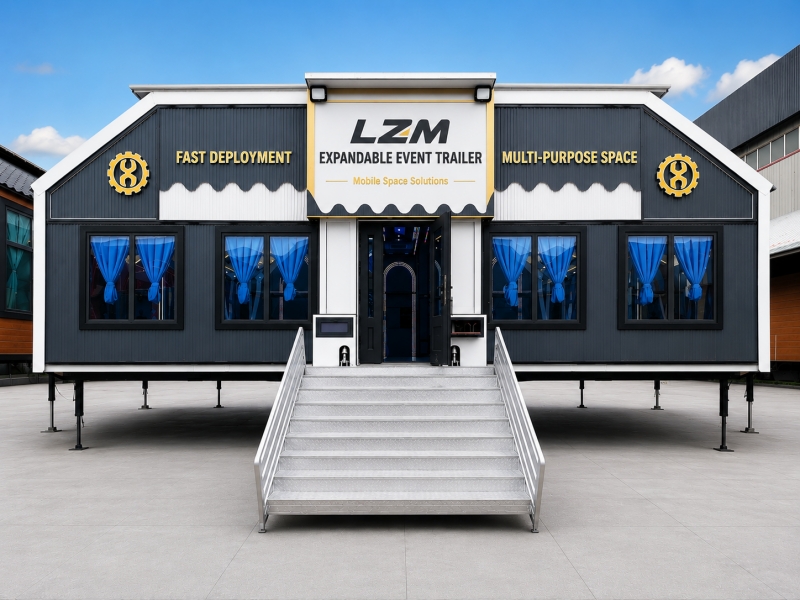
Opening another permanent branch is not always the first step a training company needs to take.
A mobile language learning center could support:
Corporate language training
Community education programs
International exchange activities
Short-term intensive courses
School outreach programs
Temporary language programs in new districts
For a private training company, the facility could also be used to evaluate demand in a new market before committing to a long-term lease and permanent classroom.
Language education can involve very different teaching formats.
A conversation course may work better with small-group seating, while examination preparation or corporate training may require desks facing an instructor and presentation screen.
Important layout considerations include:
Number of students
Seating arrangement
Instructor area
Whiteboard or display screens
Audio equipment
Storage space
The interior should be planned around the teaching method rather than forcing every program into the same classroom configuration.
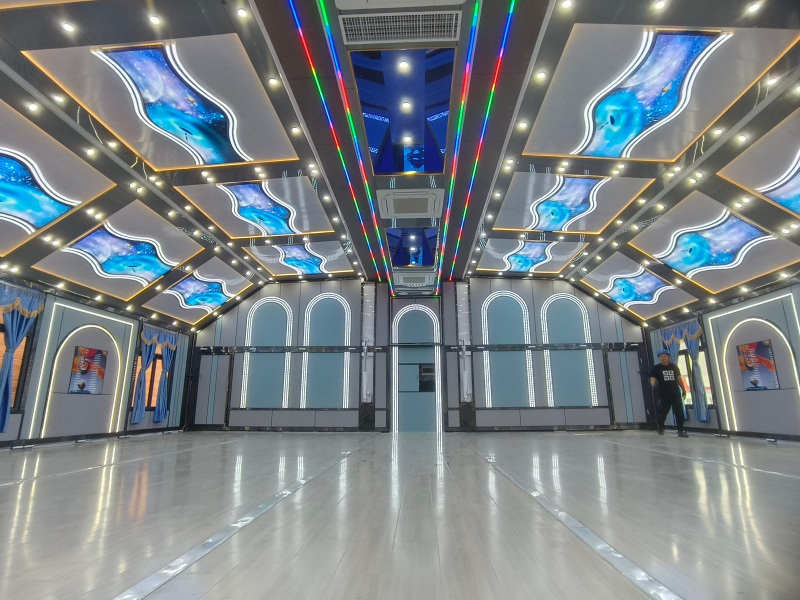
Language education increasingly combines face-to-face teaching with digital content.
Depending on the program, teachers may use:
Large display screens
Speakers
Microphones
Computers
Interactive teaching equipment
Video conferencing systems
Electrical connections and equipment positions should therefore be considered during the design stage.
For listening and speaking courses, acoustic conditions inside the classroom may also need attention.
Utilization is an important consideration for organizations investing in a mobile education facility.
The same trailer does not necessarily need to serve one language course throughout the year.
For example, an operator could use the facility for corporate English training during one project, international student activities during another, and community language programs at a different location.
Potential operators may include:
Language schools
Vocational education companies
Universities
International businesses
Community organizations
This creates a different business model from a classroom that remains permanently tied to one address.
Increasing student numbers is useful only if the classroom remains practical.
Buyers should consider the relationship between:
Student capacity
Seating space
Instructor movement
Air conditioning
Ventilation
Emergency access
Storage requirements
Osaka experiences both hot summers and cool winters, so climate-control requirements should be considered according to the intended operating season and project configuration.
Before selecting an expandable trailer size, the buyer should define how the mobile learning center will actually operate.
Useful project information includes:
Maximum number of students
Teaching format
Required classroom layout
Audio and visual equipment
Storage requirements
Climate-control requirements
Frequency of relocation
Available site power supply
Transportation, electrical, accessibility, safety, and other applicable requirements should be evaluated according to local standards and the intended use of the facility.
For an established language school, expansion normally means finding premises, signing a lease, fitting out classrooms, and committing to a new location.
A mobile language learning center introduces another possibility. It can support temporary courses, corporate programs, community projects, or market testing while allowing the education provider to use the facility in different locations over time.
LZM develops customized expandable event trailers according to student capacity, interior layout, electrical systems, climate conditions, and project requirements.
Explore the expandable platform for language training and mobile education projects:
Mobile Language Learning Center Platform