Welcome: Laizhou Machinery Group



Buying an expandable event trailer is very different from purchasing an ordinary commercial trailer.
The structure, hydraulic system, chassis, electrical configuration, interior design and local transportation requirements can all affect whether the finished unit is suitable for your project.
For international buyers comparing expandable event trailer manufacturers, the lowest quotation should therefore rarely be the only consideration.
Here are some of the most important points to check before placing an order.
Do not begin by asking only:
"What is your price?"
First determine what the trailer will actually be used for.
Typical applications include:
Wedding and banquet venues
Exhibition halls
VIP hospitality suites
Mobile showrooms
Brand activation centers
Sports event facilities
Training centers
Mobile offices
Emergency command centers
Commercial event spaces
A wedding venue and an emergency command center may use the same expandable structural concept, but their interior requirements are completely different.
Buyers should understand two different sets of dimensions:
Transport dimensions determine how the unit can be moved.
Expanded dimensions determine how much usable space is available after deployment.
Before ordering, confirm:
Overall transport length
Transport width
Transport height
Expanded width
Interior height
Total usable floor area
A larger expanded area is attractive, but transportation limitations in the destination country must also be considered.
The chassis is particularly important when the trailer needs to travel on public roads.
Requirements can vary significantly between countries.
Buyers should discuss:
Number of axles
Suspension
Braking system
Lighting
Tires
Maximum weight
Road regulations
Registration requirements
Do not assume that a chassis suitable for one country can automatically be registered in another.
For some projects, purchasing only the expandable structure and using a locally compliant chassis may be worth considering.
The hydraulic system is one of the core components of an expandable trailer.
Ask the manufacturer about:
Expansion mechanism
Hydraulic cylinders
Supporting legs
Control system
Emergency operation
Maintenance requirements
Replacement parts
The goal is not simply fast expansion.
The system must also provide reliable operation over repeated deployments.
This is frequently overlooked.
Different applications create very different floor loads.
For example:
A wedding venue may primarily contain tables, chairs and guests.
A showroom could contain heavy equipment.
A training center may require exercise machines.
An exhibition trailer could display vehicles or industrial products.
Tell the manufacturer what equipment will be installed so that the structure can be evaluated accordingly.
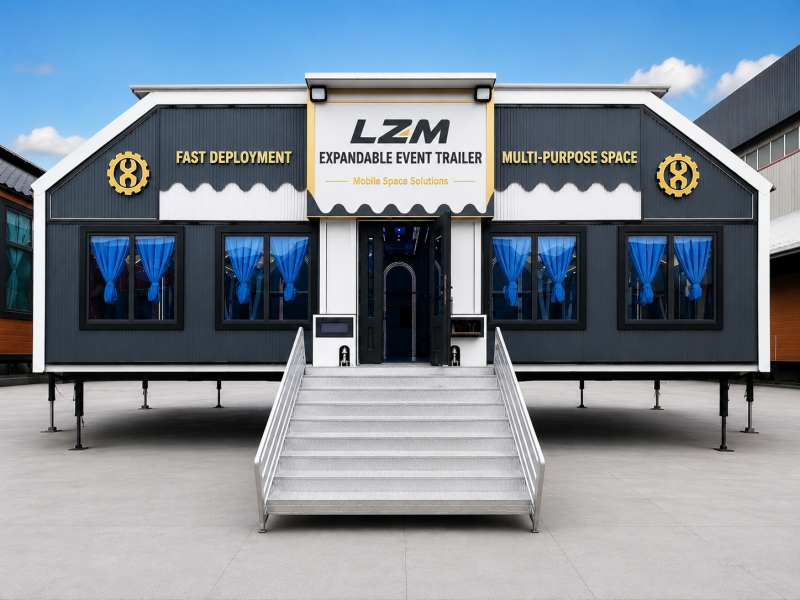
Electrical standards vary internationally.
Before production begins, buyers should confirm:
Voltage
Frequency
Single-phase or three-phase supply
Socket type
Lighting requirements
Distribution board
Air-conditioning load
Additional equipment load
Changing major electrical requirements after production has started can create unnecessary cost and delays.
Climate requirements should be based on the destination.
A trailer operating in Saudi Arabia has different requirements from one operating in Canada.
Depending on the project, buyers may need to consider:
Air-conditioning capacity
Heating
Wall insulation
Roof insulation
Door and window specifications
Ventilation
This is especially important when the trailer will be used throughout the year.
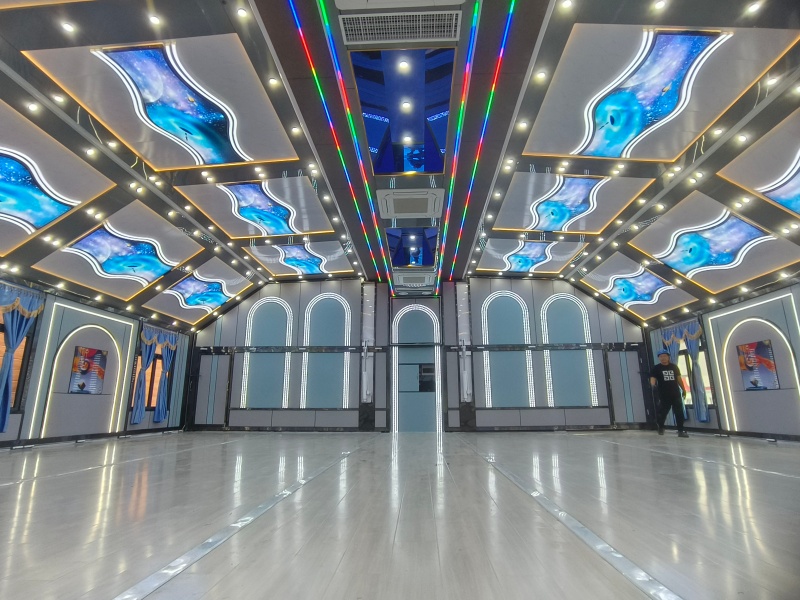
Expandable event trailers can be highly customized.
Options may include:
Interior layout
Wall finishes
Flooring
Ceiling design
Lighting
Exterior color
Branding
LED screens
Audio systems
Bars
Kitchens
Meeting rooms
VIP lounges
However, customization should serve the business model.
Adding expensive features that customers will never use does not necessarily create a better investment.
Certification should be discussed before the order, not when the trailer is ready to ship.
Requirements depend on the destination country and whether the unit will travel on public roads.
Buyers should determine which requirements apply to:
Expandable structure
Electrical equipment
Chassis
Braking components
Road registration
A manufacturer's existing certification does not automatically mean every configuration satisfies every country's regulations.
An expandable event trailer is a large piece of equipment.
Shipping method can significantly affect the total project cost.
Depending on dimensions and destination, transportation may involve:
Ro-Ro shipping
Flat-rack shipping
Breakbulk
Land transportation
Combined sea and road transportation
The manufacturer should consider transportation during the design stage rather than treating shipping as an afterthought.
Beautiful renderings are easy to produce.
International buyers should look deeper.
Ask for:
Factory photos
Production videos
Completed units
Expansion demonstrations
Technical drawings
Manufacturing details
Export experience
Previous project configurations
For a customized product of this value, engineering and production capability matter more than an attractive quotation sheet.
The trailer may operate thousands of kilometers away from the manufacturer.
Buyers should therefore understand:
Warranty coverage
Technical support
Spare parts availability
Hydraulic component replacement
Electrical component replacement
Remote troubleshooting support
A good purchasing decision considers the entire operating life of the equipment.
A serious buyer can speed up the quotation process by providing:
Destination country
Intended application
Required floor area
Expected number of people
Preferred interior layout
Electrical standard
Air-conditioning requirements
Required equipment
Road transportation requirements
Target delivery date
With this information, the manufacturer can provide a much more meaningful proposal than a simple standard price.
Professional expandable event trailer projects involve structural engineering, hydraulic systems, electrical integration, transportation and extensive customization.
LZM's current expandable event trailer range is positioned at approximately USD 70,000–140,000 EXW, depending on size and specification.
For buyers comparing suppliers, the more useful question is therefore not simply:
"Who offers the cheapest event trailer?"
It is:
"Which configuration can reliably support my business after it arrives in my country?"
Prepare your application, destination country, desired size and major equipment requirements first.
Then review the available expandable platform and consider which configuration comes closest to your project:
Review LZM expandable event trailer configurations
From there, the structure, interior and technical systems can be discussed around the actual project rather than forcing the buyer into a one-size-fits-all specification.