Welcome: Laizhou Machinery Group



mergency management teams often need a secure operational space close to the incident rather than many kilometers away in a permanent office.
Floods, wildfires, earthquakes, major accidents, severe storms, and large public emergencies can all require multiple agencies to work together at temporary locations.
An expandable emergency command center trailer can provide a large mobile workspace for command personnel, communications teams, technical specialists, and field coordinators.
Permanent emergency operation centers are essential, but they cannot always provide an on-site working environment.
A mobile command center can be transported closer to the operational area and deployed as a temporary headquarters.
Depending on the configuration, the interior can include:
Command workstations
Coordination tables
Briefing areas
Communication equipment
Large information displays
Equipment storage
Private meeting areas
Staff rest areas
This allows decision-makers and field teams to operate from the same location.
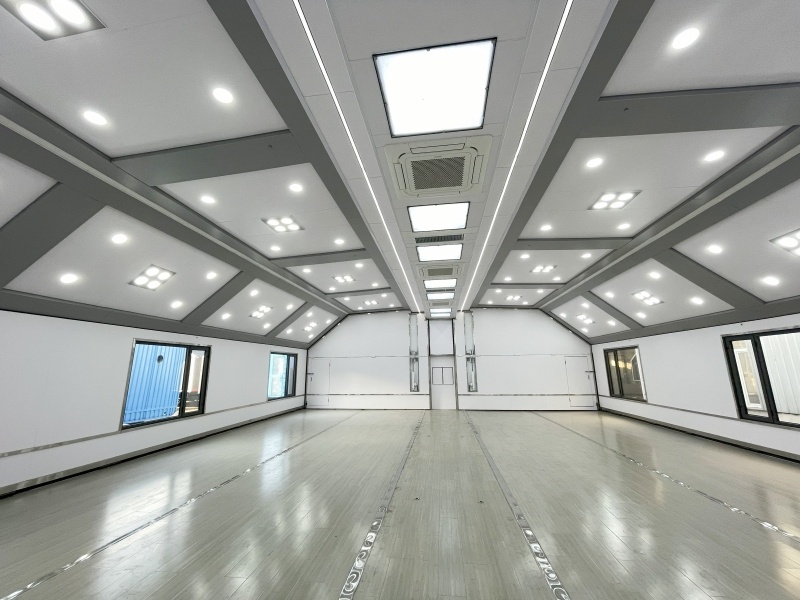
One of the limitations of conventional command vehicles is interior space.
Expandable structures address this problem by maintaining manageable transport dimensions while creating a much larger working area after deployment.
The additional floor area can accommodate multiple operational functions instead of requiring several separate vehicles.
Large emergencies may involve:
Fire and rescue departments
Police
Medical response teams
Utility companies
Local government agencies
Engineering teams
Logistics contractors
A centralized mobile facility provides a common location for information sharing, operational planning, and briefings.
Modern emergency response depends heavily on information.
Command center layouts can be designed around equipment such as:
Video walls
Computers
Radio communication systems
Network equipment
Satellite communication equipment
CCTV monitoring
Mapping displays
Electrical distribution and equipment areas can be planned according to the customer's operational requirements.
Mobile command centers are not limited to emergency disasters.
The same type of expandable facility can support:
Major sporting events
Large festivals
Infrastructure projects
Security operations
Utility restoration
Remote construction projects
Temporary government operations
This makes the platform useful for agencies that require mobile coordination capability throughout the year.
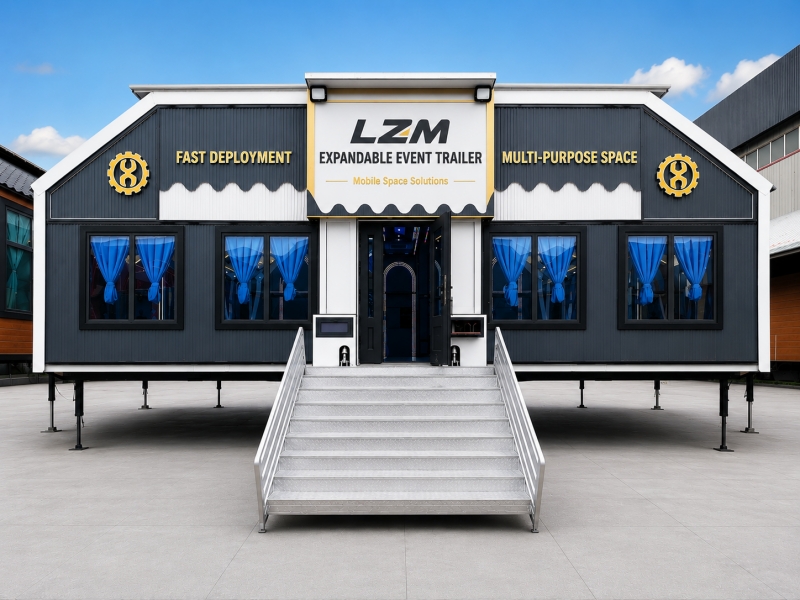
Emergency projects rarely have identical requirements.
Some customers may prioritize communications equipment, while others need more meeting space, operator stations, storage, or technical equipment.
For this reason, layout planning should begin with the actual operational workflow rather than simply selecting a standard interior.
An expandable trailer can transform from a transportable unit into a substantial operational facility at the deployment site.
For emergency agencies and organizations that need to establish command capability rapidly, this combination of mobility, expandable floor area, and customized interior design provides an alternative to relying exclusively on fixed facilities.
Command-center projects normally require more technical discussion than ordinary event applications. LZM can develop the interior configuration around the number of operators, required workstations, communications equipment, electrical requirements, displays, and other project-specific needs.
For the expandable platform and available configurations, see the LZM Mobile Command & Expandable Trailer Platform:
View the expandable trailer platform and customization options
Typical expandable trailer projects are positioned in the USD 70,000–140,000 EXW range, with final pricing depending on size, equipment, interior configuration, and technical requirements.