Welcome: Laizhou Machinery Group



When an imported off road caravan arrives in Australia, it should not be delivered directly to the final customer without inspection.
Even when a caravan passes factory quality control before shipment, international transportation, port handling, local transport, and storage may affect exterior components, interior fittings, batteries, plumbing connections, and accessories.
For Australian dealers and importers, a structured pre-delivery inspection helps identify issues before customer handover, reduces avoidable complaints, and creates a more professional buying experience.
This inspection is often referred to as a Pre-Delivery Inspection, or PDI.
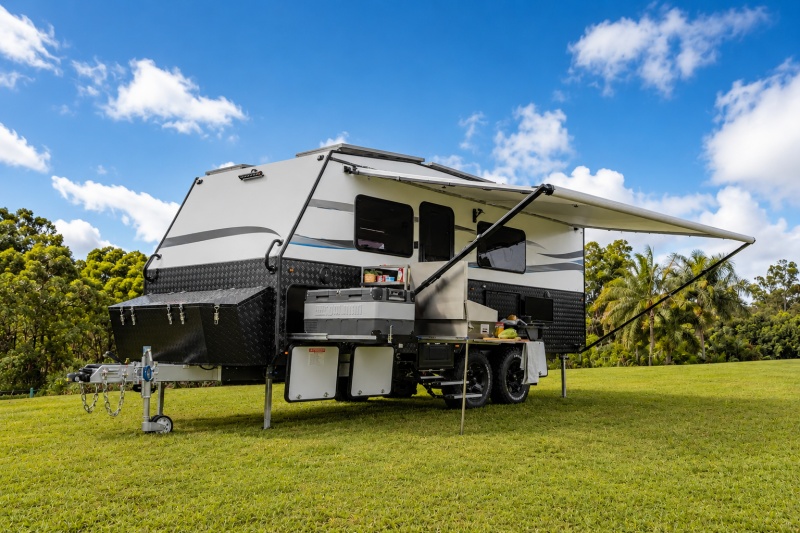
A proper PDI allows the dealer to confirm that the caravan:
Matches the confirmed order
Arrived without obvious transport damage
Contains the correct equipment
Operates as expected
Is clean and ready for presentation
Includes the required manuals and accessories
Can be handed over professionally
The objective is not simply to find faults. It is to verify the complete caravan before it enters local service.
Before inspecting the caravan, prepare the final specification sheet or order confirmation.
Check the ordered details, including:
Caravan model and size
Exterior colour and graphics
Interior layout
Sleeping capacity
Battery configuration
Solar-panel capacity
Inverter specification
Water-tank arrangement
Appliances
Optional accessories
Dealer branding
This prevents inspectors from relying only on memory.
Where possible, examine the caravan as soon as it arrives.
Look for signs of:
Impact damage
Scratches
Dents
Broken lights
Damaged windows
Loose exterior accessories
Torn protective packaging
Water exposure
Take clear photographs before removing damaged packaging or moving the caravan again.
This provides a useful record if the dealer needs to discuss transport damage with the freight forwarder, insurer, port operator, or supplier.
Walk around the entire caravan and inspect the exterior carefully.
Check:
Body panels
Roof edges
Front and rear sections
Exterior trims
Doors
Windows
Storage-compartment covers
Awning components
Exterior lights
Graphics and dealer branding
Doors and storage compartments should open, close, and lock correctly.
Windows should move smoothly and remain properly aligned.
The roof can be difficult to inspect from ground level, but it is an important part of the PDI.
Use safe access equipment and check:
Solar panels
Roof vents
Air-conditioning units
Antennas
Cable entry points
Sealant around fittings
Signs of impact or movement
Any roof inspection should be completed safely by qualified personnel.
Transport and unloading can place stress on the lower structure.
Inspect:
Chassis
Drawbar
Coupling
Safety chains
Jockey wheel
Stabiliser legs
Underbody protection
Mounting brackets
Visible welds
Fasteners
Look for loose components, damaged coatings, deformation, or signs of contact during transport.
The caravan should not be handed over until the running components have been inspected.
Check:
Suspension arms
Shock absorbers
Bushes
Wheel alignment
Wheel nuts
Tyres
Spare wheel
Brake wiring
Visible brake components
Tyre specifications and pressures should be checked against the approved setup for the caravan.
Critical suspension and braking inspections should be completed by competent technicians.
Connect an appropriate tow vehicle or electrical testing equipment.
Test:
Brake lights
Indicators
Tail lights
Clearance lights
Number-plate lights
Reversing lights, where installed
Exterior work or awning lights
Confirm that plugs and connectors are secure and correctly labelled.
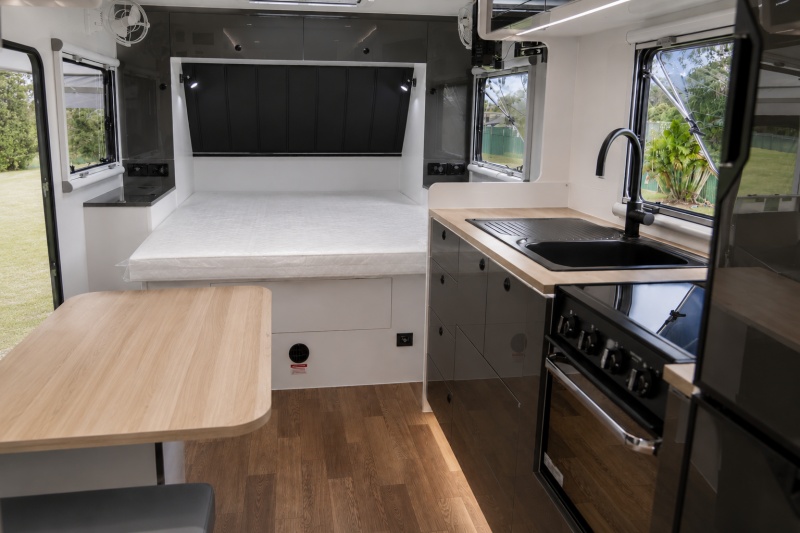
Enter the caravan and check the overall interior condition.
Inspect:
Cabinet doors
Drawers
Hinges
Locks
Benchtops
Wall panels
Ceiling panels
Flooring
Upholstery
Mattresses
Tables
Interior trim
Open and close every cabinet and drawer.
Transport vibration may loosen hinges, catches, screws, and adjustment hardware.
The electrical system should be checked under the available charging and power modes.
Depending on the configuration, test:
Battery monitor
Lithium battery system
Solar charging
External power input
Inverter
Interior lights
USB outlets
Power sockets
Water pump
Refrigerator
Air conditioning
Heating equipment
Control panels
Confirm that warning labels, switches, and controls are easy to understand.
Dealers should avoid assuming that a battery is fully charged when the caravan arrives after a long shipment.
Battery systems may remain inactive during international transportation.
Check:
State of charge
Battery-monitor readings
Cable connections
Isolation switches
Charging operation
Visible damage
Battery-management warnings
Follow the battery supplier’s operating and charging instructions.
Do not deliver the caravan with an inadequately charged or incorrectly configured battery system.
Solar-panel installation should be checked for:
Secure mounting
Visible panel damage
Cable connections
Controller operation
Charging input
Monitor readings
Solar output depends on sunlight and testing conditions, so the dealer should distinguish between a functional check and a full performance test.
Fill or connect the water system according to the approved procedure.
Test:
Freshwater tanks
Water pump
Sink taps
Shower
Toilet system
Hot-water equipment
Drainage
External water connections
Tank-level indicators
Look inside cabinets and under accessible areas for leaks.
A small loose fitting may not be visible until the system is pressurised.
Where installed, test the hot-water system according to the manufacturer’s instructions.
Confirm:
Correct power or fuel connection
Control-panel operation
Water flow
Heating function
No visible leaks
Safe shutdown
The system should not be operated without following the correct filling and startup procedure.
Test all fitted appliances that can be safely operated during the PDI.
These may include:
Refrigerator
Cooking equipment
Range hood
Microwave
Sink
Water pump
Interior lighting
External kitchen equipment
Confirm that appliance manuals and accessories are present.
Check:
Shower fittings
Toilet
Basin
Ventilation
Drainage
Door locks
Storage
Seals
Water flow
Confirm that the bathroom can be cleaned easily and that moving components remain secure during travel.
Compare the caravan against the order specification.
Verify any optional equipment, such as:
Additional batteries
Upgraded solar panels
Larger inverter
Air conditioner
Heating system
Awning
External kitchen
Spare wheel
Additional water tanks
Recovery accessories
Dealer graphics
Photograph installed options for the dealer’s delivery record.
Prepare a document package for the customer.
Depending on the caravan and project, this may include:
Product manual
Appliance manuals
Electrical information
Plumbing information
Battery instructions
Solar-controller instructions
Warranty information
Equipment list
Maintenance recommendations
Serial-number records
Imported caravans may contain equipment from several suppliers, so organised documentation is especially useful.
Dealers should use a written or digital checklist rather than relying on an informal inspection.
The record may include:
Caravan identification
Inspection date
Inspector’s name
Photographs
Test results
Issues found
Repairs completed
Final approval
Customer handover date
A consistent record becomes more valuable as the dealer imports additional caravans.
Before customer delivery, remove:
Protective films
Packaging materials
Dust
Shipping labels
Temporary fasteners
Interior debris
Then prepare the caravan for presentation:
Clean the exterior
Clean the interior
Arrange cushions and mattresses
Charge batteries
Confirm water-system condition
Check lights
Prepare keys and accessories
A properly prepared caravan creates a much better first impression.
The final stage should include a structured customer demonstration.
Explain:
Hitching and unhitching
Electrical isolation
Battery monitoring
Solar charging
Water-system operation
Appliance use
Stabiliser operation
Storage
Routine maintenance
Warranty contact process
Allow the customer to operate key systems during the handover rather than only watching the dealer.
Australian dealers and importers can browse the complete LZM Off Road Caravan range here:
https://www.lgloader.com/list/54-chinese-china-off-road-caravan.html
The LZM 21ft Family Off Road Caravan is one representative model available for international dealers, importers, and private-label projects.
LZM can discuss customized caravan sizes, layouts, electrical systems, off-grid packages, exterior branding, and equipment configurations according to customer requirements.
Learn more about the LZM 21ft Family Off Road Caravan here:
https://www.lgloader.com/products/285-21ft-Off-Road-Caravan-For-Sale.html
A successful caravan delivery begins before the customer arrives.
For Australian dealers, a thorough pre-delivery inspection helps identify transport issues, confirm ordered equipment, test operating systems, organise documentation, and prepare the caravan professionally.
Using the same PDI procedure for every imported caravan can reduce avoidable service problems and improve customer confidence.
The inspection should cover the complete product—from body panels and suspension to batteries, plumbing, appliances, manuals, and customer training—not only the visible interior.