Welcome: Laizhou Machinery Group



Houston is home to energy companies, engineering contractors, equipment suppliers, technology providers, and project service organizations operating across the United States and international markets.
Their projects may involve offshore operations, pipelines, processing facilities, equipment commissioning, maintenance shutdowns, remote construction sites, and technical demonstrations.
These activities frequently require more than a basic site office. Project teams may need a professional environment for presenting technical information, coordinating contractors, training personnel, and receiving customers or stakeholders.
An Expandable Mobile Project Center provides a relocatable space that can support several stages of an energy project without remaining permanently tied to one site.
Energy contracts often involve detailed discussions before work begins.
Customers may need to review:
Project scope
Equipment configurations
Engineering plans
Safety procedures
Construction schedules
Technology demonstrations
Service capabilities
Commercial proposals
A customized expandable facility can provide presentation screens, meeting areas, equipment displays, and private discussion rooms for these activities.
This allows contractors and technology suppliers to present complex projects in a controlled professional environment.
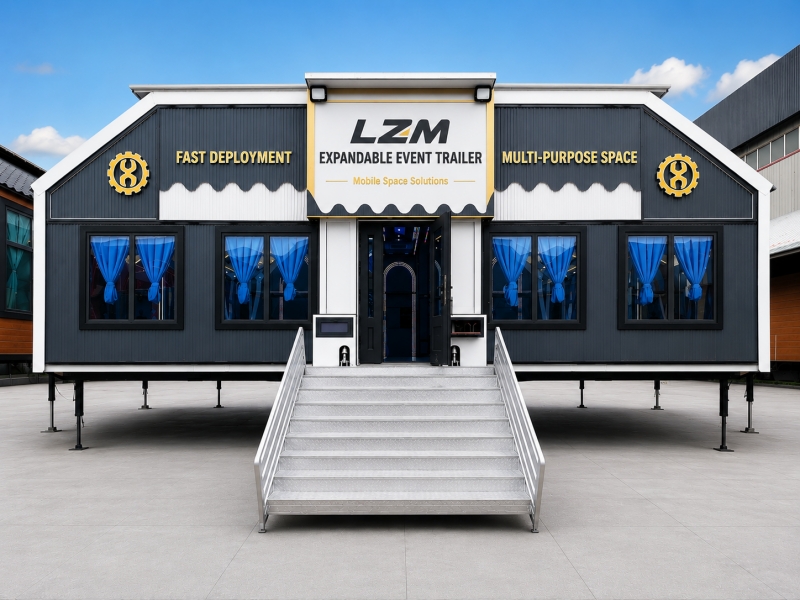
When a project moves from planning into execution, the number of contractors and technical teams may increase quickly.
The mobile project center can support:
Mobilization meetings
Contractor briefings
Project scheduling
Daily coordination
Document review
Engineering discussions
Management presentations
The interior can be divided into an open coordination area and smaller rooms for confidential meetings.
Safety, equipment operation, and procedural training are essential in oil and gas projects.
Depending on the final design and local requirements, an expandable mobile space may be configured for:
Safety orientation
Technical training
Equipment demonstrations
Emergency procedure briefings
Contractor induction
Maintenance workshops
Digital simulation presentations
Climate control, lighting, seating, multimedia systems, and storage can be planned around the expected training format.
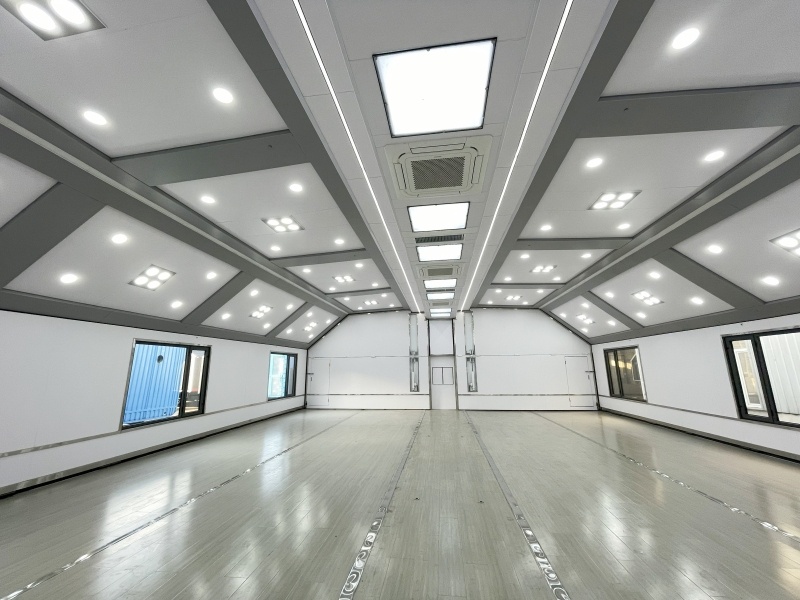
Project sites may receive visits from customers, investors, government representatives, engineering consultants, equipment partners, and corporate management.
A conventional site cabin may not provide the presentation quality or capacity required for these visits.
An expandable project center can include:
Reception area
Project exhibition zone
Conference seating
Digital project displays
Private meeting rooms
Hospitality area
Corporate branding
This creates a clearer separation between daily site administration and high-level project communication.
Planned maintenance and facility shutdowns often bring temporary teams, contractors, specialists, and equipment suppliers to one location.
During these concentrated periods, additional space may be required for:
Shutdown coordination
Shift briefings
Permit discussions
Contractor meetings
Technical problem-solving
Management reporting
A relocatable facility can provide temporary capacity without requiring the company to expand permanent buildings for a short operating period.
One project center may serve several departments during its operating life.
For example:
Engineering teams may use it for technical reviews.
Operations teams may use it for coordination meetings.
Training departments may use it for workforce programs.
Commercial teams may use it for customer demonstrations.
Corporate communications teams may use it for stakeholder visits.
Designing the interior around multiple functions can improve annual utilization.
Many oil and gas contractors work across several locations.
When one project phase ends, an expandable mobile facility may be relocated, rebranded, or internally reconfigured for another operation.
Possible future uses include:
New construction projects
Pipeline developments
Equipment demonstrations
Refinery maintenance programs
Technology roadshows
Recruitment and training campaigns
This mobility can extend the useful life of the investment beyond one contract or one site.
Before selecting a model, buyers should define:
Primary application
Expected occupancy
Number of functional zones
Meeting and training requirements
Electrical standard
Air-conditioning requirements
Multimedia equipment
Branding preferences
Destination and operating environment
Planned relocation frequency
These details help determine the suitable dimensions, interior configuration, technical systems, and transportation solution.
Temporary project requirements do not always justify permanent construction.
However, temporary does not have to mean basic or disposable.
A professionally designed expandable mobile project center can support communication, coordination, training, and stakeholder engagement across several stages of an energy project. When the project changes location, the facility can continue working elsewhere.
Its long-term value therefore comes not only from the space it creates, but from how many projects and departments can use it during its service life.
LZM develops customized expandable mobile spaces for energy companies, engineering contractors, equipment suppliers, infrastructure projects, technical training programs, and international commercial operations.
Provide your intended application, required capacity, functional areas, destination, electrical standard, and optional equipment. Our team can recommend an expandable configuration based on the actual project workflow.
Product details:
https://www.lgloader.com/products/470-Luxury-Expandable-Event-Trailer.html